Plantar Fasciitis Exercises That Actually Help Heel Pain
A physical therapist's guide to the plantar fasciitis exercises worth your time, plus honest answers on what heals it fast, what makes it worse, and the sock trick everyone asks about.

Heel pain from plantar fasciitis has a way of ruining your morning before you’ve even had coffee. That first-step pain when you get out of bed is one of the most recognizable symptoms in foot and ankle care, and it’s also one of the most treatable, provided you’re consistent with the right kind of loading and stretching. Exercises alone won’t fix everything overnight, but they’re the backbone of almost every successful recovery we see in the clinic.
This guide walks through the exercises that have the most support behind them, the common mistakes that slow healing down, and the questions we hear most often from patients dealing with this condition.
What Is Plantar Fasciitis, Briefly
The plantar fascia is a thick band of tissue running along the bottom of your foot, connecting your heel bone to your toes. When it gets overloaded, tiny areas of irritation and micro-damage build up, usually at the point where the fascia attaches to the heel. This creates the classic sharp, stabbing pain with the first steps in the morning or after sitting for a while.
It’s common in runners, people who stand all day for work, and people who’ve had a recent jump in activity level or a change in footwear. Tight calves and a stiff ankle joint often play a supporting role, which is why so many effective exercises target the calf and Achilles, not just the bottom of the foot.
The Best Exercises for Plantar Fasciitis
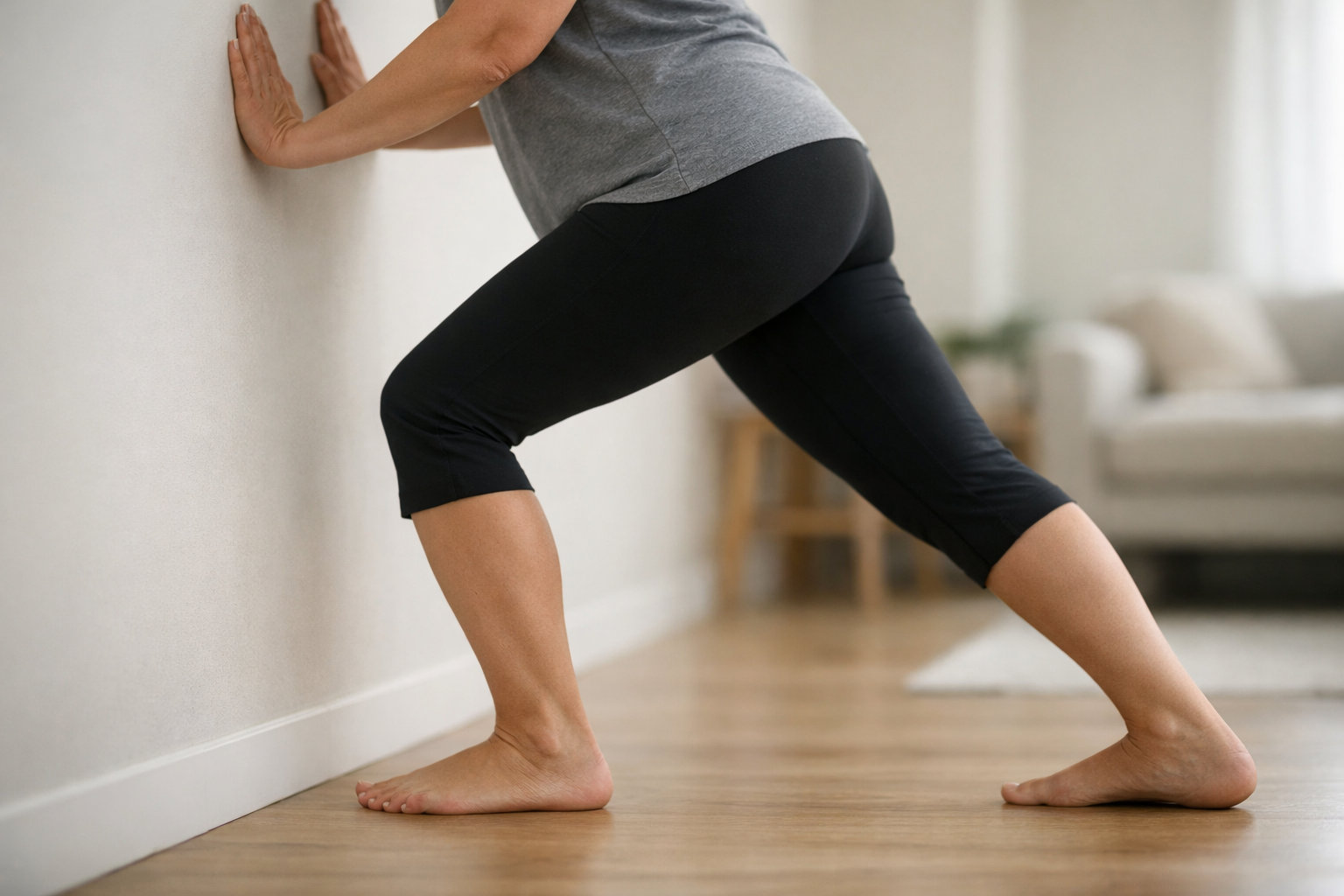
1. Calf Stretch (Gastrocnemius)
Stand facing a wall, hands flat against it. Step one foot back, keep that back knee straight and heel pressed into the floor, and lean forward until you feel a stretch in the upper calf. Hold 30 seconds, repeat 3 times per side.
This is arguably the single most useful stretch for plantar fasciitis. Tight calves increase tension through the Achilles and, by extension, through the plantar fascia itself. Loosening that chain takes direct strain off the heel.
2. Soleus Stretch (Lower Calf)
Same position as above, but bend the back knee slightly while keeping the heel down. This targets the deeper soleus muscle, which matters because a stiff ankle limits how well you can push off when walking or running, forcing the fascia to absorb more load.
3. Plantar Fascia Specific Stretch
Sit down, cross the painful foot over your opposite knee, and pull your toes back toward your shin with your hand until you feel a stretch along the arch. Hold 15 to 20 seconds, repeat several times. This one has solid backing in clinical research as a first-line stretch, and many people find it gives the quickest relief for morning pain when done right before standing up.
4. Towel or Marble Toe Curls
Place a towel on the floor and use your toes to scrunch it toward you, or pick up marbles one at a time with your toes and drop them in a cup. This strengthens the small intrinsic muscles of the foot that support the arch. It looks almost too simple to matter, but weak intrinsic foot muscles are a real contributor to plantar fasciitis, especially in people with flatter arches.
5. Heel Raises (Calf Raises)
Stand with feet hip-width apart, rise onto your toes slowly, then lower slowly. Start with both feet, progress to single leg as tolerated. This builds strength in the calf and Achilles complex, which reduces the amount of strain transferred to the fascia during walking and running. Go slow on the way down; the lowering phase is where a lot of the tendon-strengthening benefit happens.
6. Rolling Massage (Ball or Frozen Bottle)
Roll your bare foot over a tennis ball, lacrosse ball, or a frozen water bottle for a few minutes. This doesn’t strengthen anything, but it can reduce pain sensitivity and improve tissue mobility before you stretch or exercise. The cold from a frozen bottle adds a mild anti-inflammatory effect too.
7. Ankle Inversion with Resistance Band
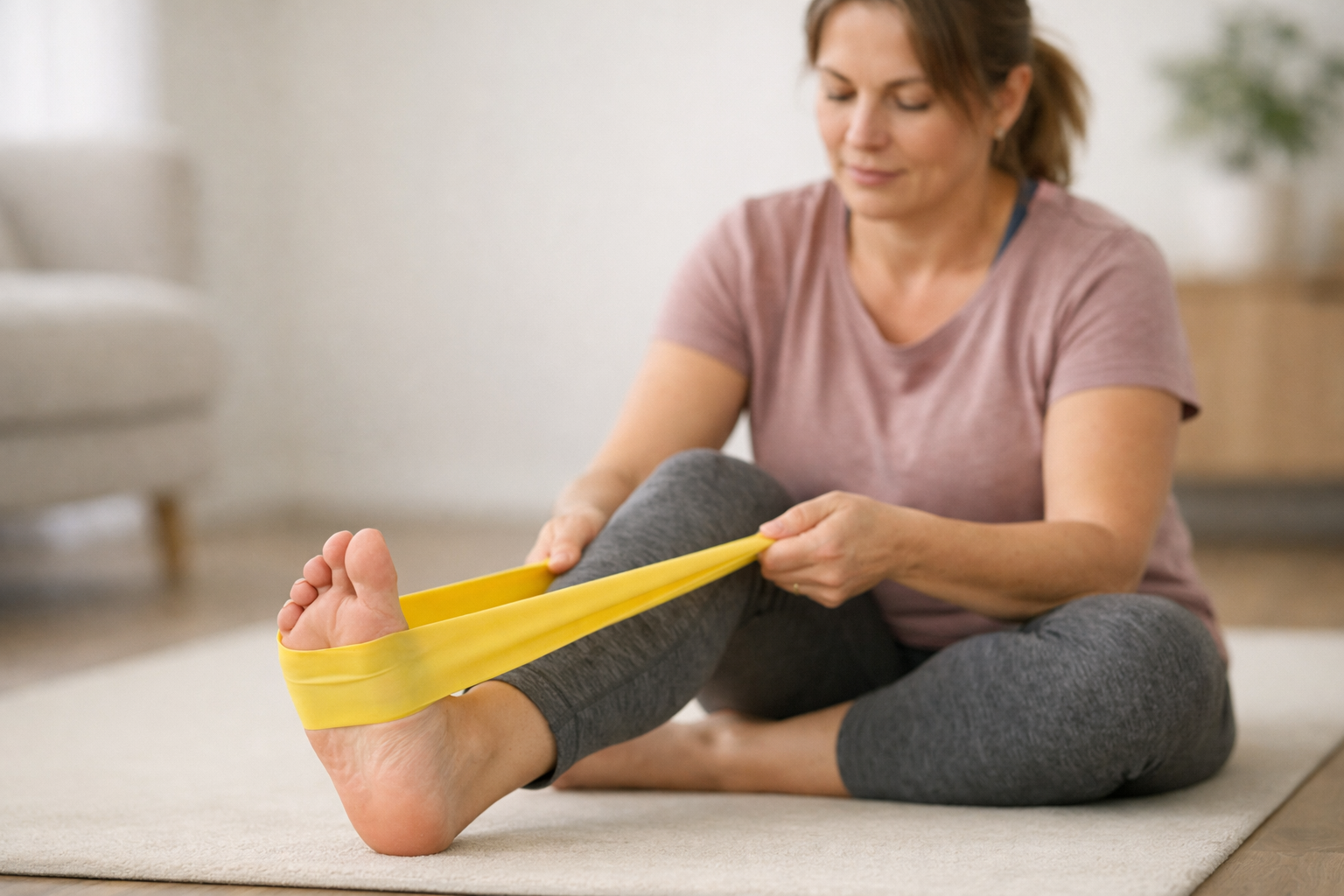
Sit on the floor with legs extended, loop a resistance band around the ball of your foot, and turn your foot inward against the band’s resistance. This targets the tibialis posterior, a muscle that helps support the arch and works closely with the plantar fascia.
A reasonable daily routine: calf stretch, soleus stretch, and the plantar-specific stretch each morning before standing, then heel raises and towel curls once or twice a day. Consistency matters more than intensity here. Ten minutes a day for six to eight weeks tends to outperform an occasional intense session.
What Is the Best Exercise to Heal Plantar Fasciitis?
If you only have time for one, the plantar fascia specific stretch (pulling the toes back while seated) combined with the calf stretch covers the most ground. Research on plantar fasciitis treatment consistently points to stretching the fascia directly, ideally done first thing in the morning before you take your first steps, as one of the more reliable ways to reduce pain over several weeks. Heel raises deserve a close second, since they build the strength that keeps the problem from coming back.
What’s the Worst Thing You Can Do for Plantar Fasciitis?
A few habits reliably make things worse:
- Going barefoot on hard floors, especially first thing in the morning. Unsupportive surfaces increase strain right when the tissue is stiffest.
- Pushing through sharp pain during high-impact activity like running or jumping. Pain is your tissue telling you it’s overloaded; ignoring it usually extends recovery time.
- Skipping the calf and ankle work and only massaging the sore spot. Tight calves are often the hidden driver, so treating the heel alone leaves the root cause untouched.
- Wearing worn-out or unsupportive shoes around the house, thinking shoes are only needed outside.
- Doing too much too soon once pain starts to improve. A lot of people feel better after two weeks, ramp activity back up fast, and set themselves back to square one.
If there’s one single worst offender, it’s probably ignoring the pain and continuing high-impact activity without any change in footwear, stretching, or load management.
What’s the Fastest Way to Fix Plantar Fasciitis?
There’s no true shortcut, and be skeptical of anything promising a cure in a few days. That said, the combination that tends to move fastest includes:
- Morning fascia and calf stretching before your first steps
- Supportive shoes worn consistently, including indoors
- Temporary reduction in high-impact activity (running, jumping)
- Ice or a frozen bottle roll after activity
- Over-the-counter arch support or a heel cup if needed
Most people notice meaningful improvement within two to six weeks with this kind of consistent approach. Cases that have been going on for many months tend to take longer, since the tissue changes become more established over time. If you’re not seeing any improvement after several weeks of consistent effort, that’s a good sign it’s time to see a physical therapist for a more targeted plan, possibly including manual therapy, taping, or a night splint.
What Do the Chinese Do for Plantar Fasciitis?
Traditional Chinese medicine approaches to heel pain often include acupuncture, herbal foot soaks, and foot reflexology or massage, sometimes combined with gentle qigong-style foot and ankle movements. Some people also use warm foot baths with herbs believed to improve circulation. There isn’t strong, consistent scientific evidence that these methods outperform standard stretching and strengthening, but foot soaks and massage aren’t harmful and may offer some symptom relief alongside, not instead of, the exercises described above.
What Finally Cured My Plantar Fasciitis?
This is one of the most searched questions about this condition, and it’s worth being honest about the answer: there’s rarely one single fix. When people describe finally getting relief after a long struggle, it’s almost always a combination of consistent daily stretching, better footwear, some reduction in aggravating activity, and time. Plantar fascia tissue heals slowly compared to muscle, often taking several months for more stubborn cases. For a smaller group of people, additional treatment like a custom orthotic, a night splint, or physical therapy with manual techniques and dry needling makes the difference between slow, plateaued progress and real improvement.
What Is the Sock Trick for Plantar Fasciitis?
The “sock trick” refers to wearing a dorsiflexion night splint sock or sleeve, sometimes just called a plantar fasciitis sock, that holds your foot and toes gently flexed upward while you sleep. The idea is to keep the plantar fascia in a mildly stretched position overnight instead of letting it shorten, which is part of why that first step out of bed hurts so much. Some versions are simple compression socks with a strap that pulls the toes back; others are more rigid splints. People report varying results, but it’s a low-risk option that many find worth trying alongside daytime stretching and strengthening.
When to See a Physical Therapist
Most cases of plantar fasciitis improve with home exercises, supportive footwear, and a bit of patience. But if your pain has lasted more than a few weeks despite consistent effort, if it’s getting worse instead of better, or if you notice numbness, tingling, or significant swelling, it’s a good idea to have it evaluated by a physical therapist or foot and ankle specialist. Persistent heel pain sometimes involves other structures, like a nerve entrapment or a stress fracture, that need a different treatment approach entirely.
A thorough evaluation can also identify contributing factors you might not catch on your own, like limited ankle mobility, weak hip muscles affecting your gait, or footwear that’s quietly working against you. Getting a personalized plan often shortens the whole recovery process considerably compared to guessing your way through it alone.