Foot Arch Pain: Causes, Assessment, and What to Do About It
A practical guide to figuring out what's actually causing your arch pain, how to tell plantar fasciitis apart from other culprits, and how to build the arch's tolerance back up without over-resting it.
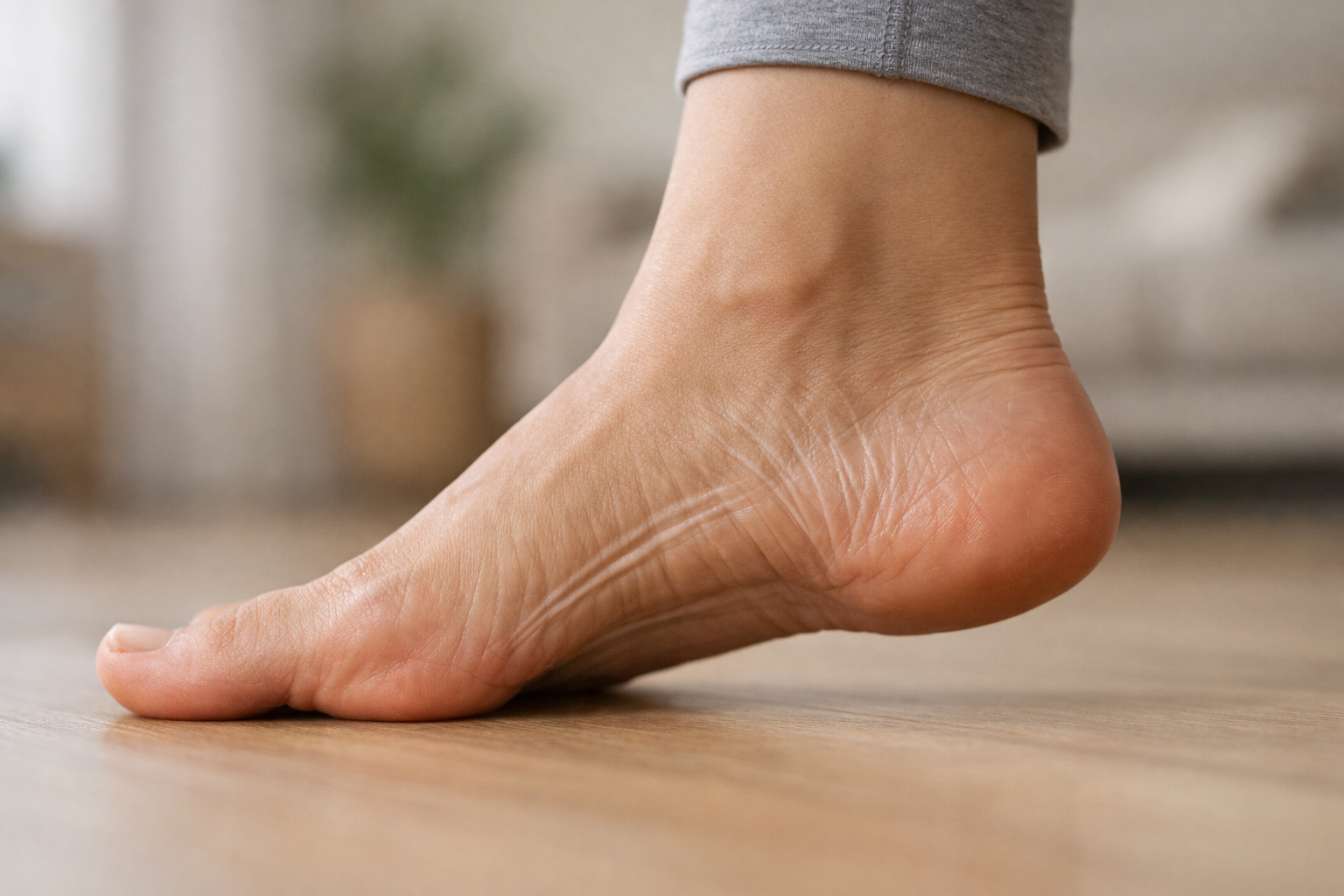
Arch pain is a location, not a diagnosis. The middle part of your foot, between the ball and the heel, houses a dense mix of fascia, small intrinsic muscles, tendons, ligaments, and bones that all share the job of supporting your weight and adapting to the ground. When one of those structures gets more demand than it can currently tolerate, you feel it as pain somewhere along the arch. Figuring out which structure is involved, and why it’s overloaded, matters more than the label you give it.
The load versus capacity problem
Every tissue in your foot has a certain capacity, meaning its current ability to handle the walking, standing, and running you ask of it. Pain tends to show up when the load placed on a structure outpaces that capacity, even briefly. This isn’t a character issue or a sign you did something wrong. A new pair of shoes, a week of extra time on your feet at work, a jump in mileage, or simply getting older and less conditioned can all tip the balance. The fix generally isn’t about finding the one bad habit to blame. It’s about rebuilding the arch’s capacity to handle what you’re asking of it, gradually enough that the tissue can adapt.
What causes pain in the foot arch and instep
Several structures can generate pain along the arch or the top of the foot (the instep), and they don’t all respond to the same approach.
- Plantar fascia: The thick band of tissue running from the heel to the base of the toes is the most common source of arch and heel pain, especially first thing in the morning or after getting up from sitting.
- Posterior tibial tendon: Runs along the inside of the ankle and arch. Pain here, especially pain that worsens with pushing off during walking, can be consistent with posterior tibial tendon dysfunction, which is a common cause of arch pain near the ankle.
- Flexor tendons and intrinsic foot muscles: Small muscles that support the arch can become irritated with sudden increases in activity, changes in footwear, or running volume.
- Midfoot joints and ligaments: Sprains or early arthritic changes in the midfoot can cause aching across the top or middle of the foot, sometimes mistaken for a fascia problem.
- Nerve involvement: Tarsal tunnel syndrome, where a nerve is compressed near the inside of the ankle, can cause burning, tingling, or aching that radiates into the arch.
- Stress reaction or stress fracture: Especially in runners or people who recently increased activity sharply, a bony stress injury can present as diffuse arch or midfoot pain that worsens with activity and doesn’t settle with rest the way soft tissue pain usually does.
Pain specifically in the instep, the higher part of the arch closer to the top of the foot, more often points toward tendon, ligament, or joint irritation rather than the plantar fascia, which sits on the bottom of the foot.
How to tell if arch pain is plantar fasciitis
A few patterns are common with plantar fasciopathy, though none of them confirm it on their own:
- Pain is usually worst with the first few steps in the morning or after sitting for a while, then eases somewhat as you move, only to return later in the day with more time on your feet.
- The pain is typically felt on the bottom of the foot, often closer to the heel but sometimes extending into the arch.
- Pressing directly on the inside of the heel, where the fascia attaches, often reproduces the pain.
- Symptoms tend to build gradually over weeks, tied to a change in activity, footwear, or time spent standing or walking.
That morning pain isn’t a sign the tissue got worse overnight. It reflects a normal sensitivity pattern after hours without load, not ongoing damage. If your pain doesn’t fit this pattern, if it’s sharp and localized to a specific bone, worse with rest instead of better, associated with numbness or tingling, or came on suddenly with a specific injury, that’s a reason to get it looked at rather than assume fasciitis.
What gets mistaken for plantar fasciitis
Because heel and arch pain is so often assumed to be fasciitis, several other conditions get missed or misattributed:
- Posterior tibial tendon dysfunction, which can eventually contribute to a flattening arch if it progresses untreated.
- Tarsal tunnel syndrome, distinguished by burning, tingling, or electric sensations rather than a dull ache.
- Fat pad atrophy, more common with age, which causes deep bruise-like heel pain rather than the classic first-step pattern.
- Stress fractures of the calcaneus or metatarsals, which tend to worsen with continued activity rather than ease.
- Baxter’s nerve entrapment, a less common nerve compression near the heel that can cause pain in the same location as plantar fasciitis. .
This is exactly why a proper evaluation matters if things aren’t improving as expected. Not all heel or arch pain is plantar fasciitis, and treating the wrong tissue rarely helps.
What to do if the arch of your foot hurts
The instinct for a lot of people is to either push through it or stop moving entirely. Neither tends to work well. Complete rest calms symptoms temporarily because you’ve removed the load, but it does nothing to build the tissue’s capacity, and pain often returns as soon as you resume normal activity. The more useful approach is intelligent load management: stay as active as you reasonably can while keeping symptoms in a manageable range.
A rough guideline many people find helpful is keeping pain at or below about a 4 out of 10 during and after activity, and checking that it settles back to baseline within about 24 hours. If pain regularly exceeds that or lingers longer, that’s a signal the current load is outpacing capacity and needs to come down a notch, not a signal to stop entirely.
Other practical steps:
- Footwear is a load-management tool, not a cure. Supportive, well-cushioned shoes can reduce the demand on the arch during the day, which can help while you rebuild capacity. They aren’t a long-term fix on their own.
- Orthotics, whether over-the-counter or custom, can also reduce load on an irritated structure temporarily. They have a legitimate role, but they work by redistributing load, not by healing tissue on their own.
- Gradual activity modification rather than complete cessation. If running aggravates it, that doesn’t necessarily mean stopping running for good. It usually means adjusting volume or surface temporarily and building back up in a graded way.
Should you massage arch pain?
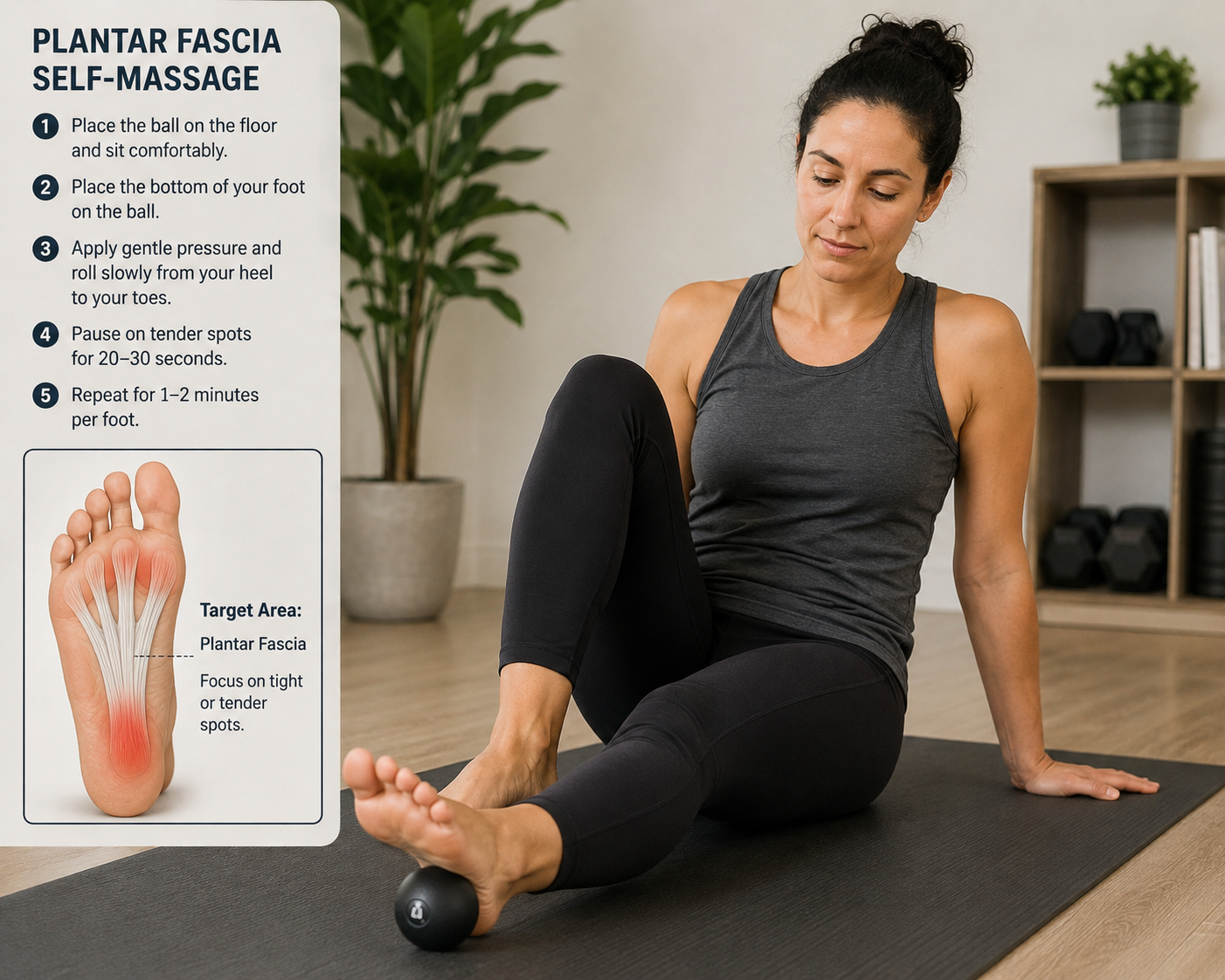
Massage, rolling the arch over a ball or bottle, and stretching can all reduce sensitivity in the short term. Many people find genuine, if temporary, relief this way, and there’s nothing wrong with using it, especially before activity or at the end of a long day. But it’s worth understanding what it is and isn’t doing. These techniques calm the nervous system’s protective response and reduce guarding; they don’t change the underlying structure of the tissue. That change comes from progressive loading over weeks to months. Think of massage and stretching as useful tools for managing day-to-day sensitivity, not as the treatment that resolves the underlying problem.
Arch pain near the ankle
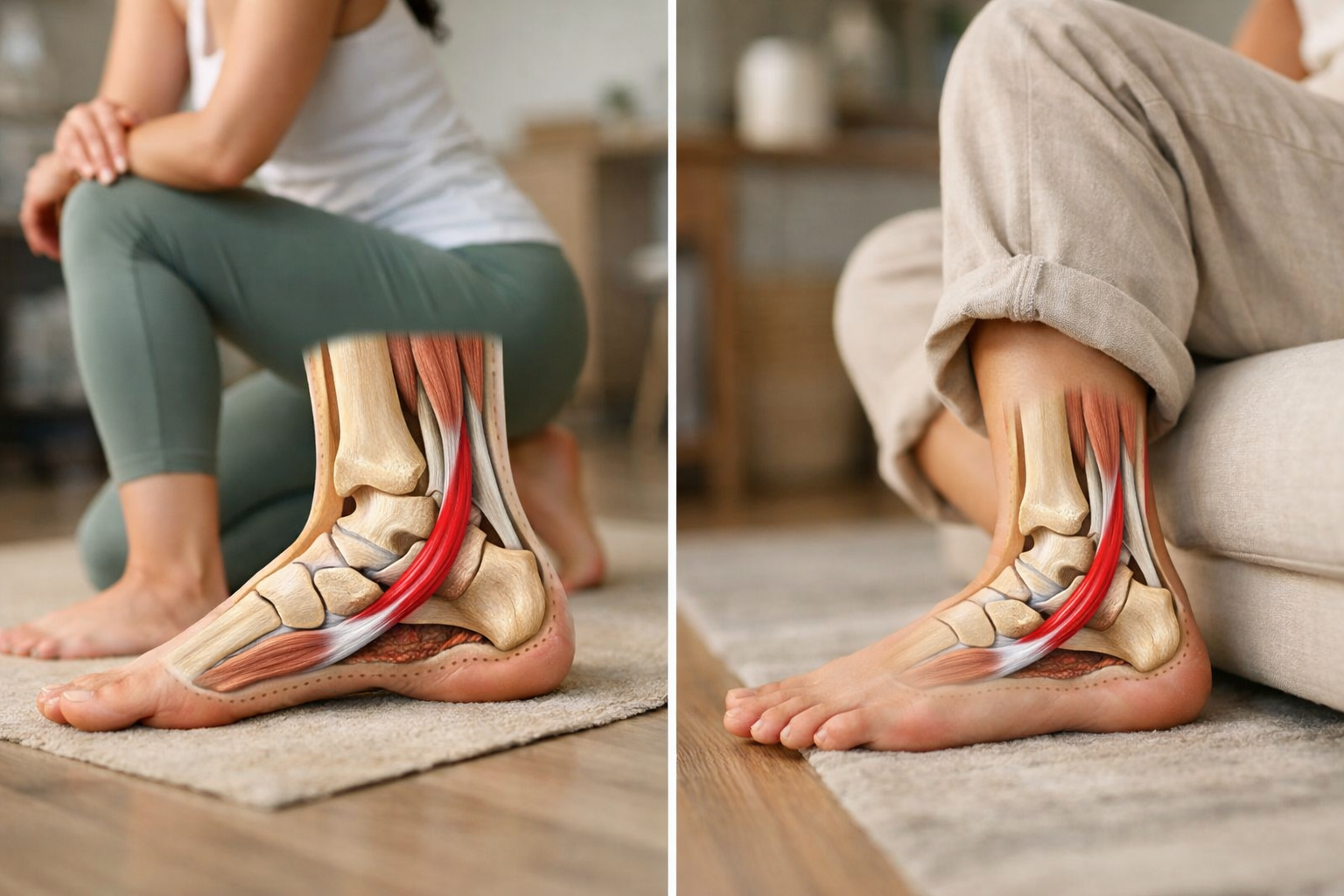
Pain that concentrates specifically near the inside of the ankle, rather than through the middle of the arch, deserves particular attention. This location is where the posterior tibial tendon runs, and pain here, especially with swelling, a feeling of instability, or difficulty rising onto your toes on that side, is a pattern worth having evaluated rather than self-treating for an extended period. Left unaddressed, tendon issues in this area can progress and become harder to manage, so earlier assessment is generally more useful than waiting.
How to actually get rid of arch pain
There isn’t a single universal fix, because arch pain isn’t a single condition. But the underlying principle is consistent across causes: identify the structure involved, reduce load enough to let sensitivity settle, and then rebuild that structure’s capacity through progressive loading rather than avoidance.
That generally means:
- Getting an accurate sense of which tissue is involved, ideally through a clinical evaluation if symptoms are persistent, severe, or not fitting a clear pattern.
- Adjusting activity and footwear to bring symptoms into a tolerable range rather than eliminating activity altogether.
- Introducing targeted loading exercises for the specific tissue involved, starting at a level that doesn’t provoke a flare and progressing gradually over roughly 8 to 12 weeks as the tissue adapts.
- Expecting some day-to-day fluctuation. A flare-up a day or two after a long walk or a busy shift usually reflects your total cumulative load that day, not a step backward in recovery.
Chronic arch pain, even pain that’s been present for months or years, usually still responds to this process. It typically just needs a lower starting point and a more patient pace, not a different approach altogether. The principles are sound whether the pain is new or long-standing.
If you’re looking specifically for a structured exercise progression for heel and fascia-related pain, that’s covered in depth in our companion guide to plantar fasciitis exercises. This article is meant to help you sort out what’s actually going on first, since not every arch pain problem needs the same exercises.
When to see someone
Most arch pain responds reasonably well to sensible load management and time. But get it evaluated sooner rather than later if you notice numbness or tingling, pain that’s worse with rest instead of activity, visible swelling or deformity, sudden onset after a specific injury, or pain that isn’t improving after a few weeks of reasonable self-management. A clinical evaluation can sort out which structure is actually involved and rule out things that mimic plantar fasciitis but need a different approach entirely.