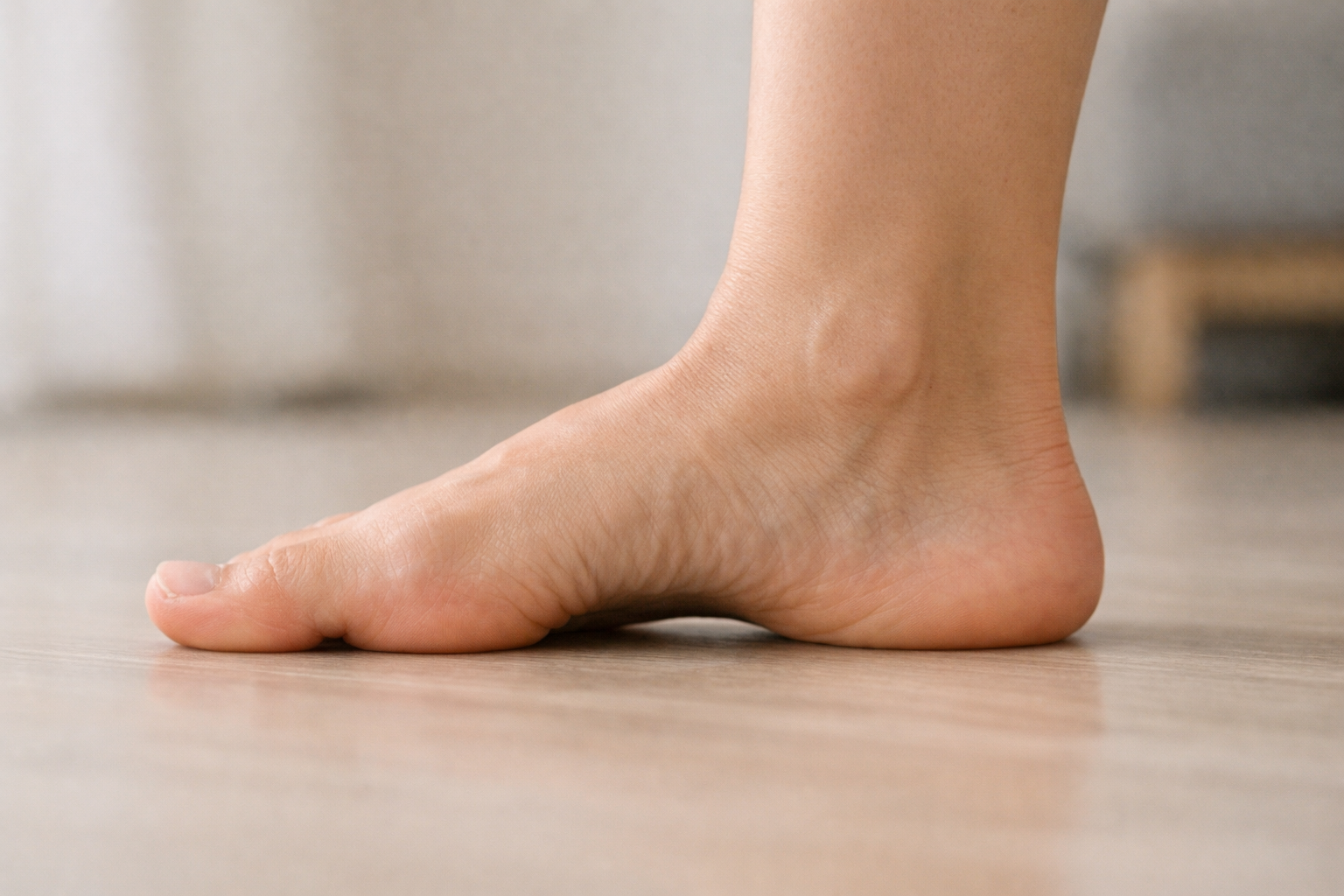
Foot Strengthening Exercises to Build Lasting Foot Capacity
A capacity-first look at why foot strength matters, how to spot weakness before it becomes pain, and a realistic progression from activation to dynamic loading.
Most people never think about foot strength until something hurts. A nagging arch ache, a flare of plantar fasciitis, an ankle that keeps rolling on uneven ground. By then the conversation is usually about pain relief, not capacity. That’s backwards. The feet are load-bearing structures made of small, dense muscles that need work just like any other muscle group, and building them up before they fail you tends to go a lot better than rehabbing them after.
This guide takes a capacity-first approach. Instead of a random grab bag of exercises, we’ll walk through why foot strength matters, how to tell if yours is lacking, and a progression you can actually follow from beginner to advanced.
Why Foot Capacity Matters
Your feet have 26 bones, more than 30 joints, and dozens of small intrinsic muscles that live entirely within the foot itself, plus larger extrinsic muscles that run down from the lower leg. Together they absorb shock, adapt to uneven terrain, and help propel you forward with every step.
When those muscles are strong and responsive, the foot acts like a spring. It stores and releases energy efficiently. When they’re weak or under-trained, that job gets shifted elsewhere, often to the plantar fascia, the Achilles tendon, or the knees and hips further up the chain. Over time that extra strain can show up as pain that seems to come out of nowhere.
Building foot capacity isn’t just for athletes or runners. It matters for anyone who stands, walks, or spends time on their feet, which is basically everyone.
What Causes Weakness in Your Feet
Foot weakness rarely has a single cause. Common contributors include:
- Years in supportive, cushioned shoes. Shoes that do a lot of the stabilizing work for you can allow intrinsic foot muscles to quietly deteriorate.
- Sedentary habits. Less time walking on varied terrain means less stimulus for the small stabilizing muscles.
- Past injury. A sprained ankle or broken toe often leads to a period of protective disuse, and strength doesn’t always come back on its own afterward.
- Aging. Muscle mass declines gradually throughout the body, and the feet are not exempt.
- Nerve or circulation issues. Conditions like diabetic peripheral neuropathy can cause genuine muscle weakness and reduced sensation in the feet, which is a different situation from simple undertraining and deserves medical evaluation.
- High arches or flat feet. Certain foot structures place more demand on specific muscle groups, and those muscles can become overworked or underused depending on the pattern.
Signs of Weak Feet
Weak feet don’t always announce themselves clearly. Some common signs to watch for:
- Arches that feel tired or achy after standing or walking, even for a moderate amount of time
- Frequent ankle rolling or a sense of instability on uneven ground
- Cramping in the arch or toes, especially at night
- Visible collapsing of the arch when standing (more than what’s normal for your foot type)
- Difficulty balancing on one foot for even a few seconds
- Toes that curl, claw, or seem to grip the ground when you walk
- A foot that fatigues noticeably faster than the other side
None of these signs are dramatic on their own. That’s part of the problem. Weak feet tend to compensate quietly for a long time before something finally gets irritated enough to hurt.
How Do You Strengthen Weak Feet? A Progressive Approach
The short answer is consistency over intensity. Foot muscles respond well to frequent, low-load work, especially early on. Trying to do too much too fast, particularly if you’ve been inactive or recovering from an injury, tends to backfire.
We like to think of foot strengthening in three general phases. You don’t need to rush through them, and some people will spend weeks in the first phase before moving on.
Phase 1: Activation and Control
The goal here is simply to reconnect your brain to the small muscles in your feet. Many people have lost some awareness of how to move their toes and arch independently of the rest of the leg.
Toe splay Sit with your foot flat on the floor. Spread your toes apart as wide as you can without curling them, hold for a few seconds, then relax. This sounds simple, but a lot of people find it surprisingly hard at first.
Big toe lift and hold While keeping the other four toes on the ground, lift just your big toe. Then reverse it: keep the big toe down and lift the other four. This isolates muscles that most shoes never ask you to use.
Short foot exercise (arch doming) Standing or sitting with your foot flat, try to shorten your foot by drawing the ball of the foot toward the heel without curling your toes. Think about gently doming the arch upward. Hold for a few seconds. This is one of the more valuable exercises for building intrinsic foot strength, and it’s worth taking the time to learn it well before moving on.
Towel scrunches Place a small towel on the floor under your foot and use your toes to scrunch it toward you. Repeat a few times, then reset.
Phase 2: Loaded Strength
Once you have decent control, it’s time to add resistance and load.
Toe curls with resistance Use a towel with light weight on it, or a resistance band looped around the toes, to add challenge to the scrunching motion.
Marble or object pickup Pick up small objects with your toes and move them to a cup or a different spot. This builds fine motor strength in the toes and forefoot.
Heel raises (double leg, then single leg) Rise onto the balls of your feet, pause briefly at the top, then lower slowly. Start with both feet, then progress to single-leg heel raises once double-leg feels easy. This works the calf and the muscles that support the arch during push-off.
Toe walks and heel walks Walking short distances on your toes, then on your heels, builds strength through both ends of the foot’s functional range.
Single leg balance Stand on one foot for a set amount of time, working up gradually. This challenges the small stabilizing muscles of the foot and ankle in a way that’s hard to replicate with seated exercises alone.
Phase 3: Dynamic and Functional Loading
This phase applies foot strength to movement that resembles real life or sport.
Single-leg balance with perturbation Add a light challenge, like a gentle toss and catch of a ball, while balancing on one foot.
Lateral hops and bounds Controlled, low-intensity hopping side to side or forward and back, landing softly, builds the foot’s ability to absorb and redirect force.
Uneven surface walking Walking on grass, sand, or a foam pad in a controlled setting gives your feet varied input that flat, hard surfaces don’t provide.
Single-leg calf raises off a step Adding a small range of motion below neutral increases the demand on the calf and the deeper foot stabilizers.
For most exercises, two to three sets of 10 to 15 repetitions, done most days of the week, is a reasonable starting target. Balance work is often better measured in time (start with 20 to 30 seconds) rather than reps.
Is Walking Barefoot Good for Foot Strength?
Generally, yes, in moderation and with some common sense. Walking barefoot on safe, appropriate surfaces (your home, grass, sand) allows your foot muscles to work the way they’re designed to, without a shoe doing the stabilizing for you. Many people notice their feet feel more “awake” or engaged after time spent barefoot.
That said, transitioning to more barefoot time should be gradual, especially if you’ve worn supportive or cushioned shoes for years. Sudden increases in barefoot walking or minimalist footwear have been associated with overuse issues in people who ramp up too quickly. Start with short periods at home, and increase slowly as your feet adapt.
Barefoot walking on hard, unfamiliar outdoor surfaces carries its own risks (glass, sharp objects, extreme temperatures), so use judgment about where and how much.
Does Walking a Lot Strengthen Feet?
Walking is good for general foot health and circulation, and it does provide some stimulus to foot muscles, but it’s not a complete substitute for targeted strengthening. Walking is a relatively repetitive, low-variability movement. It doesn’t challenge the foot’s stabilizing muscles the way single-leg balance work, toe-specific exercises, or uneven-terrain walking does.
Think of walking as valuable baseline activity, and targeted exercises as the more efficient tool for actually building strength and capacity in weak or undertrained areas.
How Long Does It Take to Strengthen Foot Muscles?
This varies by starting point, consistency, and what you’re training for, but a reasonable general expectation looks something like this:
- 2 to 4 weeks: Improved muscle activation and control. Exercises that felt awkward at first (like isolating the big toe) start to feel more natural.
- 6 to 8 weeks: Noticeable improvements in balance, arch endurance, and reduced fatigue during standing or walking.
- 3 months or more: More meaningful strength gains, better performance in dynamic movements, and often a reduction in symptoms if weakness was contributing to pain.
These timelines assume fairly consistent effort, several sessions a week. Like any strength training, sporadic effort produces sporadic results. Muscle adaptation takes time regardless of which part of the body you’re training, and the small muscles of the foot are no exception.
5 Symptoms Foot Doctors Say to Never Ignore
Most foot fatigue and mild aching responds well to strengthening and time. But certain symptoms warrant a visit to a physical therapist or physician rather than a home exercise program:
- Sudden, severe pain, especially after an injury or a pop or snap sensation
- Numbness, tingling, or burning that doesn’t resolve, particularly if it’s new or spreading
- Visible deformity, significant swelling, or an inability to bear weight on the foot
- Open wounds or sores that aren’t healing, especially in people with diabetes or circulation problems
- Skin color changes (pale, blue, or dark discoloration) or a foot that feels unusually cold
If you notice any of these, it’s worth getting evaluated before continuing a strengthening program. Working through certain kinds of pain can delay healing rather than help it.
Putting It Together
Foot strengthening exercises work best as an ongoing habit, not a short-term fix. A few minutes a day, done consistently, tends to outperform an occasional long session. Start with activation work if your feet feel unresponsive or if balance exercises feel unexpectedly hard, then progress to loaded and dynamic work as those basics start to feel easy.
If foot pain has been persistent, is getting worse, or hasn’t responded to a few weeks of sensible home exercise, a physical therapist can assess your specific movement patterns, foot structure, and any contributing factors further up the chain. Sometimes the feet are the whole story, and sometimes they’re one piece of a larger pattern that’s worth sorting out with a trained set of eyes.