Can Fallen Arches Be Rebuilt? What Exercise Can Actually Do
Some fallen arches respond to strengthening, some won't change shape much, and both groups can end up walking and standing far more comfortably. Here's how loading the foot gradually rebuilds what it can handle, and what a reasonable timeline actually looks like.
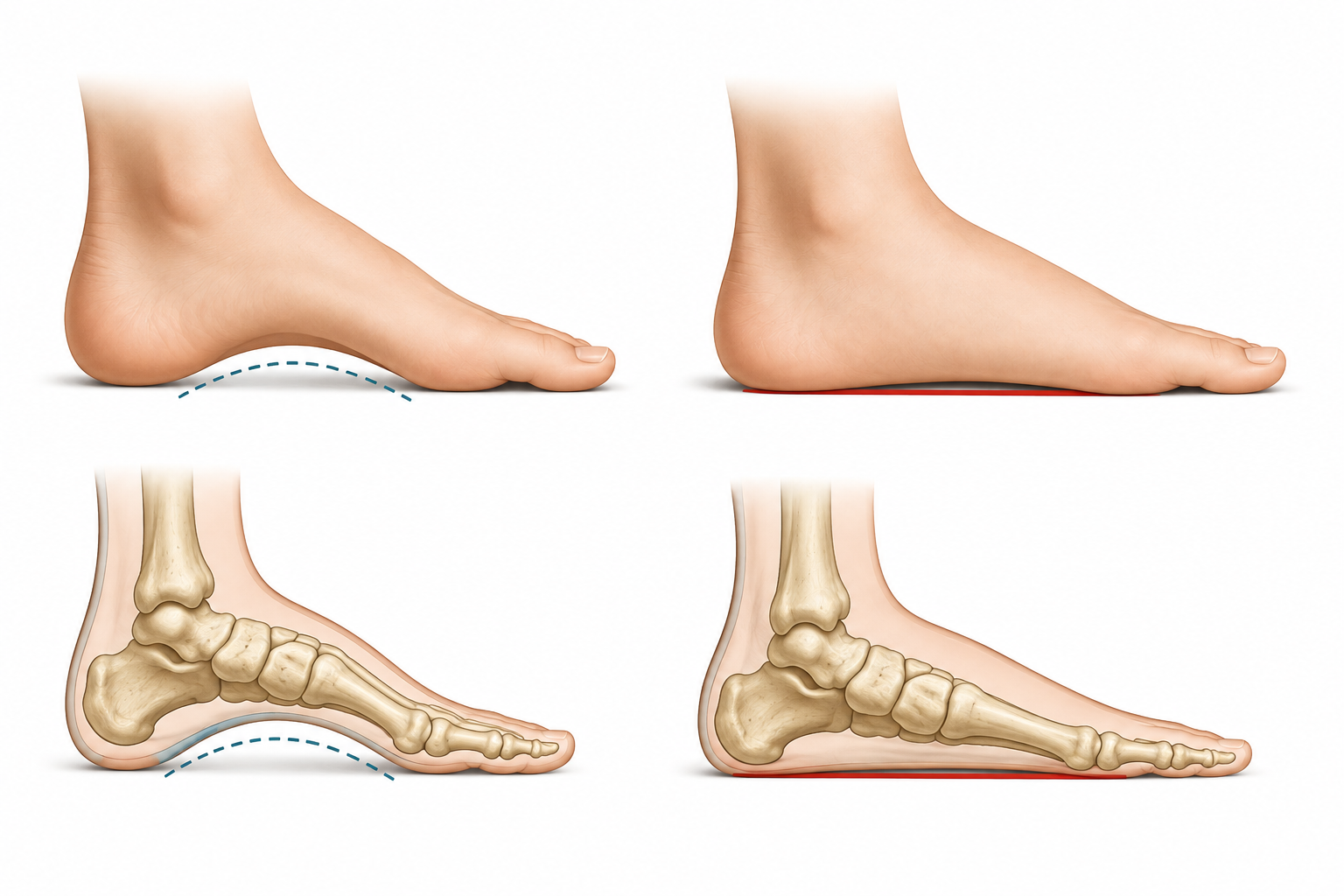
Can Fallen Arches Be Reversed?
The honest answer is: partly. It depends what you mean by “fallen.”
Two very different things get called fallen arches. One is a flexible, low arch you were probably born with, or one that came on slowly over the years, where the bones and ligaments just sit a little lower but the foot still works fine. The other is an arch that used to be higher and has dropped, because of tendon dysfunction, an injury, or years of load that outpaced what the supporting structures could handle.
For that second group, exercise can genuinely change things. Strengthening the muscles that support the arch, especially the posterior tibial tendon and the small intrinsic muscles of the foot, can improve how well the foot manages load, reduce pain, and in many cases restore some functional arch height. For the first group, the bony architecture usually isn’t going to change shape. What can change is how well that foot tolerates walking, standing, and running without complaining.
This is the same load versus capacity idea that shows up in almost every foot and ankle problem I see. Pain and dysfunction happen when the demand on a structure exceeds what it can currently handle. Rebuilding what your foot can handle, rather than chasing arch height on an x-ray, is usually the more useful goal.
How Long Does It Take to Correct Fallen Arches?
There’s no fixed timeline, and anyone promising you one is guessing. What we can say is that tendon and connective tissue adapt slowly. The early improvements in strength and pain, often in the first few weeks, are mostly your nervous system getting better at using the muscles you already have. The actual structural changes, the thickening and strengthening of tendon and supportive tissue, take longer. Often somewhere in the range of 8 to 12 weeks of consistent, progressive loading, sometimes longer if this has been going on for years.
Persistent doesn’t mean permanent. It usually just means you start lower and progress more patiently. Someone who’s had a collapsed arch for five years isn’t doomed, but they probably shouldn’t expect the six-week turnaround that might work for a mild, recent change.
Do Foot Arches Flatten With Age?
Yes, to some degree, and that’s normal. Ligaments lose some elasticity over time, and the posterior tibial tendon, which does a lot of the work holding the arch up while you walk, can gradually lose capacity if it isn’t regularly loaded. Weight changes, years of standing on hard surfaces, and less overall foot strength as activity levels drop all add to the cumulative load on that tendon.
None of this means age-related arch flattening is something you did wrong. It’s a total load story: the demand on the tendon slowly outpaced its capacity to adapt over decades. The encouraging part is that capacity can still be rebuilt at almost any age, even if the starting point and the pace look different than they would for someone 25.
How Can I Restore My Arch? A Progressive Approach
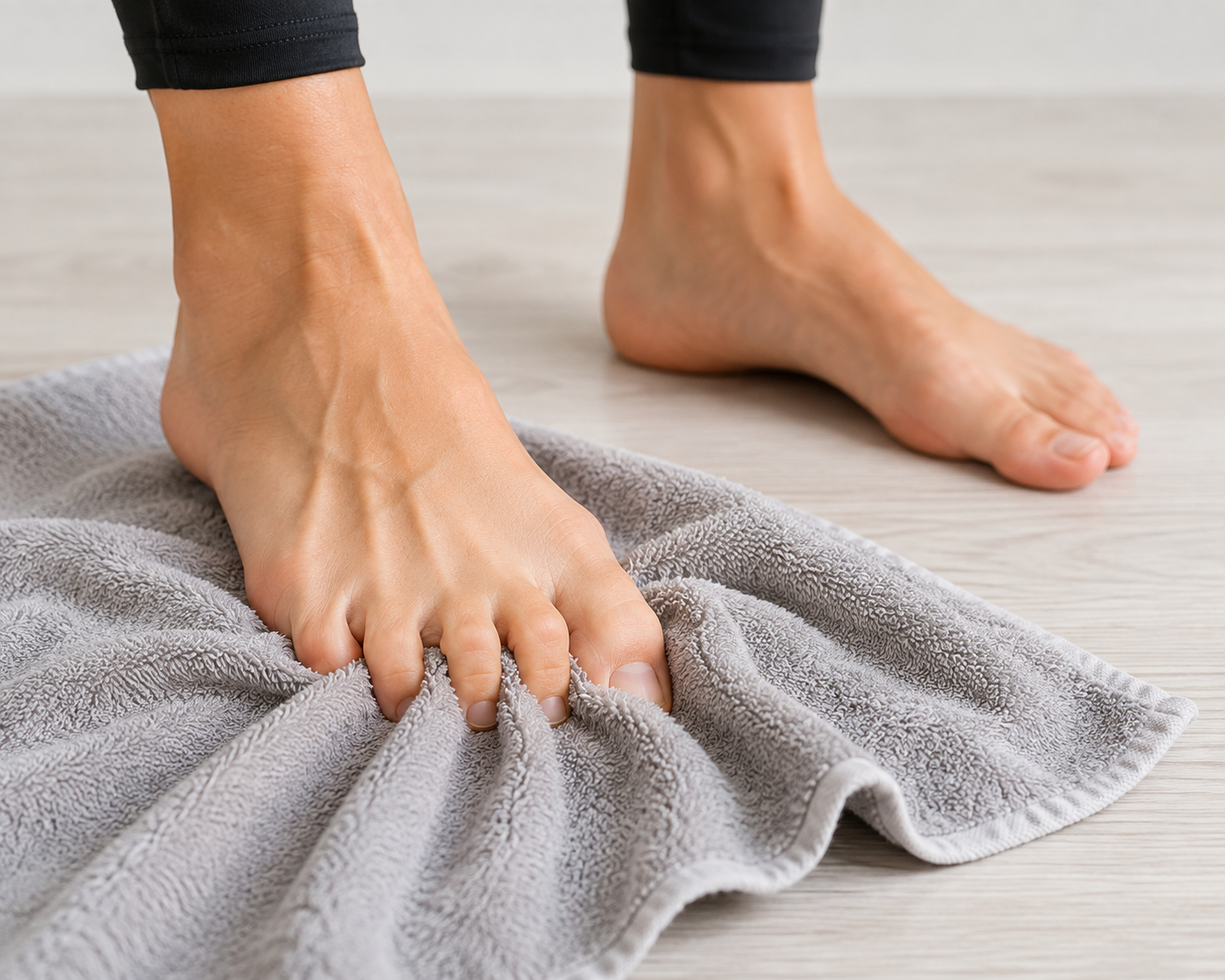
The exercises that help fallen arches aren’t exotic. What matters more than the specific movement is the progression: starting at a load your foot can currently tolerate, staying there long enough to adapt, and only then moving forward.
A general progression looks something like this:
- Activation work. Short foot exercises and towel scrunches to wake up the intrinsic muscles that support the arch.
- Isolated strengthening. Resisted inversion work and heel raises that target the posterior tibial tendon directly.
- Loaded standing work. Single-leg balance and controlled heel raises that ask the arch to hold its position under body weight.
- Dynamic and functional loading. Step-downs, walking lunges, and eventually gait-specific drills that mimic the demands of daily walking or running.
A reasonable rule of thumb here: keep discomfort at or below about a 4 out of 10 during and after exercise, and expect it to settle within about 24 hours. If soreness climbs past that or lingers longer, the last step up in load was probably too much. That isn’t a sign to stop altogether. It’s a sign to back off one notch. We cover this progression in more depth, including specific exercises and how to know if your feet are actually weak, in our article on foot strengthening exercises.
Flare-ups during this process are common, and they don’t mean you’ve undone your progress. Usually they mean the day’s total load, exercise plus work plus errands plus standing around, added up to more than your foot could handle that day. Symptoms can lag a day or two behind the load that caused them, which is why it helps to look at your whole week rather than blaming the most recent workout.
Is Walking Good for Fallen Arches?
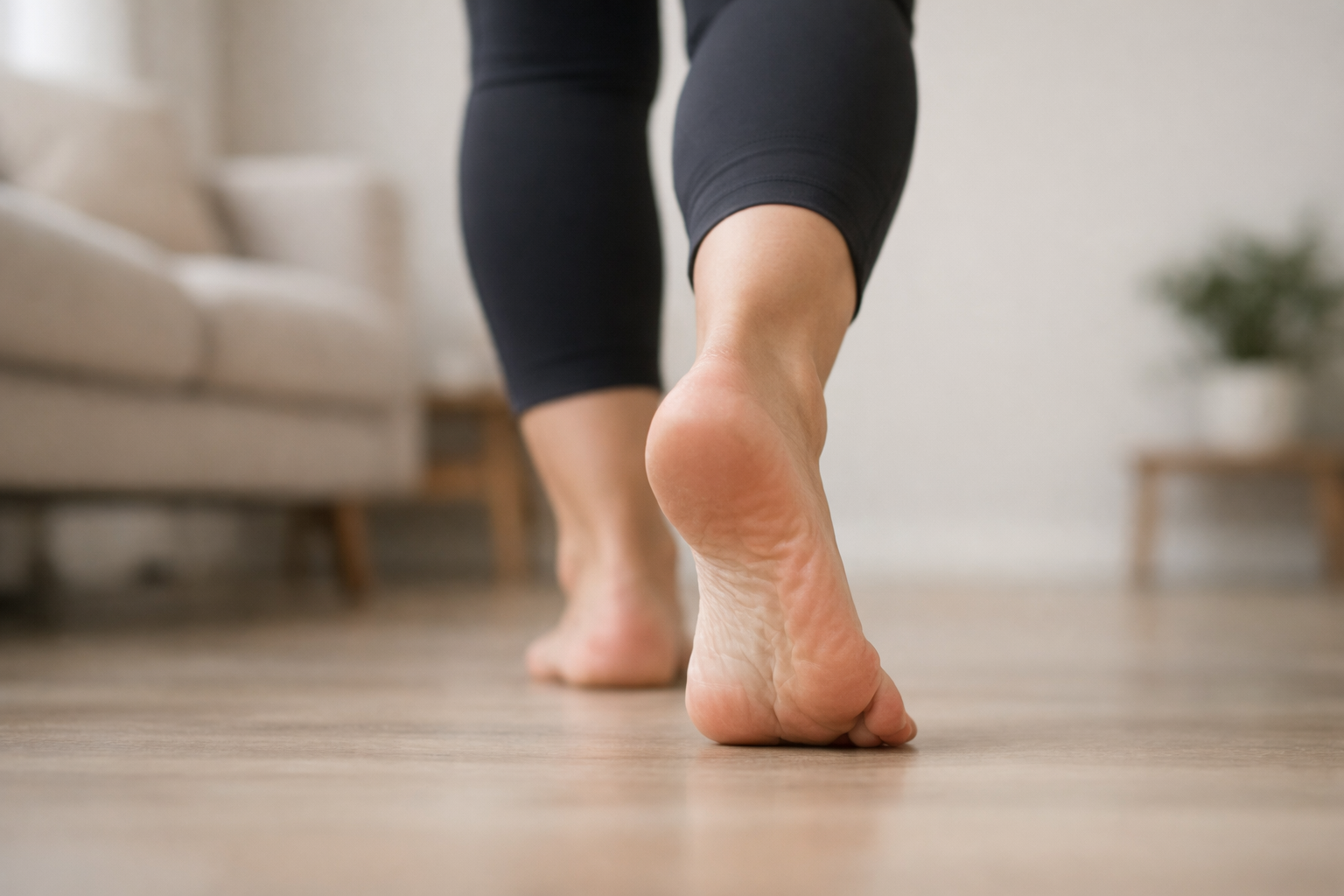
Generally, yes. Walking is a low-level, repetitive load that most feet can tolerate, and it helps build capacity over time when it’s dosed sensibly. The mistake people make runs in two directions: avoiding walking entirely out of fear of “more damage,” or suddenly ramping up mileage the moment they feel a bit better.
Rest has a role here, but only in small doses. Complete rest lets pain settle temporarily because the tissue isn’t being asked to do anything, but it doesn’t build the capacity you need for daily life. The goal is staying as active as you can tolerate, adjusting volume and intensity based on how your feet respond, rather than shutting activity down.
Is Walking Barefoot Good for Flat Feet?
It can be, in moderation. Short amounts of barefoot walking on safe, forgiving surfaces ask the small stabilizing muscles of the foot to work harder than they do inside a supportive shoe, which can be a useful part of a strengthening progression. The key word is gradual. Jumping straight into long barefoot walks or runs before your feet are used to that demand is a common way to trigger a flare-up. Not because barefoot walking is inherently bad, but because the load outpaced what your foot could handle that day.
What Shoes Should You Not Wear With Flat Feet?
There’s no universal banned list, but a few patterns tend to cause trouble for people managing fallen arches:
- Very flat, unsupportive shoes with no structure through the midfoot, worn for long periods of standing or walking
- Worn-out shoes that have lost whatever support they originally had
- Shoes with minimal stability used for high-mileage walking or running before the foot has built up tolerance for that
Footwear is a load-management tool, not a moral judgment. A supportive shoe or an orthotic can reduce the demand on a fatigued or under-recovered arch while you build capacity elsewhere. It’s not a permanent crutch and it’s not cheating. Think of it the way you’d think of a brace during rehab: useful at the right time, less necessary once your capacity improves.
What Age Do Flat Feet Go Away?
This question usually comes up about kids. Many children have flexible flat feet that gradually develop a visible arch by the ages of 6 to 10 as ligaments tighten and muscles strengthen. Some kids never develop a pronounced arch and go on to have completely normal, pain-free feet as adults. A visible arch isn’t required for good foot function.
In adults, flat feet don’t typically “go away” on their own the way they might in childhood. But as I covered above, function and comfort can still improve significantly with the right loading approach.
What Do Podiatrists and Physical Therapists Recommend for Flat Feet?
Recommendations vary depending on whether the flat foot is painful, whether it’s flexible or rigid, and whether it’s a lifelong trait or a newer change. In general, care tends to include some combination of:
- A progressive strengthening program targeting the posterior tibial tendon and intrinsic foot muscles
- Temporary use of supportive footwear or orthotics to manage load while capacity improves
- Gradual, monitored increases in walking, running, or standing tolerance
- Addressing footwear and total daily load (standing job, recent activity changes, body weight) as contributing factors, not something to feel guilty about
Orthotics and supportive shoes aren’t a failure to handle the problem naturally. They’re one tool among several, useful for reducing symptomatic load while the underlying tissue adapts. Injections have a role in specific situations for pain control, but they don’t build capacity on their own.
A Quick Note on Diagnosis
Not all arch or heel pain associated with a lower arch is the same problem. Posterior tibial tendon dysfunction, plantar fasciopathy, and simple flexible flat feet without pain can all look similar from the outside but need different approaches. This can be consistent with several different conditions, and an evaluation is the most reliable way to sort out which one you’re actually dealing with, particularly if the pain is new, one-sided, or getting worse rather than better.
If you’re noticing significant swelling, an arch that seems to be changing shape quickly, or pain that isn’t responding to a few weeks of sensible activity modification, it’s worth having it looked at rather than guessing from an article, this one included.
Many people improve meaningfully with a patient, progressive approach to loading their feet. The principles are sound even when the timeline isn’t fast: build capacity gradually, manage total load rather than avoiding activity altogether, and give the tissue the months it typically needs rather than the weeks you might want it to take.