Arch Pain in the Foot: Is It Plantar Fasciitis or Something Else?
A practical guide to identifying whether arch pain is plantar fasciitis, including self-checks, what it typically feels like, common look-alikes, and what actually helps it heal.
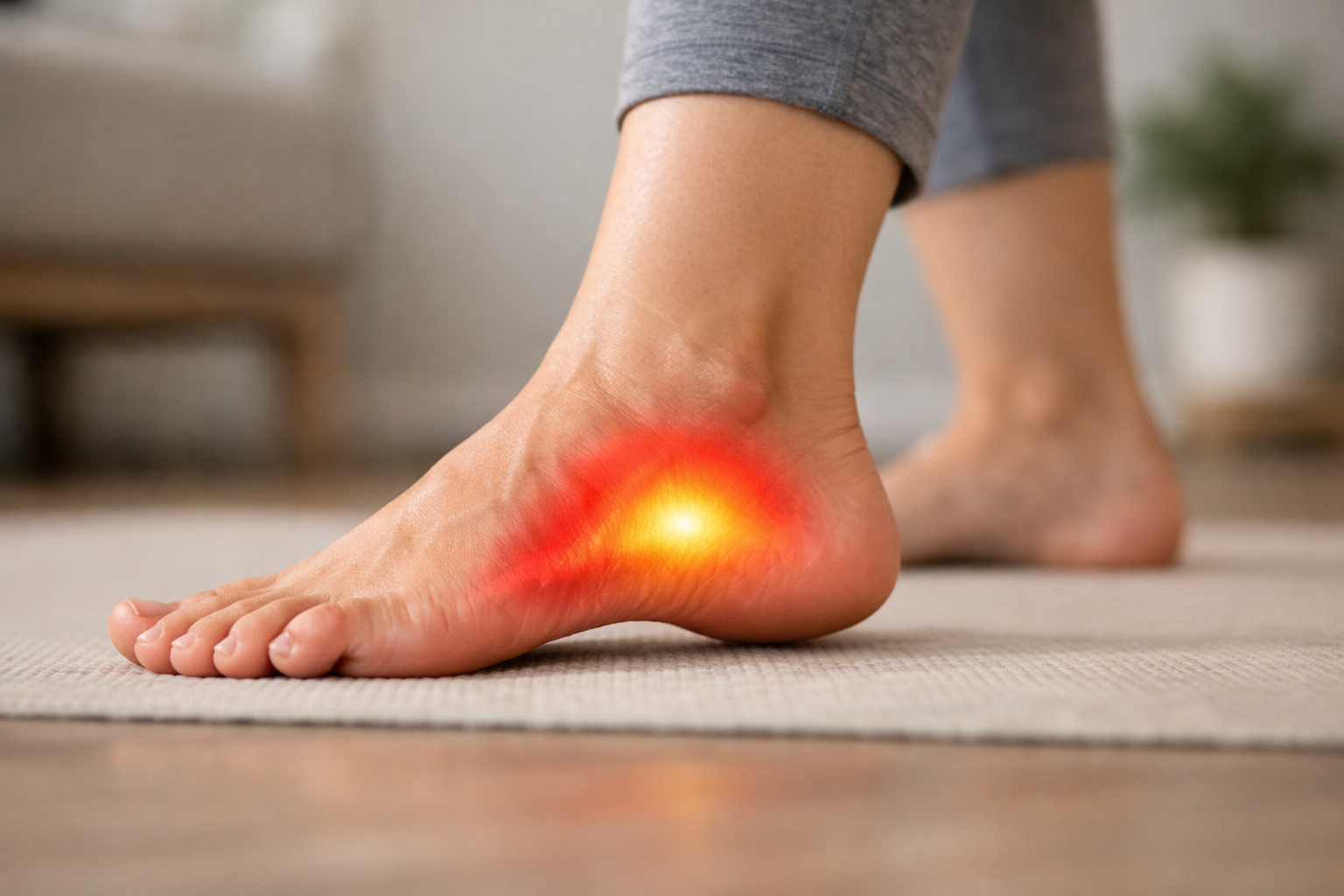
Arch pain sends a lot of people straight to Dr. Google, and plantar fasciitis is usually the first thing that comes up. Sometimes that’s right. Sometimes it isn’t. The arch is a crowded piece of anatomy, and several different structures can produce pain in roughly the same location. Sorting out which one you’re dealing with matters, because the fix isn’t identical for all of them.
This article focuses on how to tell what you’re feeling and how to self-check it at home. If you want a deeper dive into the underlying causes of arch pain and how to rebuild the arch’s tolerance over time, our companion piece on foot arch pain covers that ground in more detail.
What Plantar Fasciitis in the Arch Actually Feels Like
Plantar fasciitis, more accurately called plantar fasciopathy once it’s been around for a while, tends to have a fairly recognizable pattern:
- Pain concentrated at the bottom of the heel, often radiating forward into the arch
- Worse with the first steps out of bed or after sitting for a while
- Eases somewhat after a few minutes of walking, then can return later in the day with prolonged standing or activity
- A deep, bruised, or stabbing quality rather than sharp nerve-like pain
- Tenderness when you press directly into the inner heel where the fascia attaches
That morning pain isn’t a sign the tissue got worse overnight. It’s a sensitivity pattern. The fascia goes hours without load while you sleep, and the first steps reintroduce tension to a tissue that’s temporarily more reactive. That’s a normal feature of an irritated fascia, not evidence of new damage.
If your pain sits more in the middle of the arch, feels burning or electric, or comes with tingling or numbness, that’s less typical of plantar fasciitis and worth paying attention to as a possible sign of something else.
How to Self-Test for Plantar Fasciitis
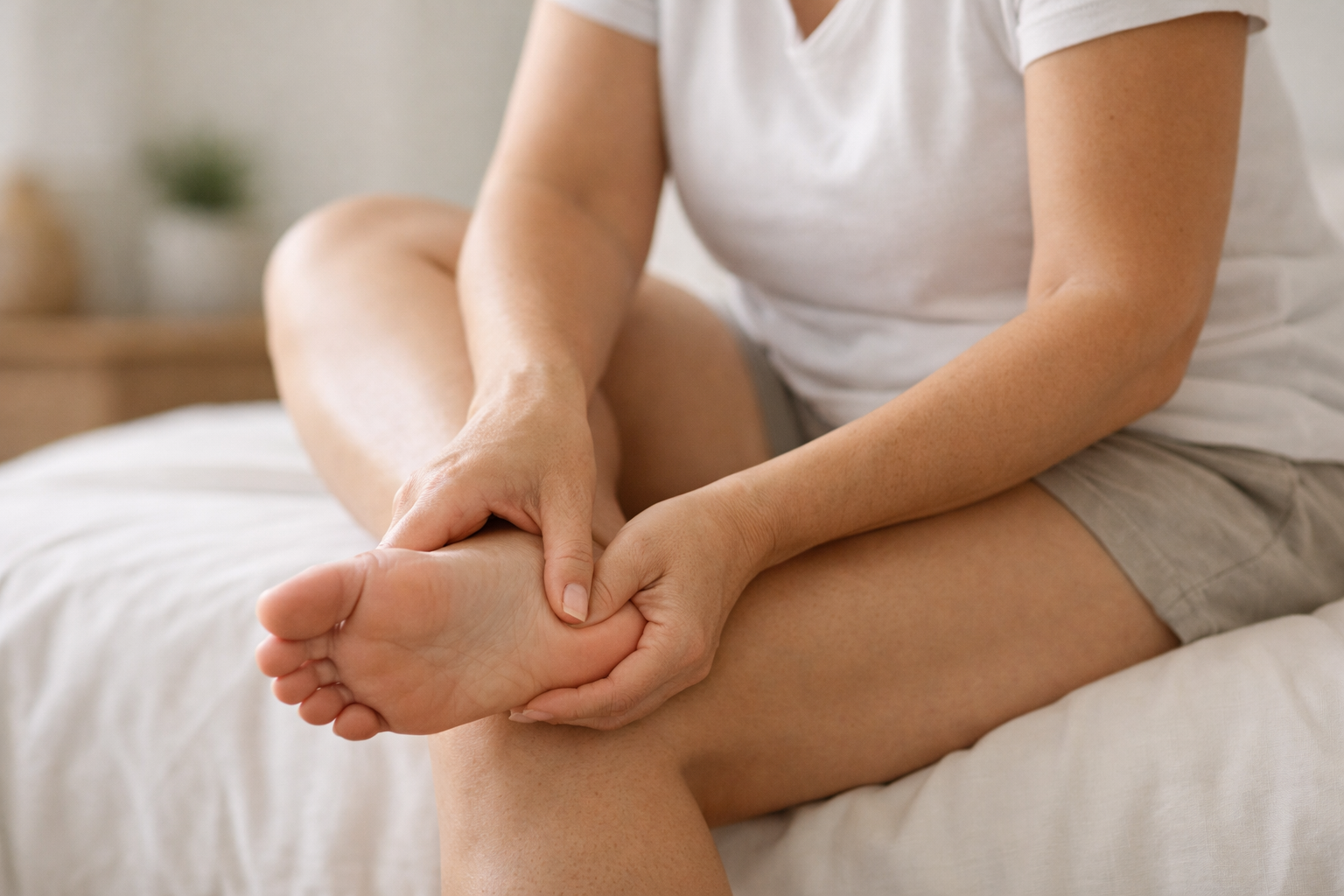
A few simple checks at home can help you get a sense of what’s going on, though they don’t replace a hands-on evaluation.
The windlass test. Sit down, pull your big toe upward toward your shin while keeping your heel on the floor, and see if that reproduces pain along the arch or heel. Pulling the toe up tightens the fascia, and if that recreates your familiar pain, it points toward the fascia as the source.
The first-step test. Notice what happens the moment you stand up after being off your feet for a while. Sharp heel pain that eases within a few minutes of walking is a classic plantar fasciitis pattern.
Direct palpation. Press your thumb into the bottom of the heel, slightly toward the inner side, where the fascia attaches to the heel bone. Reproducing your pain there is another supportive sign.
None of these tests are diagnostic on their own. This can be consistent with plantar fasciitis without being a certainty, and a physical therapist or physician can combine these findings with a broader exam to sort out what’s actually happening.
What Gets Mistaken for Plantar Fasciitis
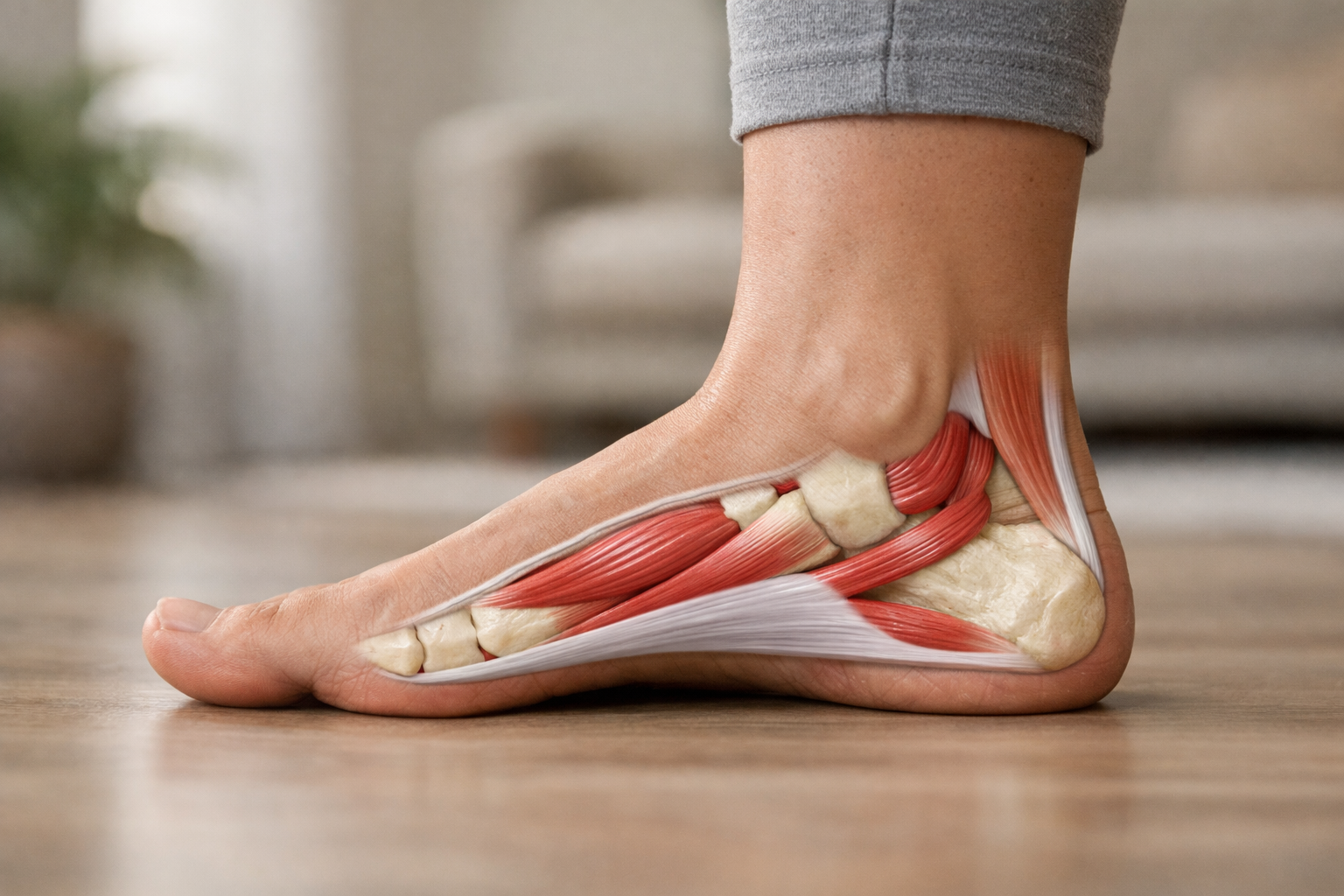
A surprising number of conditions overlap with plantar fasciitis symptoms. A few of the more common ones:
- Tibialis posterior tendinopathy. Pain tends to run along the inner ankle and into the arch, often worse with pushing off during walking, and may come with a flattening of the arch over time.
- Tarsal tunnel syndrome. A nerve entrapment near the inner ankle that can cause burning, tingling, or numbness in the arch, sometimes worse at night, distinctly different from the deep ache of fasciitis.
- Arch strain or plantar fascia tears. More acute in onset, often tied to a specific event like a hard landing, with swelling and bruising rather than the gradual buildup typical of fasciopathy.
- Stress fractures of the midfoot bones. Pain that worsens steadily with activity and doesn’t ease with warming up, sometimes with focal swelling.
- Fat pad atrophy. More common with age or after years on hard surfaces, producing a bruised feeling directly under the heel with less of the sharp first-step pattern.
Not all heel or arch pain is plantar fasciitis, and these look-alikes are common enough that an evaluation is worth it if your symptoms don’t fit the typical pattern or aren’t improving with reasonable load management.
Why Did I Suddenly Get Plantar Fasciitis?
“Sudden” is often misleading. The tissue usually didn’t fail overnight. It’s more likely that the demand placed on the fascia exceeded its current capacity to handle that demand, and the tipping point happened to land on a particular day.
A new pair of shoes, a jump in mileage, a new job that has you standing on concrete all day, or simply weeks of cumulative wear can all add load faster than the tissue adapts. Body weight, standing jobs, and footwear changes aren’t personal failures. They’re just contributors to the total load on the system, and total load includes everything you do in a day, not just exercise. Symptoms can also lag a day or two behind whatever actually caused them, which is part of why the trigger doesn’t always feel obvious.
What’s the Worst Thing You Can Do for Plantar Fasciitis?
Two opposite mistakes cause the most trouble.
The first is pushing through pain and continuing high-impact activity at full volume, assuming it will just work itself out. That keeps loading a tissue that hasn’t built the capacity to tolerate it.
The second, less obvious mistake is complete rest for weeks or months. Rest reduces sensitivity while the tissue is unloaded, which is why pain often calms down quickly with time off. But it does nothing to build the tissue’s capacity, so pain tends to return as soon as normal activity resumes. Long stretches of avoidance can also lead to deconditioning elsewhere in the foot and calf, which doesn’t help matters.
The better path sits between those two extremes: staying as active as reasonably tolerable while managing load intelligently.
Is Walking Good for Plantar Fasciitis?
Generally, yes, in reasonable amounts. Walking is a moderate, controllable load that most people can tolerate and gradually build on. The goal isn’t to avoid walking, it’s to keep it within a range your foot can handle without a big flare afterward.
A useful general pattern many people use: keep pain at or below about a 4 out of 10 during and after activity, and check in the next day. If pain from a walk settles within roughly 24 hours, that’s often a sign the load was appropriate. If it lingers longer or climbs higher, that’s a cue to scale back slightly, not stop altogether.
What Is the Sock Trick for Plantar Fasciitis?
The “sock trick” usually refers to a night splint sock, a compression sleeve or brace worn to bed that holds the foot in a slightly flexed position overnight. The idea is to keep gentle tension on the fascia while you sleep instead of letting it shorten completely, which some people find reduces that sharp first-step pain in the morning.
It’s a reasonable tool for symptom management, and some people find it genuinely helpful. It doesn’t build tissue capacity on its own, though. Like rest, stretching, or ice, it changes sensitivity temporarily rather than changing the underlying tolerance of the fascia. That distinction matters when you’re deciding how much weight to put on it in your overall plan.
How Do You Fix Plantar Fasciitis in the Arch?
The short answer is progressive loading over time, not a quick fix applied once. A few pieces work together:
- Manage total load first. Identify what’s contributing, whether that’s mileage, standing hours, or footwear, and adjust the volume rather than eliminating the activity entirely.
- Load the tissue gradually. Calf raises, towel scrunches, and progressive standing or walking tolerance work help rebuild the fascia and surrounding muscles’ capacity to handle daily demands. Start low, hold at each level long enough to adapt, then advance.
- Use supportive tools as bridges, not cures. Orthotics, supportive footwear, and taping can reduce strain on the fascia while capacity builds. They have a real role; they just aren’t a substitute for loading.
- Expect a gradual timeline. Meaningful structural adaptation in fascia and tendon tissue often takes somewhere in the range of 8 to 12 weeks of consistent, progressive loading, sometimes longer for cases that have been around a while. Chronic doesn’t mean permanent, it usually just means starting from a lower point and progressing more patiently.
What’s the Fastest Way to Heal Plantar Fasciitis?
There isn’t a shortcut that skips the biology. Anything that promises a fast, complete fix is either managing sensitivity temporarily or overselling what it can do. Ice, stretching, taping, and rest can all reduce pain quickly, which is genuinely useful for getting through a bad day. But the tissue itself changes on a slower timeline, through consistent progressive load, not through any single technique applied once.
The most efficient path is usually the boring one: manage flare-ups sensibly, stay within a tolerable pain range, and stick with a gradual loading progression long enough for the tissue to actually adapt. Many people improve substantially with this approach, and the principles are sound even when progress feels slow week to week.
When to Get It Checked
If your arch pain includes numbness, tingling, significant swelling, pain that’s worsening despite rest, or pain following a specific injury, it’s worth having a physical therapist or physician take a look rather than guessing at home. The same goes for pain that isn’t improving after several weeks of sensible load management. An evaluation can confirm whether this is consistent with plantar fasciitis, identify a look-alike condition, and set you up with a loading plan suited to where your tissue actually is right now.