Best Exercises for Weak Foot Muscles: A Rebuilding Guide
A practical, progressive routine for rebuilding strength in weak feet, plus honest answers on timelines, vitamins, drop foot, and warning signs worth paying attention to.
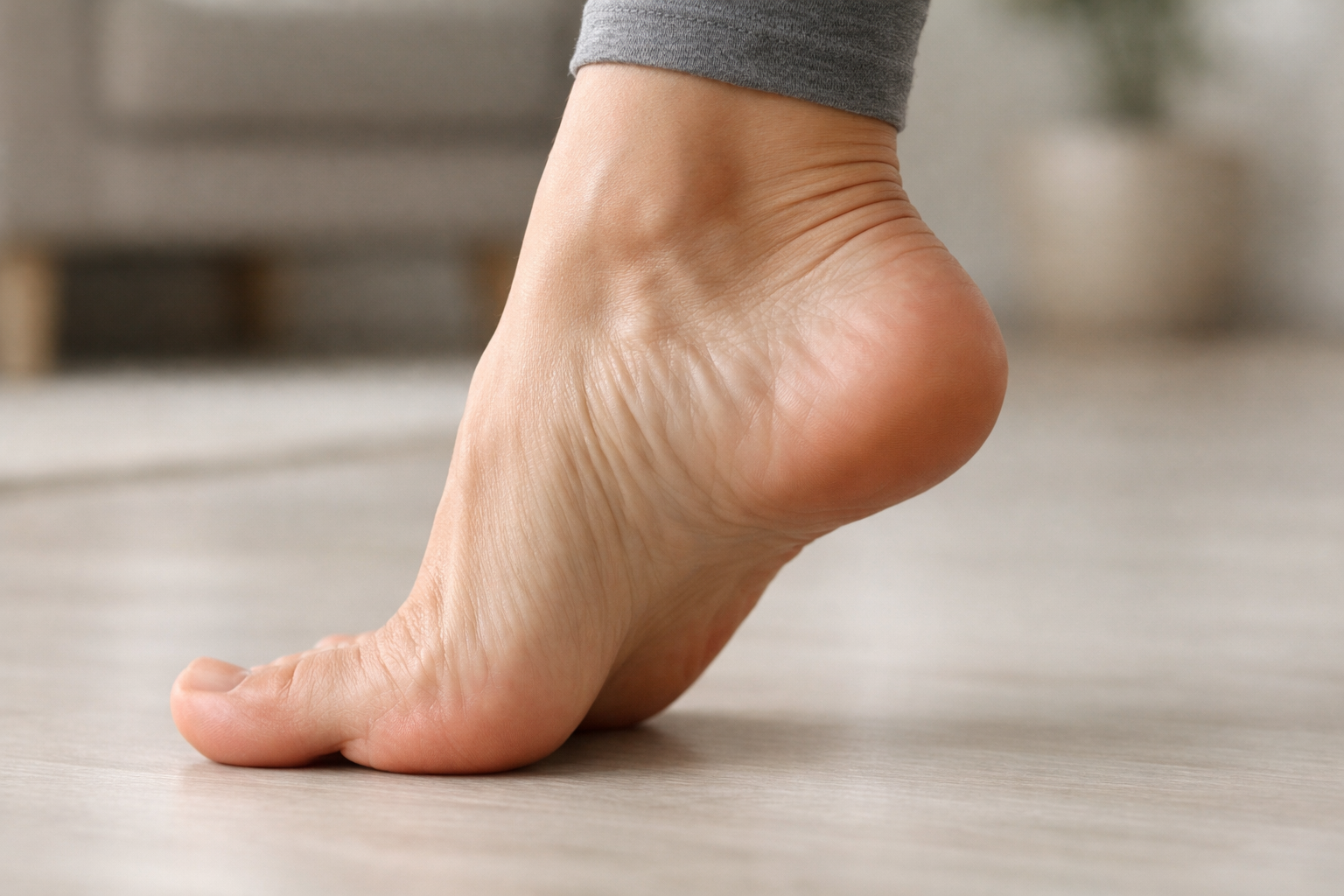
Weak feet don’t usually announce themselves. They show up as tired arches by mid-afternoon, ankles that roll more than they used to, or a nagging ache after a walk that used to feel easy. The good news is that foot muscles respond to training the same way any other muscle does. They just need the right kind of load, applied consistently, for long enough to adapt.
We’ve written elsewhere on this site about why foot capacity matters and how to spot early weakness (see our piece on foot strengthening exercises for that groundwork). This article is about the how: the actual exercises, the order to do them in, and the timeline you can realistically expect.
Can Foot Muscles Actually Be Strengthened?
Yes. The intrinsic muscles of the foot, the small stabilizers that support the arch and control how your toes grip the ground, respond to progressive loading just like your quads or your back. Years of supportive shoes, minimal barefoot time, or simply not asking much of your feet can let these muscles get quiet and underused. That’s not permanent. It’s a capacity problem, and capacity can be rebuilt.
The catch is that strengthening a weak foot takes more than a few sets of towel scrunches done for a week and abandoned. It takes a structured progression, similar to rehabbing any other tissue that’s fallen behind the demands placed on it.
What Causes Weak Muscles in the Feet?
A few common contributors show up again and again:
- Long stretches in highly cushioned or overly rigid shoes that do the stabilizing work the foot should be doing itself
- Reduced walking or standing time (desk jobs, sedentary stretches, recovery from injury elsewhere)
- Prior ankle sprains or foot injuries that led to guarding and disuse
- Age-related decline in muscle mass, which affects small foot muscles along with everything else
- Certain nerve conditions that reduce the signal getting to foot muscles in the first place
Most of these are about total load on the system over time, not something you did wrong. If your job keeps you on your feet all day, or if you’ve recently increased walking or running distance without much lead-in, the demand may simply have outpaced what your feet were conditioned to handle.
Signs Worth Paying Attention To
Weak feet tend to show up as a cluster of small things rather than one dramatic symptom:
- Arches that ache or flatten more by the end of the day
- Toes that don’t seem to grip or splay well when you try
- Frequent ankle rolling or a sense of instability on uneven ground
- Calluses in unusual spots, suggesting the foot is compensating for weak intrinsic muscles
- Balance that feels worse on one leg than the other
None of these confirm a diagnosis on their own. Heel and foot pain can come from plantar fasciopathy, nerve entrapment, stress reactions in bone, or joint issues that have nothing to do with muscle weakness. If symptoms persist, an evaluation sorts out what you’re actually dealing with rather than guessing.
A Progressive Routine for Weak Feet
The order matters here almost as much as the exercises themselves. Jumping straight to hopping or single-leg work before the small stabilizers can fire properly usually just reinforces the same faulty patterns that got you here.
Stage 1: Activation (Weeks 1 to 2 or 3)

The goal here is simply teaching the small foot muscles to fire without recruiting the toes or calf to cheat the movement.
- Short foot / arch doming: Sit with your foot flat on the floor. Without curling your toes, try to shorten the foot by drawing the ball of the foot toward the heel, lifting the arch slightly. Hold 3 to 5 seconds. This is subtle and often frustrating at first; that’s normal.
- Toe splays: Spread your toes apart, hold, release. Many people can’t do this well initially. It improves with repetition.
- Toe yoga: Practice lifting just your big toe while keeping the other four down, then reverse it. This isolates control that’s usually lost from years in shoes.
Aim for short, frequent sets. Two or three minutes, several times a day, beats one long session.
Stage 2: Loaded Isometrics and Basic Strength (Weeks 3 to 6)
Once the activation drills feel less awkward, add load.
- Towel scrunches: Use your toes to scrunch a towel toward you, then push it back out. Add light resistance (a small weight on the towel) once it feels easy.
- Marble or object pickups: Practicing toe dexterity and grip strength.
- Double-leg calf raises, slow and controlled, both with knees straight and slightly bent, to load the different portions of the calf-Achilles-plantar fascia chain that supports the arch.
- Heel walks and toe walks: Short bouts, building tolerance to sustained loading of the foot’s smaller stabilizers.
A reasonable target during this phase is keeping any discomfort at or below about a 4 out of 10 during and after the exercises, and having it settle within roughly a day. If soreness is climbing beyond that or lingering longer, that’s a sign to back off the dose, not the exercise itself.
Stage 3: Dynamic and Single-Leg Loading (Weeks 6 to 10 or beyond)

This is where the strength gains built in the first two stages get tested under more realistic, functional demands.
- Single-leg balance, progressing from flat ground to a folded towel or foam pad
- Single-leg calf raises
- Step-downs off a small step, controlling the descent
- Lateral band walks to bring in hip and ankle stability together, since weak feet rarely operate in isolation from the rest of the kinetic chain
For people returning to running or higher-impact sport, this stage eventually includes light hopping and change-of-direction drills, introduced gradually rather than all at once.
How Long Does It Take to Strengthen Weak Feet?
Early gains, the kind where a movement suddenly feels less awkward, often show up within a couple of weeks. That’s mostly neural: your nervous system getting better at recruiting muscles it had stopped using efficiently. Real structural change in muscle and connective tissue takes longer, generally in the range of 8 to 12 weeks of consistent, progressive loading for many people. Feet that have been weak for years usually need a lower starting point and more patience, not a different approach. Chronic doesn’t mean stuck.
Stopping the moment things feel better, before that structural adaptation has caught up, is one of the most common reasons weakness (and the instability or pain that comes with it) returns a few months later.
Does Walking Strengthen Your Foot Muscles?
Somewhat, but it has limits. Walking provides low-level, repetitive loading that helps maintain baseline capacity, and for someone who’s largely sedentary, simply walking more is a reasonable first step. But walking alone rarely provides enough progressive overload to build meaningful strength in feet that have become significantly deconditioned. It’s a maintenance dose, not a rebuilding program. Pair it with targeted loading and you get both the volume and the specificity that real change requires.
It’s also worth remembering that walking adds to your total daily load alongside whatever exercises you’re doing. A long day on your feet at work, plus a full exercise session, can add up to more than your tissue is ready for that week, even if neither piece alone would have been a problem.
What Vitamins Help With Drop Foot?
Drop foot (difficulty lifting the front of the foot, causing a slap or catch when walking) is usually a neurological issue, most often related to nerve compression or injury affecting the peroneal nerve, rather than a simple muscle weakness that vitamins can correct. Nutrients like B vitamins (particularly B12) support nerve health generally, and a deficiency can contribute to nerve-related symptoms in some people. But taking vitamins is not a treatment for drop foot on its own, and it shouldn’t replace a proper evaluation. If you’re noticing a foot slap, tripping over your toes, or difficulty clearing the ground while walking, that’s a symptom that warrants a clinical assessment rather than a supplement aisle decision.
Foot Symptoms You Should Never Ignore
Most weak-foot symptoms respond well to time and the right exercises. A few signs deserve prompt attention instead of a home program:
- Sudden numbness, tingling, or weakness that’s new or rapidly worsening
- Foot drop or noticeable difficulty lifting the front of the foot
- Significant swelling, redness, or warmth, especially with fever
- Pain that wakes you from sleep or doesn’t ease at all with rest
- An inability to bear weight after a twist, fall, or impact
Any of these, or symptoms that are persistent, severe, or getting worse despite a few weeks of sensible loading, are worth having looked at by a clinician rather than pushed through.
Building Feet That Hold Up
Rebuilding strength in weak feet isn’t about a handful of exercises done for a week. It’s a progression: activation first, then loaded strength, then dynamic and single-leg work, given enough time between stages for actual tissue adaptation to catch up with how the movement feels. The principles are sound and many people improve meaningfully when they stick with the process rather than chasing the fastest fix. Feet that have been weak for years can still get stronger. They just need a starting point that matches where they actually are, not where you wish they were, and the patience to progress from there.