Foot Arch Strengthening Exercises: Building a Stronger Base
Your arch is a living structure made of muscle, fascia, and bone, and it responds to training the same way the rest of you does. Here's how to build arch capacity, what to expect week to week, and how footwear, walking, and rest actually fit in.
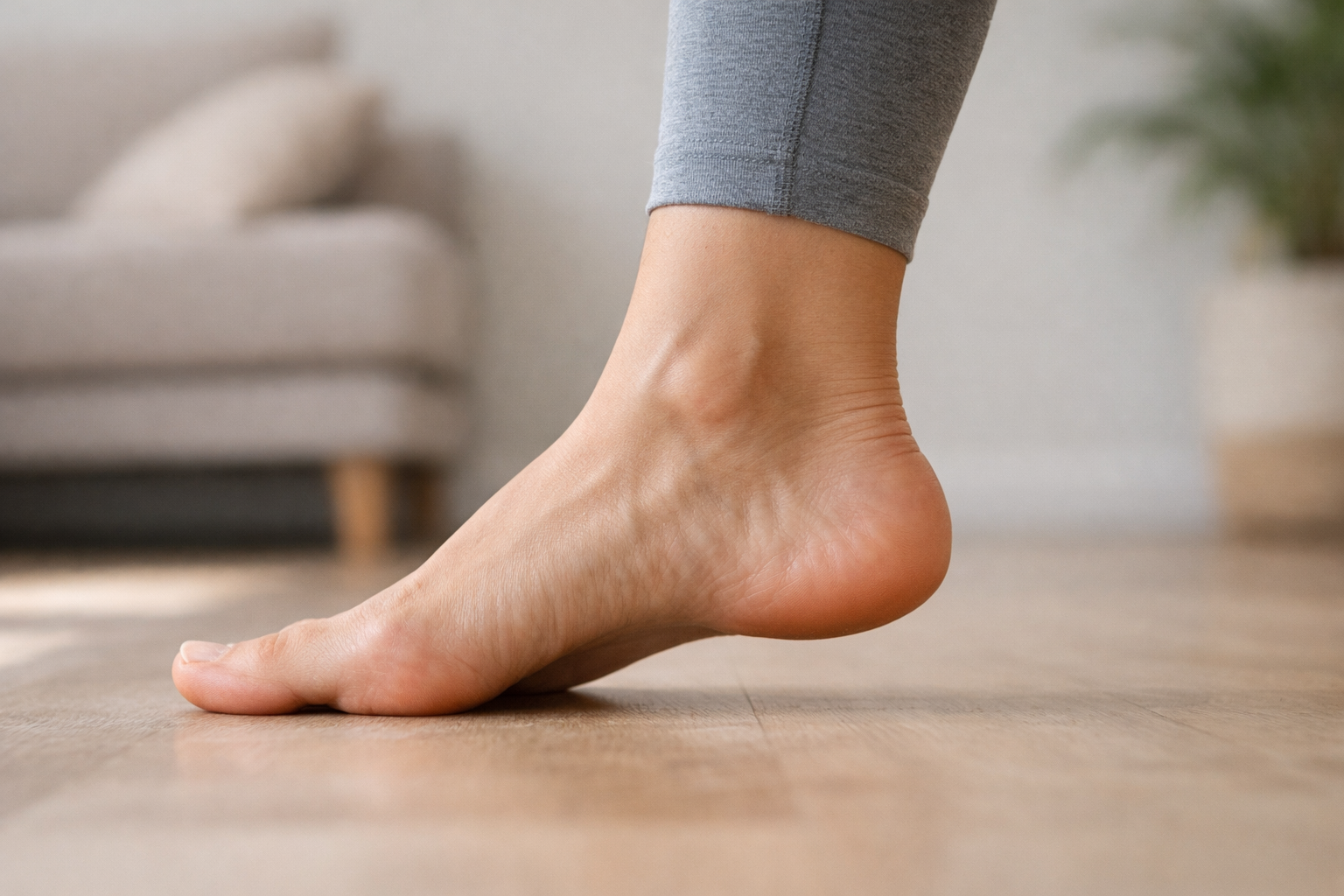
Your arch isn’t a fixed architectural feature, like a beam holding up a house. It’s a living structure built out of bone, ligament, fascia, and a network of small muscles that all work together every time your foot hits the ground. When that system can handle what you’re asking of it, walking and standing never even cross your mind. But when the demand goes up (standing all day, more mileage, new shoes, some extra body weight, an old injury) faster than what the tissue can currently handle, the arch starts to feel the strain. Arch strengthening exercises are one of the main tools we use to close that gap.
Can You Strengthen the Arch of Your Foot?
Yes. The muscles that support your arch, especially the small intrinsic muscles along the sole of the foot and the posterior tibial muscle that runs up the inside of your ankle, respond to load the same way any other muscle does. Give them a consistent, progressive stimulus and they get stronger and more resilient over time.
It helps to separate two ideas here. Strength is how much force a muscle can produce. Capacity is broader. It’s your tissue’s ability to tolerate a specific task, like standing for eight hours or running three miles, without breaking down. Strengthening exercises build both, but capacity is really what determines whether your feet hold up during a long shift or a long run.
The Exercises
These are the exercises I reach for most often when building arch capacity. None of them need equipment beyond a towel or a few small objects, and all of them can be scaled up or down depending on where you’re starting.
Short foot exercise. Sit or stand with your foot flat on the floor. Without curling your toes, try to shorten your foot by drawing the ball of the foot toward the heel, lifting the arch slightly off the ground. Hold for a few seconds and release. This targets the small intrinsic muscles directly, and it’s often the first exercise I give people, because it teaches the arch to activate under low load before we add anything more demanding.
Toe yoga. Keep your foot flat and practice lifting just your big toe while the other four stay down, then reverse it. Sounds simple. It usually isn’t, at least not at first. This builds the independent toe control that a stable arch depends on.
Towel scrunches. Lay a small towel flat on the floor under your foot and scrunch it toward you using your toes, then push it back out. Same intrinsic muscles, worked through a fuller range of motion.
Marble or object pickups. Pick up small objects (marbles, a pencil, a washcloth) with your toes and drop them into a cup. Low load, high repetition, easy to do daily without eating up much time.
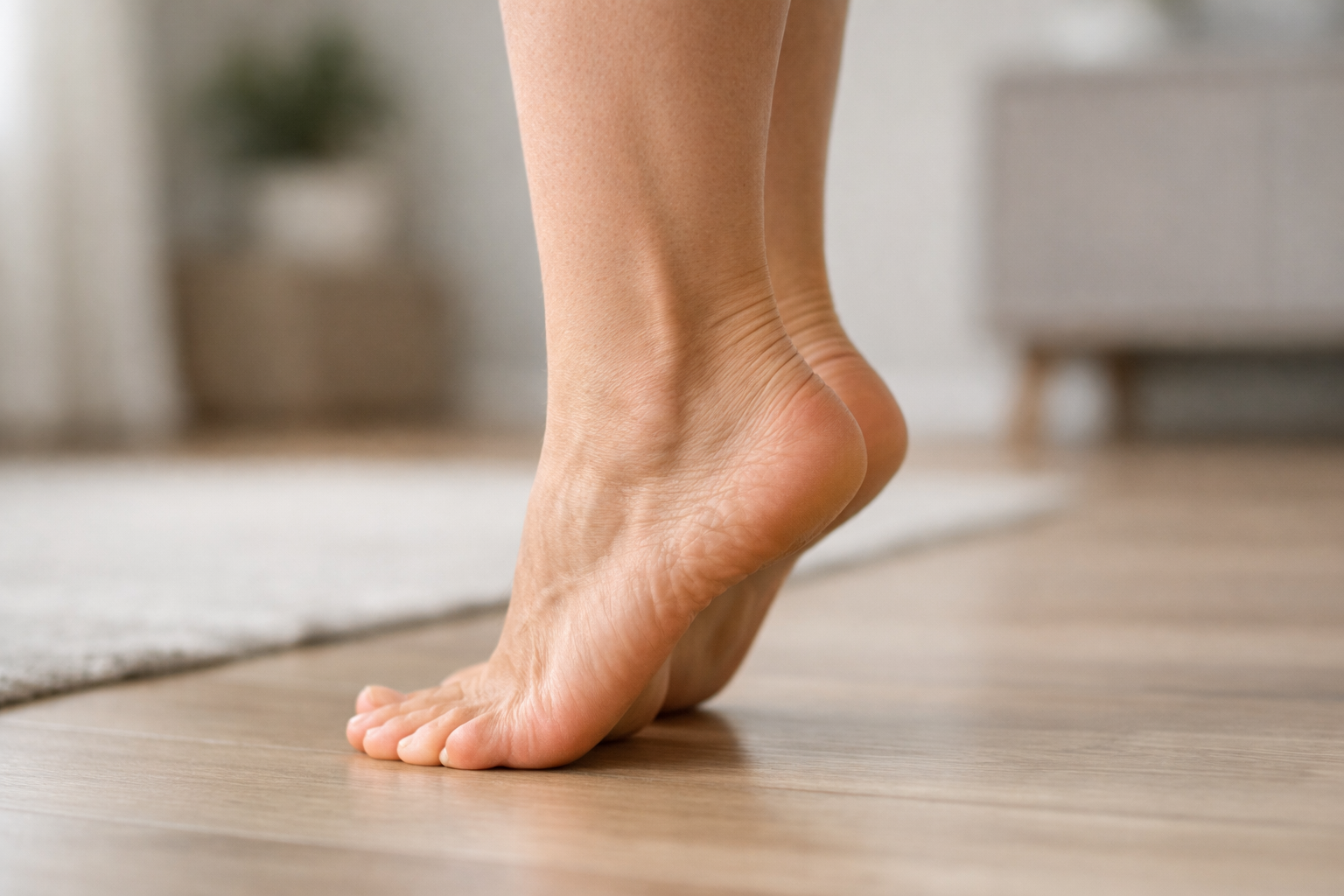
Calf raises. The calf and Achilles play a bigger role in supporting your arch than most people expect, since the posterior tibial tendon that helps hold the arch up shares a functional line with the calf complex. Start with double-leg raises, both feet on the ground, and move to single-leg as your capacity improves. Controlling the lowering phase slowly matters just as much as the lift itself.
Heel and toe walking. Walking short distances on your heels, then on your toes, loads the muscles on both sides of your lower leg and foot in ways ordinary walking doesn’t.
Arch lifts (doming). Stand with feet flat and roll your weight slightly toward the outside edges of your feet, keeping your heels and toes in contact with the ground, lifting the arch without curling your toes. This is basically the short foot exercise under more load.
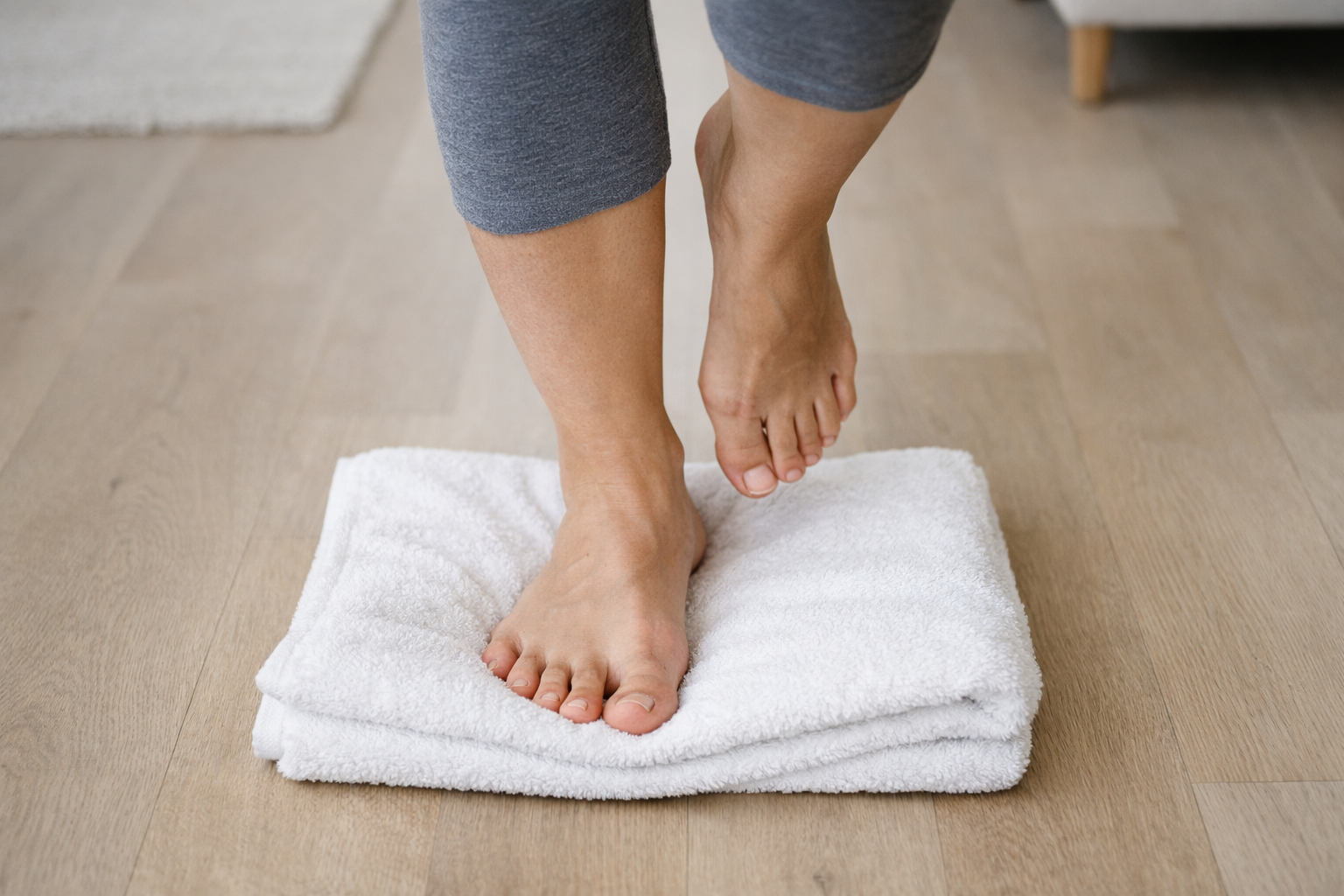
Balance work. Single-leg standing, first on firm ground and later on something unstable like a folded towel or cushion, forces the foot’s stabilizing muscles to fire continuously instead of in isolated reps. That carries over directly to real-world walking and standing.
Progression Matters More Than the Exercise List
Any of these exercises can help, and none of them will help much if you do ten reps once and call it done. The principles here are sound: start at a level that’s genuinely easy, stay there long enough for the tissue to adapt, and only then add reps, sets, or resistance.
A few general patterns are worth knowing, though think of them as rules of thumb rather than promises. Many people do well keeping discomfort at or below about a 4 out of 10 during and after these exercises. If soreness from a session is still hanging around a full day later, that’s usually telling you the dose was more than your tissue could absorb that week, not that the exercise is wrong for you. Meaningful structural adaptation in muscle and connective tissue typically takes something like 8 to 12 weeks of consistent, progressive loading. The improvement you notice in the first couple of weeks is often your nervous system learning the movement pattern, not the tissue itself getting stronger yet, which is exactly why people who stop as soon as symptoms calm down tend to see things creep back.
What Is the Most Common Cause of Fallen Arches?
Fallen or flattening arches usually come from a mix of things rather than one single cause: the natural laxity of ligaments in some people, years of weight-bearing load, footwear that offers little structural support, and reduced capacity in the muscles and tendons that hold the arch up, particularly the posterior tibial tendon. Body weight and standing jobs are frequently part of the picture too, but that’s about total load on the system, not a personal failing. The same foot can handle a certain amount of standing one week and struggle with that same amount the next, depending on what else is going on: sleep, other activity, footwear, even how much time you spent barefoot on hard floors.
Is Walking Good for Fallen Arches?
Generally, yes, and staying as active as you can tolerate usually beats resting completely. Complete rest lowers your tissue’s capacity over time, so when you do return to walking, the same distance feels harder than it used to. That said, if a specific amount of walking consistently causes pain that lingers, that’s telling you the current volume is more than your capacity right now, not a reason to stop moving altogether. The better move is usually to adjust the dose, shorter walks, more frequent breaks, supportive footwear, while you build strength underneath it.
Will Walking Barefoot Help Flat Feet?
Barefoot walking on soft, forgiving surfaces, in small doses, can help wake up the small foot muscles that supportive shoes tend to do the work for. But jumping straight into long barefoot walks on hard floors, especially if your feet aren’t used to it, can just as easily overload a system that hasn’t built the capacity for it yet. If you want to try it, treat it like any other new load: small amounts, gradually increased, and pay attention to how your feet feel the next day.
What Are the Best Shoes for Collapsed Arches?
There’s no single “best” shoe that works for every foot, but a few general qualities help most people: a firm heel counter, moderate arch support or the option to add an insert, and a sole that doesn’t fold in half at the midfoot when you twist it. Footwear is a load-management tool, not something that resolves the underlying problem on its own. It can take some strain off a fatigued arch while you build strength, but shoes alone rarely solve the underlying capacity deficit.
How Long Does a Fallen Arch Take to Heal?
This depends heavily on how long the arch has been under-supported and how consistent you are about rebuilding it, so there’s no single number that fits everyone. Chronic doesn’t mean permanent, but it usually means starting from a lower baseline and progressing more patiently rather than expecting things to turn around quickly.
A Quick Note on Pain That Doesn’t Fit This Picture
Arch and heel pain can come from several different sources, including plantar fasciopathy, posterior tibial tendon dysfunction, nerve irritation, or stress reactions in the bone, and they don’t all respond to the same approach. If your symptoms are severe, getting worse despite rest, or come with swelling, numbness, or pain that wakes you at night, it’s worth having a physical therapist or physician take a look before you build a home exercise program around a guess. For everyday arch fatigue and mild flattening, though, many people improve meaningfully with a consistent, progressively loaded exercise routine like the one outlined here.