How to Choose Insoles and Arch Support for Heel Pain
A practical guide to picking insoles for plantar fasciitis, what arch support can and cannot do, and how to use inserts as part of rebuilding what your foot can handle rather than as the whole plan.
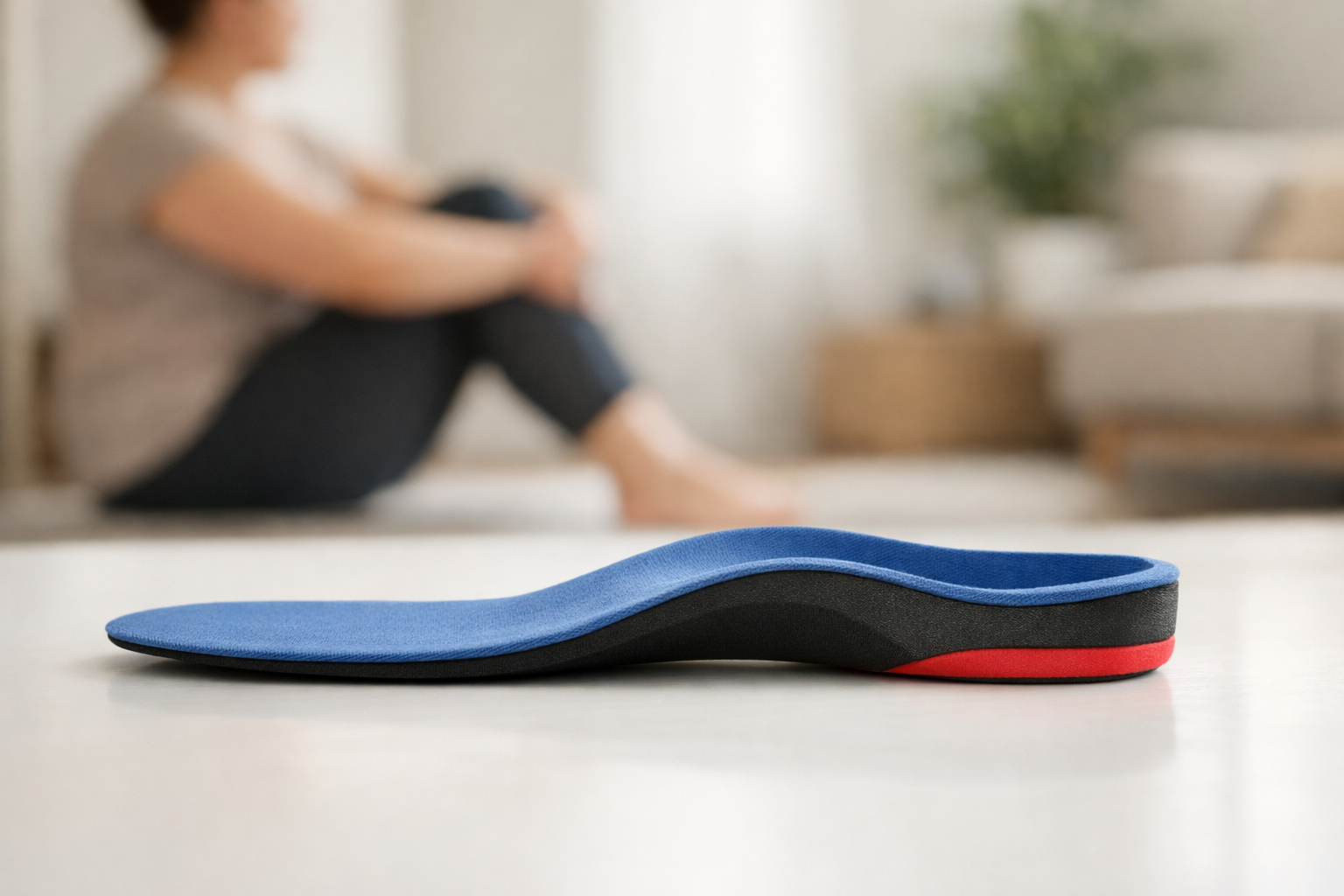
You’re standing in the pharmacy aisle, or scrolling a page of insoles with 40,000 reviews, and every single one says it’s the one podiatrists recommend. Some are firm plastic. Some are squishy gel. Some cost twelve dollars and some cost sixty. Your heel has been hurting for three months and you’d like someone to just tell you which box to buy.
I can’t tell you which box. But I can tell you how to think about it, which is more useful, because the reason people cycle through four pairs of insoles isn’t that they keep picking the wrong brand. It’s that an insole is being asked to do a job it can’t do alone.
Let’s sort out what insoles actually do, how to choose one that suits your foot, and where they fit into getting your heel back to normal.
Do insoles work for plantar fasciitis?
Often, yes, in a specific and limited way. And that limitation is the whole point.
Here’s the frame I use for almost everything in the foot. Your plantar fascia has a certain amount it can currently tolerate: so many steps, so many hours standing, so much push-off on a hard floor. Call that its capacity. Then there’s what your day actually demands of it. When demand consistently outruns capacity, the tissue gets irritated and stays irritated. That’s the load versus capacity problem, and it’s the reason heel pain so often shows up after a move, a new job, a training block, or a summer in flat sandals.
An insole works on one side of that equation. It reduces demand. A good one supports the arch so the fascia doesn’t have to work quite as hard at each step, cushions the heel a bit, and spreads pressure over more of the foot. For someone whose tissue is currently overloaded, taking 10 or 15 percent of the strain off can be the difference between an angry foot and a manageable one.
What an insole does not do is raise your capacity. It doesn’t make the fascia thicker, stronger, or more tolerant of load. It makes today easier. That’s genuinely valuable, and it’s also why pain tends to come straight back when the insole comes out, or when the demand goes up again.
So insoles work. They just work as a support, not as a treatment for the underlying problem. Think of them the way you’d think of a well-timed backing-off period: helpful for calming things down, not sufficient for building things up.
What insoles do podiatrists recommend for plantar fasciitis?
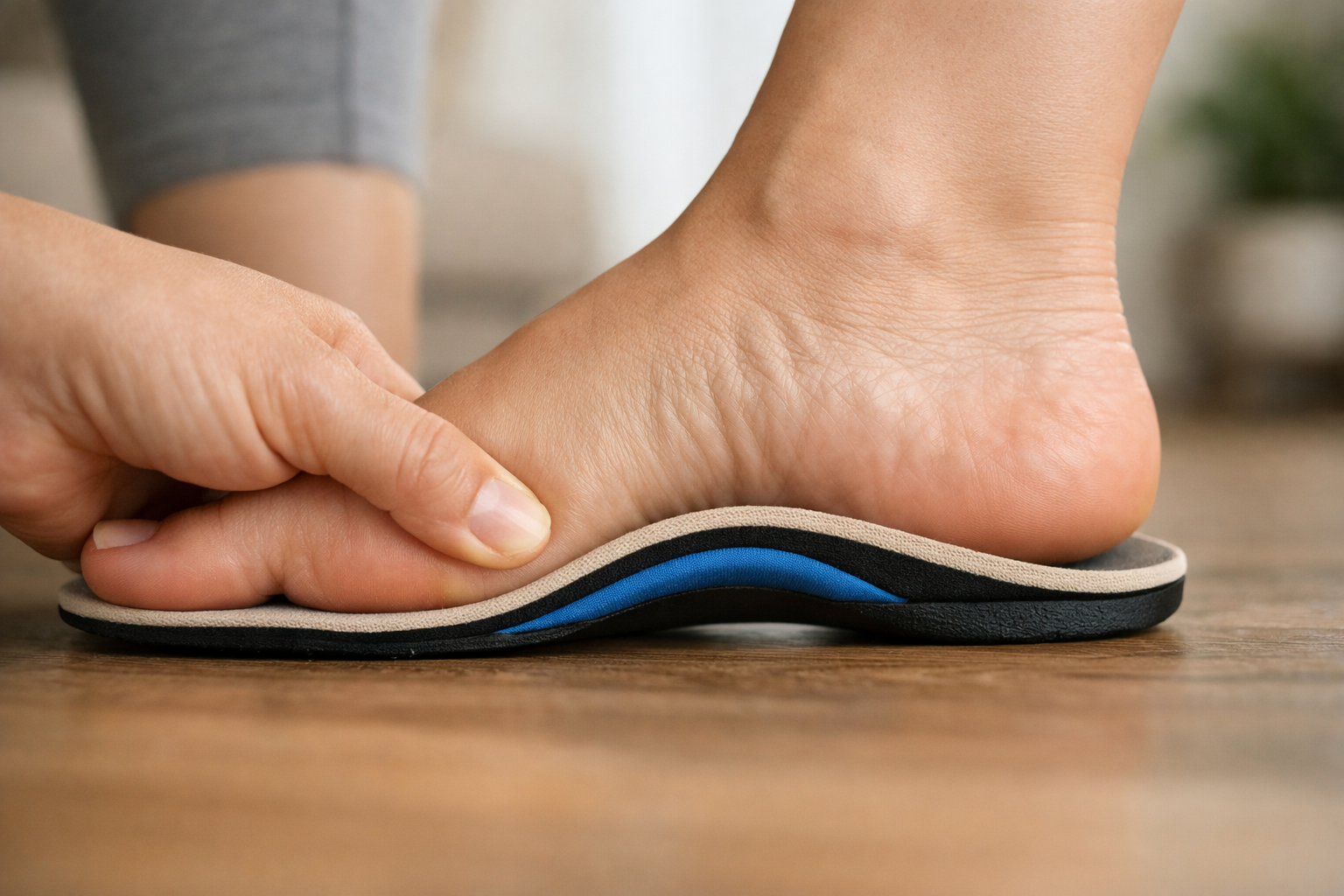
Every brand claims to be the most recommended, and honestly, several of them are reasonable products. Podiatrists, physical therapists, and pedorthists tend to recommend the same general characteristics rather than one specific product, because feet differ enormously.
The features that matter:
Real arch contour. The insole should have a shape that meets your arch, not just a flat foam pad. When you hold it and press the arch with your thumb, it should push back.
A deep, stable heel cup. The cup holds the fat pad of your heel underneath you instead of letting it spread out sideways at impact. This is one of the more underrated features. A stable heel usually feels better than a soft one.
Firmness with a bit of give. This is the part people get wrong most often. Very soft gel feels wonderful in the store and then collapses under body weight by mid-morning, which means the arch gets no actual support. Rock-hard plastic with no cushion can be uncomfortable on the heel and irritating on the edges. You want structure underneath with a thin comfortable top layer.
Full length versus three-quarter. Full-length insoles replace your shoe’s existing liner and tend to sit better. Heel-only cups can help some people, but they can also change how the shoe fits and shift pressure in odd ways.
Shoe compatibility. An insole only works if you can actually get it into the shoes you wear all day. That firm bulky one is useless if it only fits your hiking boots and you spend eight hours in flats.
A word on custom orthotics, since it’s the natural next question. Custom devices can be genuinely useful, particularly when a foot has a structural feature that off-the-shelf shapes won’t accommodate, when the foot is quite rigid or quite flexible at the extremes, or when someone’s job requires long hours on hard surfaces and standard options have already been tried. Custom is not automatically better than over-the-counter, though. Several good studies over the years have compared them without finding a clear winner for typical heel pain. If a twenty-dollar insole lets you walk your dog comfortably while you do the work of building your foot back up, that insole is doing its job.
One thing to look out for: an orthotic that came with no plan for what happens next. Orthotics aren’t the problem. The gap is when the insert becomes the entire treatment, and six months later the foot can still only handle exactly what it could handle before.
How to actually choose one, for your foot
The question isn’t “what’s the best insole.” It’s “what does my foot need less of, and what shoes am I going to wear?”
If your arch is high and fairly rigid, your foot is often not great at absorbing shock. Heel pain in this foot type frequently responds to more cushioning under the heel with moderate arch contact. An aggressive rigid arch can dig in and feel worse.
If your arch flattens noticeably when you stand, you tend to do better with more structure and a firmer arch that actually resists. Cushioning alone gets compressed and stops helping.
If you stand on concrete for a living, prioritize firmness and durability plus real shock absorption. Retail, nursing, kitchens, warehouses, trades. Standing all day is a big cumulative load. Many people in these jobs also do well rotating between two pairs of shoes on alternating days, which changes the loading pattern slightly.
If you’re a runner, be more conservative. Dropping a firm insole into your shoes changes the fit, the volume, and the way your foot loads mid-stride. Try it on shorter easy runs before a long one.
Then test it properly. Wear the insole for a couple of short days first, not a twelve-hour shift on day one. Your foot needs a few days to adjust to a new shape. Mild new awareness in the arch during the first week is common. Pain that builds each day, new pain somewhere else, or numbness means the shape isn’t right for you, and that’s information, not failure.
Give it around two weeks before deciding. If it hasn’t helped at all by then, the answer usually isn’t a more expensive version of the same thing.
What finally worked for people who got better
When someone asks me what finally resolved their plantar fasciitis, they’re usually hoping for a single item. A brand. A stretch. A gadget.
In my experience, when heel pain that’s been hanging around for months finally turns the corner, it’s rarely one thing. It’s that the person stopped only trying to calm the tissue down and started making it capable again.
Calming things down is the first half. Insoles, a temporary reduction in the aggravating activity, more supportive shoes, sometimes a night splint, sometimes taping. All of these reduce sensitivity while the load is lower. Necessary, and often the reason someone can sleep and work.
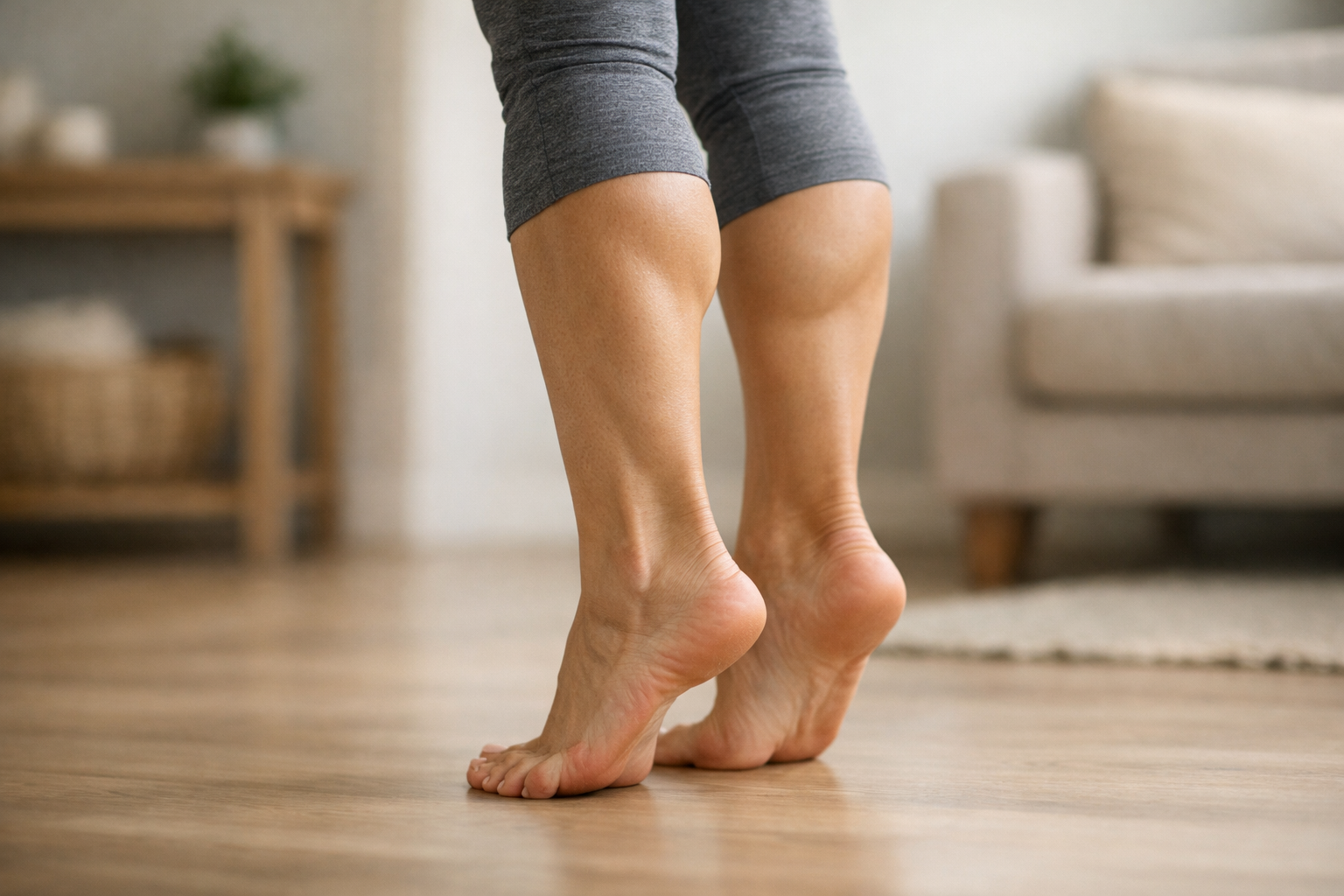
The second half is where the change happens. Loading the fascia, the calf, and the foot muscles deliberately, at an amount the foot can handle, and gradually asking for more over weeks. Heel raises. Progressing to a single leg. Slow, controlled, heavy enough to matter. Adding range at the toes, because the fascia loads through the big toe as you push off. Walking distance built up on purpose rather than by accident.
That’s the difference between feeling better and being better. Rest and stretching reduce sensitivity while the tissue is unloaded, which is exactly why pain reappears the moment load reappears. Structural change in fascia and tendon comes from mechanical loading, repeated over weeks to months. For many people, meaningful tissue adaptation takes something in the range of 8 to 12 weeks of consistent work, and often longer for a problem that’s been there a year.
Recovery is built. An insole can make the building easier. It can’t do the building.
How do you permanently fix plantar fasciitis? And how do you fix it quickly?
These are the two most common questions and they pull in opposite directions, so let me take them honestly.
Quickly: you can often reduce pain fairly quickly. Within a couple of weeks, many people feel noticeably less irritated by removing the biggest source of overload, wearing more supportive shoes, adding an insole, and starting gentle loading. That’s real progress and worth having.
But fast pain reduction and durable capacity are not the same achievement. The most common pattern I see in people whose heel pain keeps coming back is this: symptoms improved, they felt fine, they stopped the exercises and went back to their normal volume, and six weeks later they were back at the start. The pain had resolved. The tissue hadn’t adapted yet. Early improvement tends to be your nervous system getting less protective, which happens quickly. Tissue change lags well behind it.
Permanently is a word I’d rather not use, and not to be evasive. The honest version: many people get back to full activity with no meaningful symptoms and stay there. The way that holds is by ending up with a foot whose capacity comfortably exceeds what daily life asks of it, so there’s margin. If your foot can handle exactly the amount you walk and not one step more, any busy week will tip you over.
So the durable answer isn’t a permanent fix, it’s a bigger buffer. And where insoles fit in is that some people keep using them long term simply because they like them, and that’s fine. Others use them for a few months, build capacity, and gradually go back to normal shoes for most of the day. Neither is more virtuous. If you want to come out of the insole eventually, wean out of it gradually while your strength work continues, rather than removing it all at once.
What’s the worst thing you can do for plantar fasciitis?
Two candidates, at opposite ends.
The first is complete rest for weeks on end. Backing off aggravating activity for a short stretch is often exactly right, and I’ll recommend it. But the fascia is living tissue that adapts to what you ask of it, and prolonged unloading makes it, your calf, and your foot muscles less capable, not more. You feel better because nothing is being asked of the tissue. Then you return to normal life with a lower capacity than you started with, and it hurts more than before. Rest equals rust.
The second is pushing straight through significant pain with no adjustment at all. Running the same mileage on an already irritated fascia, day after day, hoping it toughens up. Tissue does adapt to load, but only when the load is high enough to stimulate and low enough to recover from.
The useful zone sits between them. As a general guide, many people do well keeping discomfort at or below roughly a 4 out of 10 during activity, and, more importantly, watching whether the foot settles back to its usual baseline within about a day. If your heel is grumpy for an hour after a walk and then fine, that walk was probably fine. If it’s worse the next morning and the morning after, the dose was too high. Adjust and go again.
Also worth mentioning, because I hear it often: repeated aggressive rolling on a hard ball or a foam roller until it hurts. Some gentle self-massage can genuinely reduce sensitivity for a while. Grinding an inflamed area until you wince tends to just leave it more irritated.
Is there a pressure point that relieves plantar fasciitis?
There isn’t a switch. But there are places that often feel good to work on, and the reason is worth understanding.
Most people find tender spots along the inside of the heel where the fascia attaches, through the arch itself, and up in the calf, particularly the deeper calf muscles behind the shin. Pressure or massage there can reduce how sensitive the area feels, sometimes noticeably. That’s a real effect. It’s a change in how your nervous system is interpreting signals from the area, and it’s temporary, usually minutes to hours.
Use it that way and it’s useful. Roll the arch gently over a frozen water bottle or a tennis ball for a couple of minutes to take the edge off before you walk, and it may make the walk more comfortable. Just don’t expect the tender spot to be the cause. It’s where you feel the problem, not why the problem exists.
The calf connection is real, though, and worth more attention than most people give it. A tight, weak calf changes how much work your foot has to do at every push-off. Calf strength work is one of the more reliable pieces of heel pain recovery.
Where insoles actually belong in your plan
Put it together and insoles have a clear job, just a smaller one than the marketing suggests.
Use them to buy room. If your heel is very irritated, an insole plus a supportive shoe can lower the daily demand enough that you’re not re-aggravating the tissue every single day. That’s what makes loading work possible.
Don’t let them be the whole plan. The insole reduces demand. Loading raises capacity. You need both, and only one of them changes what your foot can do.
Pay attention to the rest of the shoe. People obsess over the insert and ignore the shoe it goes into. A shoe that’s worn out, too flexible through the middle, or completely flat will undo a lot of what a good insole is trying to do. Sandals and flats are a common hidden factor in summer flare-ups.
Remember your total load. The exercises are a small slice of what your fascia handles in a day. Standing, walking, work, the airport, the yard, all of it counts, and symptoms often lag a day or two behind the load that caused them. If your foot flares on Wednesday, look at Monday and Tuesday. When something has to increase, try not to increase everything at once.
Expect the exercises to feel unremarkable. Slow heel raises don’t look like treatment. They are, though, and the response is what tells us when to add weight, add reps, or add a step. The calendar gives structure. The foot’s response decides the pace.
A note on what else could be going on
Not all heel pain is plantar fasciitis, and insoles won’t help much if it isn’t. A pinched nerve on the inside of the ankle, an irritated fat pad under the heel, a stress reaction in the heel bone, an Achilles problem at its attachment, and referred pain from the low back can all produce heel or arch pain that looks similar from the outside. If you want to work through how to tell these apart, the article on foot arch pain on this site goes into it in more detail.
Also, two things that get more airtime than they deserve. A heel spur on an X-ray is usually a consequence of long-term stress on the area, not the source of your pain, and plenty of people have one with no symptoms at all. Thickened fascia on ultrasound reflects tissue that has responded to stress. Neither one determines how your recovery goes. A scan can show structural changes, but it doesn’t always tell us why you hurt.
Worth getting looked at properly if: the pain is severe, it started after a specific injury, you have numbness or tingling or burning, the heel is swollen or red or warm, night pain wakes you, or you’ve been consistent with sensible loading for a couple of months and nothing is shifting. An evaluation sorts out what’s actually driving it, and the plan gets a lot more efficient once you know.
If you take one thing from this
The reason four pairs of insoles didn’t solve your heel pain isn’t that you haven’t found the right insole. It’s that insoles work on how much your foot is being asked to do, and nothing about them changes how much your foot can do.
Buy a reasonable one with a real arch shape and a firm heel cup that fits the shoes you actually wear. Use it. And then start the slower work of making your foot capable of the walking, standing, and running you want back, because that’s the part that holds.