Women's Orthopedic Shoes: What They Do and When to Consider Them
A plain-language look at what actually separates women's orthopedic shoes from regular footwear, what the features do and don't do, and how to judge whether a shoe is helping your feet or just cushioning them.
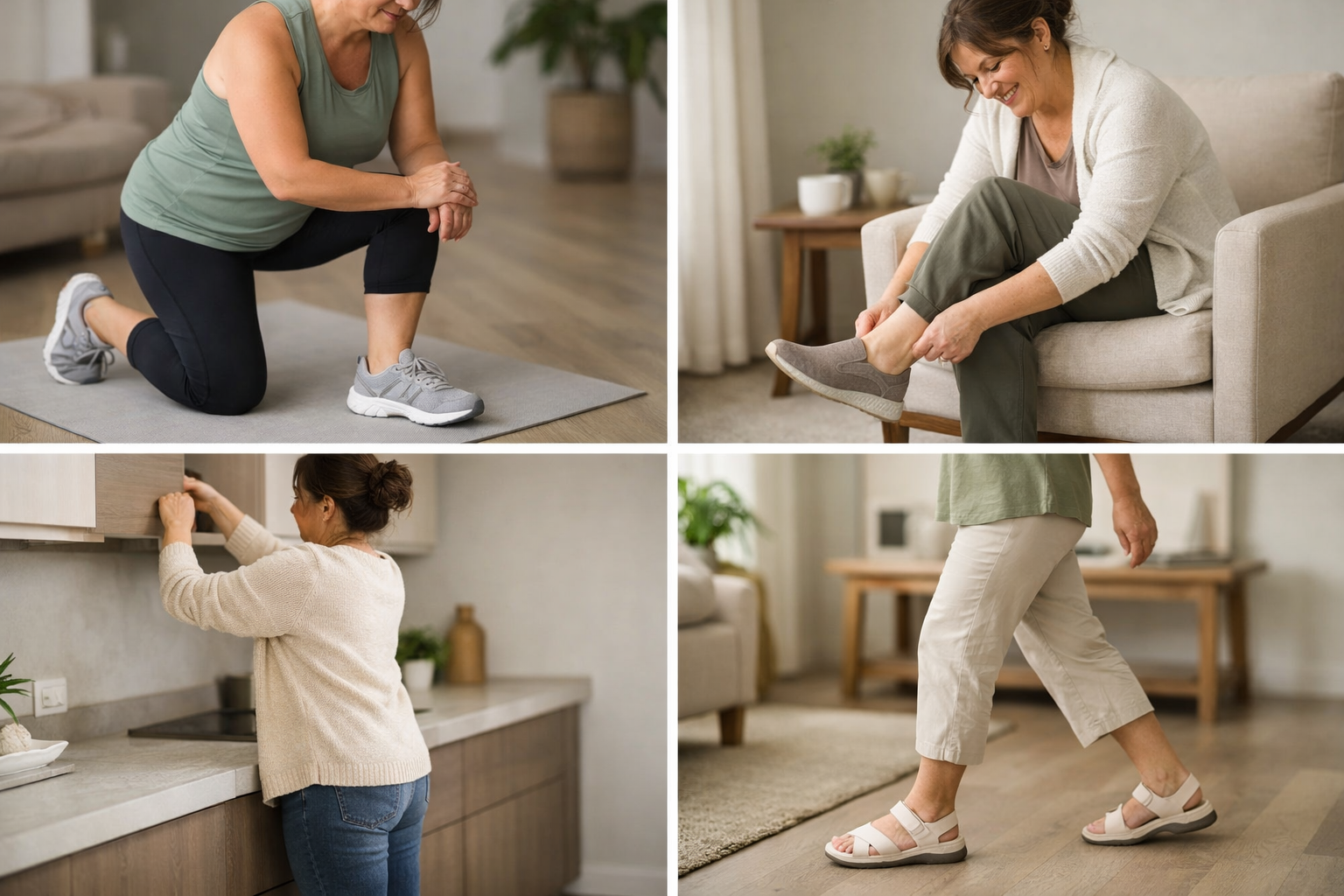
Most people who ask me about orthopedic shoes are not shoe enthusiasts. They are standing on a tile floor for nine hours, or their heel is screaming for the first twenty steps in the morning, or their bunion has finally won the argument with every pair they own. They want to know if there’s a shoe that will make this stop.
So let’s answer that honestly, because the answer is more useful than the marketing version.
A shoe changes how load is distributed across your foot and how much work different tissues have to do with every step. That’s real. That matters. A shoe cannot rebuild what your foot is able to tolerate. Those are two different jobs, and confusing them is why so many people end up with a closet full of expensive footwear and the same pain they had two years ago.
What actually makes a shoe “orthopedic”
There’s no licensing board for the word. Any company can print it on a box. But when the term is used well, it usually points to a set of construction choices that differ from a standard fashion or athletic shoe.
A wider and deeper toe box. Most women’s shoes taper to a point well before your toes do. A shoe built for foot health leaves your forefoot the width it actually is. This matters enormously for bunions, hammertoes, neuromas, and honestly for everyone else too.
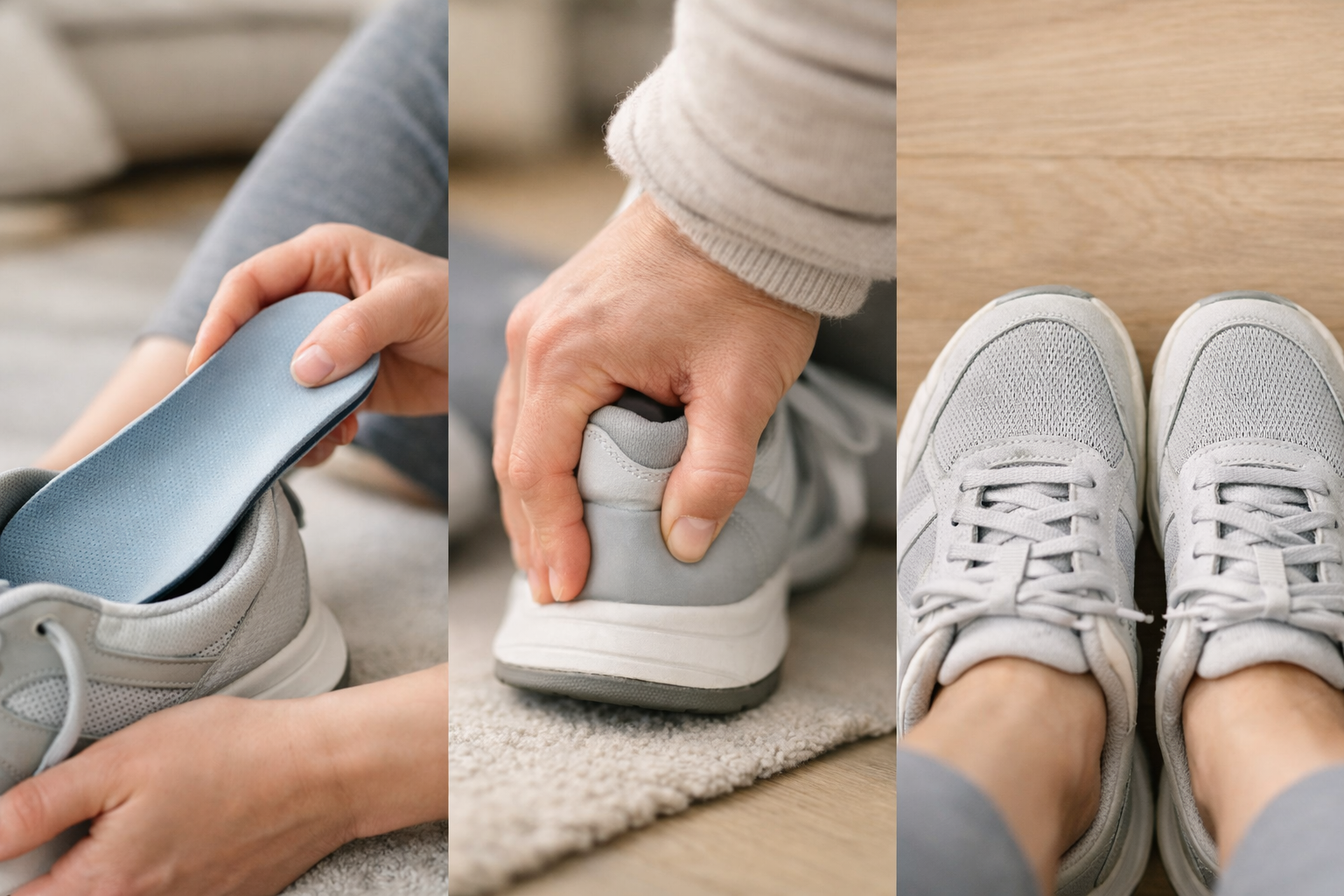
Removable insoles. This is one of the most practical features and the easiest to check. If the factory footbed lifts out, you can put a custom or over-the-counter orthotic in without cramming your foot into a shoe that’s suddenly a half size too small.
A firm heel counter. Squeeze the back of the shoe where your heel sits. If it collapses like a paper cup, it isn’t doing much to control how your heel lands. A firm heel counter gives the rearfoot something to work against.
Torsional stability. Grab the shoe at the toe and the heel and wring it like a towel. Some twist is fine and normal. A shoe that twists into a spiral offers your foot very little structure.
Reasonable heel-to-toe drop and a stable base. Most supportive shoes put the heel modestly higher than the forefoot and sit on a sole wide enough not to tip.
Adjustability. Laces, straps, or a wide instep opening let you accommodate swelling, a brace, or a foot that changes shape over the course of a long day. Slip-ons that fit at 8 a.m. often don’t at 6 p.m.
That’s the whole list, more or less. Notice what isn’t on it: proprietary technology names, gel pods, memory foam, and the word “advanced.”
Orthopedic shoes vs. orthotic shoes: the difference people actually ask about
These terms get used interchangeably in online listings, which is confusing, so here’s the distinction that’s worth holding onto.
An orthopedic shoe is the shoe itself, built with the features above. The support is part of the construction.
An orthotic is the insert that goes inside a shoe. It can be an over-the-counter footbed or a custom device made from a mold or scan of your foot. An “orthotic-friendly” or “orthotic shoe” usually means a shoe designed to accept one: extra depth, removable liner, enough volume that adding a device doesn’t crush your toes.
A lot of people are told to wear orthotics and then put them into whatever shoes they already own. If the shoe is shallow and flexible, the orthotic ends up doing all the work while fighting the shoe. The insert and the shoe are a system. They work together or they work against each other.
The honest limit of what footwear can do
Here’s the part the shopping guides tend to skip.
Plantar heel pain, Achilles pain, and most stubborn foot problems develop when the demand you’re putting on a tissue outpaces what that tissue can currently handle. Load exceeded capacity. Not always dramatically, and often not from one event. More often it’s a slow accumulation: a new job with concrete floors, a training block that ramped too quickly, a move to a house with stairs, a summer in flat sandals after a winter in boots.
A better shoe lowers the load side of that equation. That is genuinely useful, especially early on when your foot is easily irritated. It can be the difference between limping through a workday and getting through it.
But lowering demand doesn’t raise capacity. If your foot could tolerate 4,000 steps before it protested, a supportive shoe might get you to 6,000 comfortably. It doesn’t make the tissue itself stronger or more resilient. That only happens when you gradually ask the tissue to do more, in doses it can handle, over weeks and months.
This is why so many people describe the same frustrating loop. New shoes help for a few weeks. Then they stop helping. Then it’s on to the next pair. The shoes weren’t a bad idea. They just weren’t the whole plan. Recovery is built.
What kind of shoes do orthopedic and foot specialists actually recommend?
I’m going to disappoint anyone hoping for a single brand name, because that’s not how this works. I’ve watched patients thrive in shoes I would not have predicted, and struggle in shoes with an excellent reputation. Feet vary. Volume, arch height, forefoot width, how much motion your ankle has, what you do all day.
What I recommend instead is a set of criteria you can apply in any store:
- It fits the foot you actually have. Get measured, both feet, standing, at the end of the day when your feet are largest. Most adults are wearing shoes narrower than their forefoot. Buy for the wider foot.
- A thumb’s width past your longest toe. Which is not always the big toe.
- No break-in period for the fit. Cushioning softens over time. A shoe that pinches the width of your foot in the store will pinch it in six months.
- It matches the task. A shoe for eight hours on hospital floors has a different job than a shoe for a 5K.
- It feels stable, not just soft. Softness and support are not the same thing, and this trips up a lot of people.
That last point deserves a moment. Very soft, very high-stack shoes feel wonderful in the first ten steps. For some feet, that’s exactly what’s needed. For others, a squishy platform makes the foot work harder to stabilize, and people with irritable Achilles tendons or unsteady balance sometimes do worse in them. Soft is a preference to test, not a rule to follow.
Are Hoka shoes orthopedic?
This question comes up constantly, so it’s worth a direct answer.
Hoka isn’t an orthopedic brand in the medical sense. It’s a running and walking shoe company. Some of its models happen to include features that overlap with what makes a shoe supportive: a thick cushioned midsole, a rockered sole that helps the foot roll forward with less demand on the toes and forefoot, wide options in some styles, and removable insoles in many models. Several models also carry seals of acceptance from podiatric organizations, which is a real thing but reflects a review process, not a prescription for your specific foot.
That rockered sole is genuinely helpful for certain problems. If your big toe joint is stiff and painful, or your forefoot hurts when you push off, a rocker reduces how much your toes have to bend. Some people with plantar heel pain love them. Some find the soft, tall platform makes their symptoms worse, particularly if their calves and Achilles are already irritable.
So: potentially a very good shoe for you. Not a category answer. The same is true for every brand that gets recommended in comment sections, including the ones that specialize in comfort footwear. Test them against your own feet and your own week.
Where to buy, and why the store may matter more than the brand
People ask who sells good orthopedic shoes as if the answer is a website. Often the more useful answer is a type of place.
A specialty running shop or a dedicated comfort-shoe store will measure both feet, watch you walk, bring out multiple widths, and let you actually move around. Some carry certified pedorthists on staff, who are trained specifically in footwear and foot orthoses. That fitting process is worth more than any single brand.
Medical supply retailers and pedorthic offices stock shoes with extra depth and extra width for feet that are difficult to fit, including people with diabetes, significant deformity, or swelling. Online is fine for reordering a shoe you already know fits you. It’s a poor way to solve a fit problem you haven’t diagnosed yet.
And if a store’s fitting process is “what size are you, here’s the box,” you’re on your own regardless of what’s on the wall.
The best house shoes: don’t skip the hours you’re at home
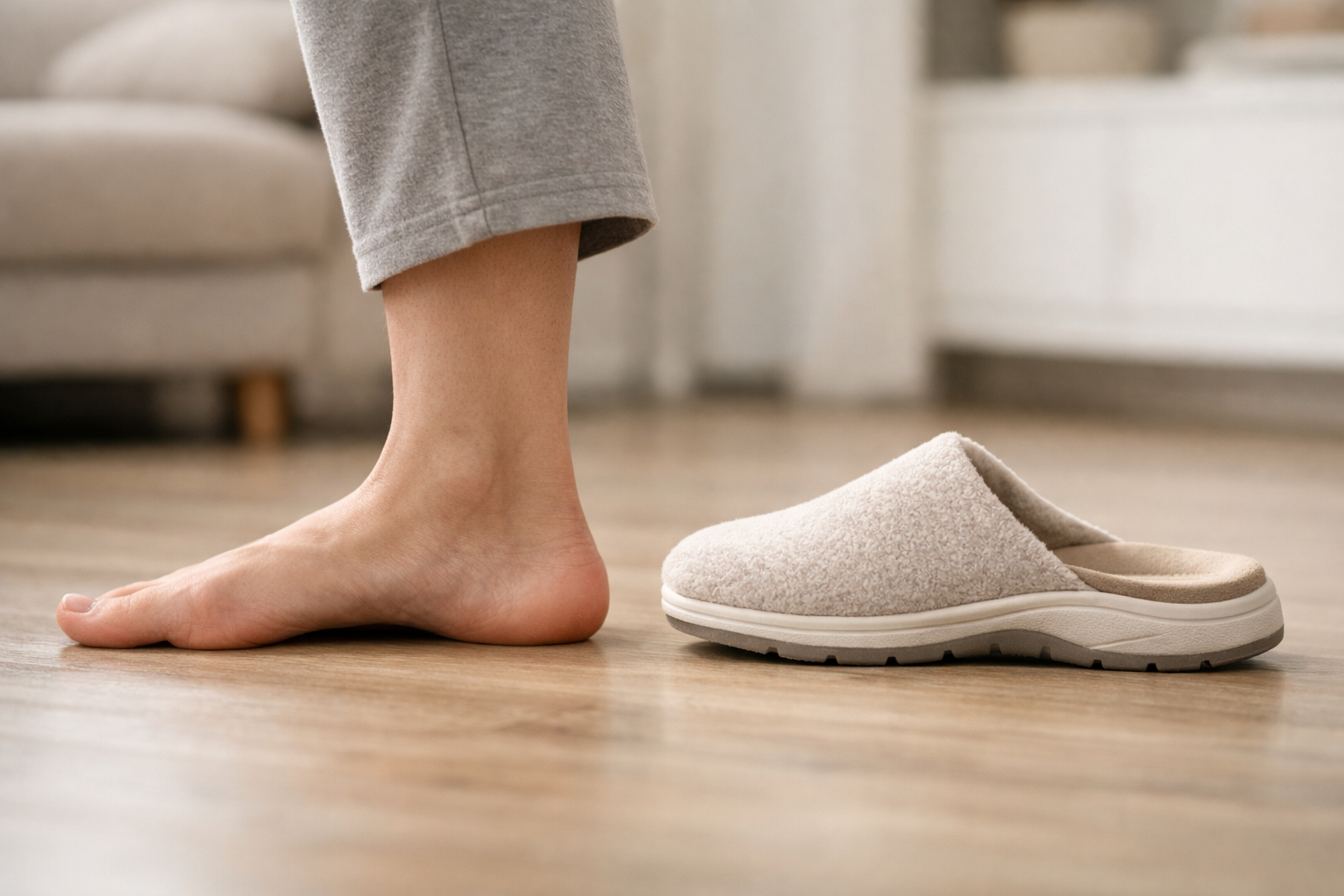
I’d guess this is the most under-appreciated question on the list. People buy excellent work shoes and then spend every evening and weekend barefoot on hardwood, and wonder why mornings still hurt.
If your feet are currently sensitive, the hours at home count. They’re part of your total load for the day.
What to look for in a supportive house shoe or slipper:
- A real sole, not just a fabric bottom. Something with structure that doesn’t fold in half.
- Contoured footbed or a removable insole, so you can slide your orthotic in if you use one.
- A back, or at least a secured heel. Backless slides make your toes grip to hold them on, which is more work for the very tissues that are already irritated.
- Easy on and off, because a supportive slipper you don’t wear helps nobody.
Several comfort-footwear brands make house shoes built on the same lasts as their outdoor shoes, and clog-style options with a contoured cork or EVA footbed are popular for the same reason. The specific brand matters less than whether it has a sole and stays on your foot.
One caveat worth saying plainly: going barefoot at home is not inherently bad. For a foot that isn’t currently irritated, time barefoot is a reasonable way to let the foot do its own work. But when heel pain is flaring, cushioning the surfaces you stand on most is a sensible way to bring the daily demand down while you rebuild.
What shoes do foot specialists wish people would stop wearing?
I want to be careful here, because the honest answer is more nuanced than the listicles suggest. Very few shoes are universally bad. Most are just badly matched to a particular foot, a particular problem, or a particular amount of time.
That said, some patterns cause trouble more often than others:
Completely flat, unstructured flats and thin sandals worn all day. The ballet flat with a paper-thin sole. The flip-flop worn from May to September. They provide almost nothing, and your foot muscles absorb the difference. Fine for short stretches. Rough as an all-day default, especially on hard floors.
Shoes that are too narrow at the forefoot. This is the big one. Pointed toe boxes are the most common contributor to bunion irritation, neuromas, and toe deformities that I see. The shoe doesn’t create the underlying bone structure, but it absolutely aggravates it.
Very worn-out shoes. Midsole foam compresses long before the upper looks bad. If the tread is worn through on one side or the shoe rocks when set on a table, it isn’t providing what it did originally.
Backless clogs and mules for long days on your feet. Your toes work overtime to keep them on.
A brand new shoe on a day with unusually high demand. Changing your footwear right before a trip, a long shift, or a race is a reliable way to find out what your foot wasn’t ready for.
Notice the theme. It’s usually not the shoe. It’s the shoe plus the duration plus the surface plus what your foot could handle at that moment.
Change your shoes the way you’d change anything else
Here’s a practical point that almost never appears in shoe guides, and I think it’s the most useful thing in this article.
A new shoe changes how force travels through your foot, ankle, knee, and hip. Even when the change is an improvement, it’s still a change, and tissues need time to adjust. Going from a flat shoe to a high-cushion rocker, or from a soft trainer to a firm stability shoe, redistributes work. Something that was doing less is now doing more.
So when you get new shoes, especially very different ones:
- Wear them a few hours a day at first, not for a full shift on day one.
- Keep your previous shoes in rotation for a couple of weeks.
- Pay attention to how your feet feel the next morning, not just how the shoes feel in the store.
- Build up over one to two weeks before making them your everyday shoe.
And if things get sore during that transition, that isn’t necessarily a sign the shoes are wrong. It might mean you asked for the change too quickly. Back the dose down, then build again.
How to tell whether a shoe is actually helping
Comfort in the first five minutes is a weak signal. Here’s what I’d rather you track over two to three weeks:
- How far you can walk before symptoms show up. Increasing distance is meaningful even if the pain number hasn’t hit zero.
- How you feel the next morning. For heel pain especially, the first steps out of bed are one of the most honest measures you have.
- How quickly you settle down after a long day. If soreness that used to last two days now clears in a few hours, that’s real progress.
- Whether the shoe fits at hour eight, not just hour one.
A general rule I use with patients: during and after activity, aim to keep discomfort at or below roughly a 4 out of 10, and it should settle back toward your normal within about a day. That window won’t fit everyone, but it’s a reasonable starting frame. If something you did leaves you noticeably worse two days later, the dose was too much. That’s information, not a setback.
And function counts as much as the pain number. Walking farther, standing longer, and bouncing back faster all mean your foot is handling more than it used to, even on days it still talks to you.
When footwear is only part of what you need
For a lot of people, better shoes plus a sensible plan to gradually build up what the foot can tolerate is enough to turn things around. The principles are sound, and many people improve considerably with exactly that.
But shoes alone tend to fall short when:
- The pain has been around for months and hasn’t budged despite several changes in footwear.
- Symptoms come back every time you increase your walking, standing, or running.
- You’ve got numbness, tingling, or burning, which points more toward nerve involvement than tissue overload.
- There’s swelling, redness, or warmth around the joint.
- The pain started after a specific injury, or you can’t put weight on the foot.
- You have diabetes or reduced sensation in your feet, in which case footwear fit and skin checks become a medical matter, not a comfort one.
Not all heel or foot pain is plantar fasciitis, even when the pattern looks classic. Nerve entrapments, stress reactions in the heel bone, fat pad problems, and tendon issues can all mimic it, and they don’t all respond to the same approach. An in-person evaluation sorts that out fairly quickly. If your symptoms are severe, worsening, or just not responding to what you’ve tried, that’s the right time to see a clinician rather than buy a fourth pair of shoes.
What I’d tell you if you were sitting across from me
Buy shoes that fit the width of your actual foot. Look for a removable insole and a heel that doesn’t collapse. Match the shoe to the task. Transition into new ones gradually. Don’t ignore the hours you spend at home.
Then treat the shoe as what it is: a way to make the day’s demand more manageable while you do the slower work of building a foot that can handle more. Those two things together tend to hold up. Either one alone usually doesn’t.