What Not to Do With Plantar Fasciitis: Habits That Slow Healing
The single worst thing you can do for plantar fasciitis is stop moving and wait for the pain to leave on its own. Here's a clear look at the habits that stall recovery, the ones that only look like mistakes, and how to tell the difference.
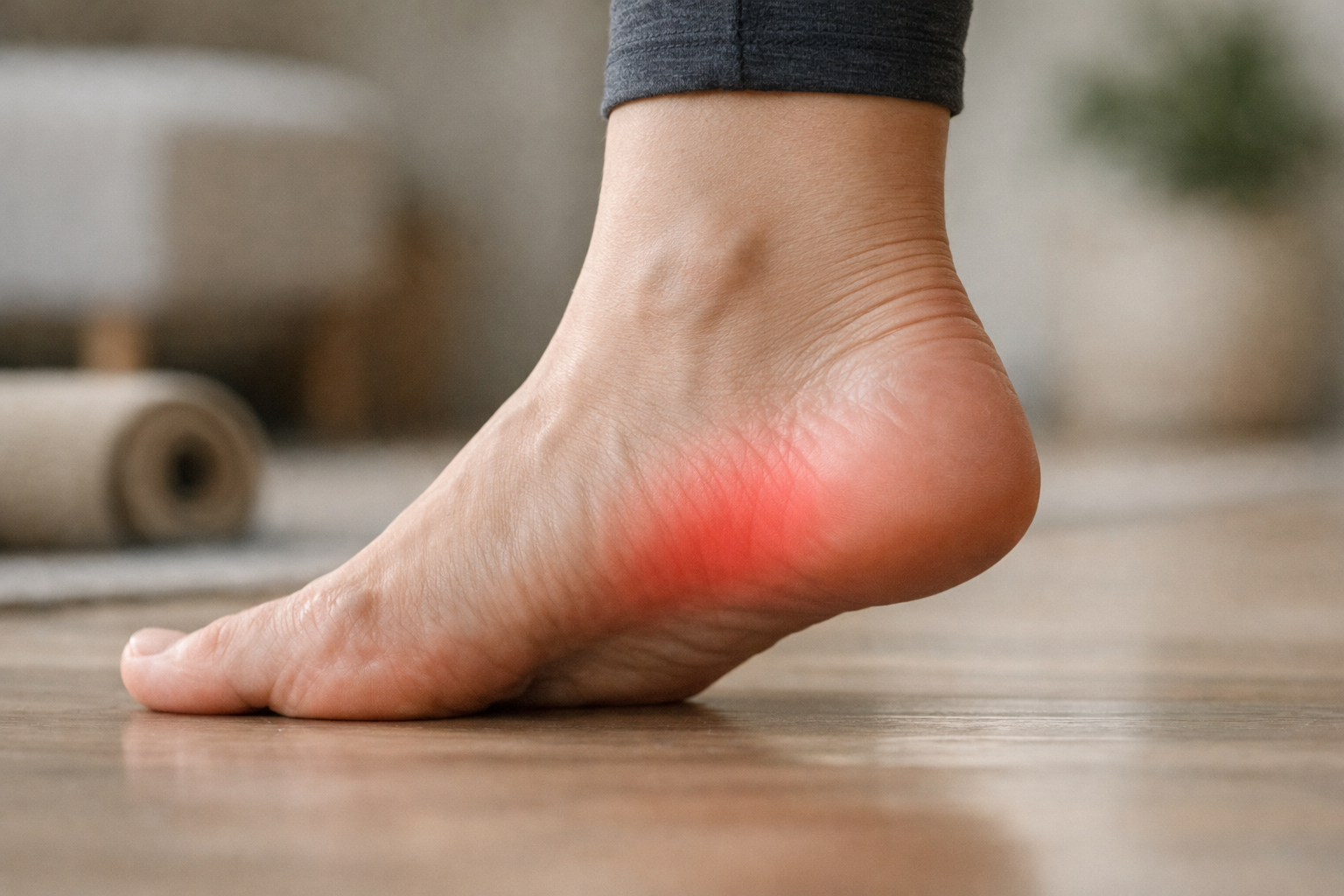
Most people asking what’s the worst thing you can do for plantar fasciitis are really asking something else. They’re asking: am I making this worse?
That’s a fair question. Heel pain has a way of making you suspicious of your own feet. You walked around the grocery store and it hurt more that night. You tried a stretch you saw online and the next morning was rough. So you start narrowing your life down, cutting things out, waiting for a signal that it’s safe to move again.
That narrowing is usually the problem. Not the walking. Not the stretch.
So let’s go through the habits that genuinely slow things down, the ones that only look like mistakes, and how to tell which is which in your own foot.
The Worst Thing: Waiting It Out
If I had to pick one, it’s shutting down activity and hoping the pain resolves on its own.
Rest works, in the short term, and that’s exactly why it fools people. When you stop loading the plantar fascia, it becomes less sensitive. The pain drops. It feels like healing. Then you go back to a normal day of walking, standing, or a weekend on your feet, and the pain comes right back, sometimes worse than before.
Here’s why. Rest lowered your sensitivity. It didn’t raise what your foot can handle. Actually, it lowered that too. Tissue that isn’t being asked to do anything gets less capable of doing things. Two weeks of avoidance and your foot is now less prepared for your regular life than it was when the pain started.
This is the trap that turns a six-week problem into a two-year one. Pain shows up, activity drops, tolerance drops, so the next return to activity hurts even more, which justifies more rest. Recovery is built, not waited for.
That doesn’t mean rest is useless. Backing off for a few days can absolutely calm an angry foot down. Use it as a reset, not a strategy. The goal is always to get back to loading the tissue at a level it can handle, and then slowly asking it for more.
The Other Extreme: Pushing Through Without Adjusting Anything
The opposite mistake is just as common, and it’s usually made by people who are otherwise doing everything right.
You’re a runner, or you work twelve-hour shifts on concrete, or you just refuse to let heel pain change your week. So you keep doing exactly what you were doing, at exactly the same volume, with the same shoes, on the same surfaces. Pain shows up every day and you decide it’s just something to tolerate.
The issue isn’t toughness. It’s that nothing in the input changed, so nothing in the output will either. Your foot is telling you the demand is currently higher than what it can absorb. If you don’t adjust the demand at all, you’re just running that same equation on repeat.
What usually works better is a temporary reduction, not a stop. Cut the run distance. Break up standing time. Change the surface. Keep moving, at a level your foot can actually recover from within about a day, and then start building back up. Adjusting is not quitting.
How to Aggressively Treat Plantar Fasciitis (Without Making It Angry)
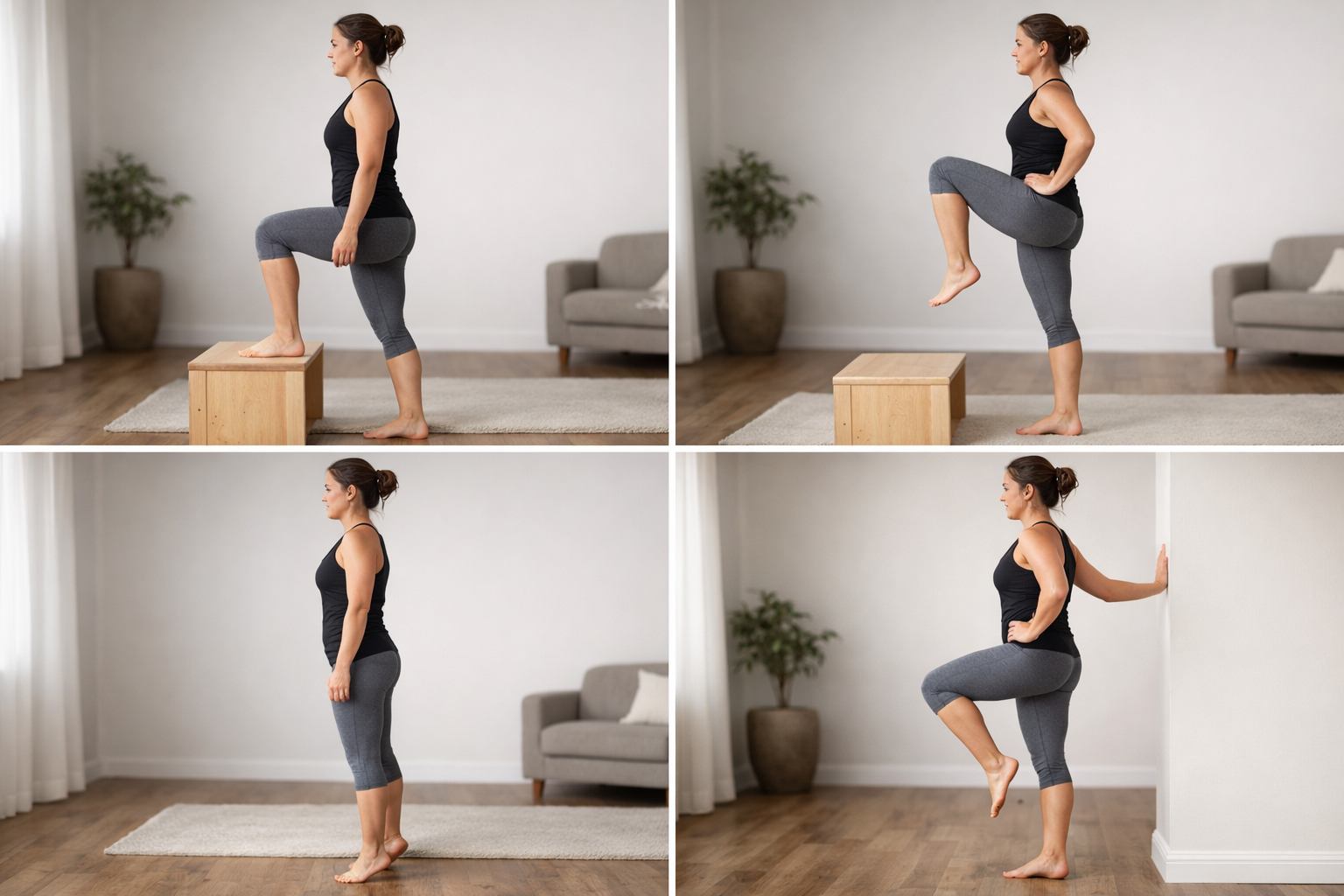
People ask about aggressive treatment expecting the answer to be a more intense stretch, a harder massage, or a stronger anti-inflammatory. Aggressive, in the way that actually matters, means consistent and progressive rather than violent.
Being aggressive with plantar fasciitis looks like this:
- Load the tissue on purpose, most days. Calf and foot strengthening done slowly and with real resistance, not a token thirty seconds. This is the part that changes the tissue over time.
- Keep the discomfort in a reasonable range. For many people, staying at or below roughly a 4 out of 10 during and after the work is a useful ceiling. Some discomfort while loading is expected and generally fine.
- Check the next 24 hours. If the foot is back to its usual baseline within about a day, that dose was appropriate. If it’s still elevated the next morning and into the following day, that was too much.
- Stay at each level long enough to adapt. A week or two at a given load before you add more. People who jump levels every three days tend to flare, back off, and start over.
- Manage the rest of your day. Your exercises are a small slice of what your foot did today. Standing, walking, shoes, and errands are the bulk of it.
Aggressive also means patient in a specific way. Early improvements, in the first few weeks, come mostly from your nervous system getting more comfortable with load and your muscles coordinating better. The actual structural change in the fascia and calf tissue takes longer, often somewhere in the 8 to 12 week range and sometimes considerably beyond that. Which brings me to the most common reason this thing comes back.
Stopping the Moment It Stops Hurting
This is the quiet mistake almost nobody thinks of as a mistake.
Pain resolves before capacity is rebuilt. Your foot feels fine walking around the house, so you drop the loading work, resume your full mileage or your full shifts, and six weeks later the heel pain is back and you’re confused because you “did the rehab.”
You did. You just stopped at the point where symptoms cleared, which is roughly the halfway mark, not the finish line. The tissue was less irritated. It wasn’t yet more capable.
The more useful marker is function. Can you stand through a full shift and feel normal the next morning? Can you walk the distance you actually want to walk? Can you do a set of single-leg calf raises off a step with good control on that side, comparable to the other? Those tell you something the pain number doesn’t.
When someone tells me what finally worked for them, it’s almost never one intervention. It’s usually the moment they stopped chasing symptom relief and started treating this like a strength and tolerance project with a real progression, then kept going after it felt better. Function matters as much as pain.
Chasing Passive Treatments and Nothing Else
Rolling a frozen bottle. Night splints. Massage guns. Taping. Orthotics. Injections. Stretching in the shower.
None of these are bad. Several of them are genuinely useful, and I recommend some of them regularly. The problem is when the entire plan is made of them.
All of those things primarily reduce how sensitive the tissue is right now. That’s valuable, especially early on, because a less irritated foot can tolerate more loading, and loading is what changes things. But if the sensitivity-reducing tools are the whole plan, you’ll spend months feeling temporarily better and never actually building anything.
A useful test: if you removed the passive treatments tomorrow, would anything in your week still be making your foot stronger? If the answer is no, that’s the gap.
Same with orthotics. An insert can redistribute load and reduce strain, and for some people it makes a real difference in getting through a workday. It’s supporting the foot, not developing it. Use it as a tool while you build, not as the endpoint.
Going All In on Stretching
Stretching feels productive. It gives immediate relief, especially in the morning, which makes it easy to believe it’s the treatment.
Stretching the calf and the plantar fascia can help. It temporarily reduces stiffness and makes those first steps less sharp. It does not meaningfully change the load-bearing capacity of the tissue, which is why the relief tends to last a couple of hours and then fade.
More stretching is not the answer to stretching not working. Loading is. Heavy, slow calf raises. Work with the toes extended to bring the fascia into it. Progressive strength through the whole lower leg. If your morning routine is five minutes of stretching and zero minutes of strengthening, that ratio is backwards.
If morning pain is the part that bothers you most, there’s a separate article on this site called “Why Does Plantar Fasciitis Hurt More in the Morning?” that gets into what’s actually happening overnight.
The Footwear Habits That Add Up

Shoes aren’t the cause and they aren’t the cure, but they change how much stress lands on your heel across thousands of steps a day. A few patterns worth noticing:
- Sudden changes. Switching from a supportive work shoe to flat sandals for the summer, or into a minimalist running shoe, changes the demand on your foot quickly. The foot can usually adapt. It needs time to do it.
- Worn-out shoes. Cushioning and support degrade quietly. You don’t notice the change day to day, which is what makes it sneaky.
- Going barefoot all day on hard floors, particularly if you’ve been in supportive shoes for years. Some barefoot time is fine and probably good. A full transition overnight is a big load change.
- Backless slippers and flip-flops, which make your foot work harder to keep them on with every step. Not forbidden. Just not the shoe for the day you’re on your feet for six hours.
The theme isn’t that certain shoes are evil. It’s that abrupt changes in what your foot is asked to do tend to outpace what it’s ready for.
Why Did I Suddenly Get Plantar Fasciitis?
It rarely comes out of nowhere, though it feels that way because the pain arrives suddenly even though the buildup didn’t.
Look back three to six weeks before the pain started. Something usually shifted:
- New job with more standing, or a return to the office after working from home
- A jump in running volume, or adding hills or speed work
- New shoes, or old shoes that finally wore out
- A vacation with a lot of walking on unfamiliar surfaces
- A move to a house with hard floors
- A layoff period where activity dropped, followed by a return to normal
- Changes in body weight, which change the load per step (a load variable, not a character flaw)
Sometimes it’s a combination of small things, none of which would have mattered alone. Your foot handled its old life fine. The demand moved, capacity didn’t move with it, and the tissue started complaining. That’s the whole mechanism, and it’s also why the way out is rebuilding capacity rather than hunting for the one thing you did wrong.
What Is Stage 3 or Stage 4 Plantar Fasciitis?
You’ll see these staging systems online. They usually describe something like: stage 1 is pain only in the morning that warms up; stage 2 is pain in the morning and after activity; stage 3 is pain during activity that limits what you do; stage 4 is constant pain that affects daily life, often with symptoms for many months or years.
There’s no universally agreed-upon clinical staging system for this condition. The categories aren’t meaningless, because they do describe a real progression in how irritable a foot has become, but they aren’t a diagnosis and they don’t determine your outcome.
Here’s what actually changes if you’re in the more persistent category. When heel pain has been around a long time, the tissue state is better described as plantar fasciopathy than fasciitis. It’s less about active inflammation and more about a fascia that’s been under repeated stress and has changed in structure. Practically speaking, that means:
- Your starting point is lower. Less load to begin with.
- The progression is slower and needs more patience.
- Your foot gets irritated more easily, so total daily load matters more.
- The overall trend still moves in the right direction with consistent loading.
Persistent doesn’t mean permanent. It means a longer runway.
Can Plantar Fasciitis Hurt So Bad You Can’t Walk?
It can hurt enough that walking becomes genuinely difficult, especially those first steps in the morning or after sitting a while. People limp. People plan their day around minimizing steps. That happens and it’s real.
What it usually isn’t is a sign that something tore or that the foot is being damaged by walking. High pain reflects a highly sensitive tissue, and sensitivity and damage aren’t the same thing. Pain is information. An increase doesn’t automatically mean an injury.
That said, some things warrant getting looked at rather than reasoned through at home:
- Sudden severe pain with a pop or snap during activity
- Numbness, tingling, or burning into the foot or toes
- Pain that’s worse at rest or wakes you at night, or that isn’t relieved by getting off your feet
- Heel pain following a fall, an awkward landing, or a big jump in impact activity
- Redness, warmth, swelling, or fever
- Pain that’s steadily worsening over weeks despite sensible adjustments
If you can’t put weight on the foot at all, get it evaluated promptly.
What Is Commonly Mistaken for Plantar Fasciitis?
Quite a bit, which is one reason a stalled recovery sometimes isn’t a loading problem at all. Heel pain can also be consistent with:
- A calcaneal stress fracture, which tends to hurt with weight-bearing broadly, not just at the heel’s inside edge, and often follows a big jump in impact.
- Fat pad irritation, where the tender spot is more centered under the heel and the pain feels like bruising, worse on hard surfaces.
- Nerve irritation (including entrapment of a small nerve near the heel or referral from the low back), which often brings burning, tingling, or night pain.
- Insertional Achilles issues, where the pain is at the back of the heel rather than underneath.
- Tarsal tunnel syndrome, with numbness or tingling along the inside of the ankle and into the arch.
- Inflammatory conditions, which can involve multiple joints and morning stiffness lasting well beyond the first few steps.
A good evaluation sorts this out with history and hands-on testing, usually without imaging. And if you have had a scan showing a heel spur or a thickened fascia, that’s worth putting in context. A spur is generally a consequence of long-term stress on the heel rather than the thing causing your pain, and recovery looks the same whether or not one shows up on the film. Thickening reflects tissue that has adapted to stress. A scan can show structural changes, but it doesn’t always tell us why you hurt.
What Is the Longest Plantar Fasciitis Can Last?
Years. I’ve worked with people who’d had it for five, eight, ten years.
But duration is rarely just the natural course of the condition. It’s usually the cycle described at the top of this article: pain, avoid, deconditioning, return to activity, flare, avoid more. Ten years of that loop is not ten years of a foot that refuses to heal. It’s ten years without a progression.
When someone with long-standing heel pain finally starts a graded loading program and stays with it, improvement is common. Slower than a fresh case, sure. But the same principles apply, and many people improve substantially even after years of symptoms.
How Do You Permanently Fix Plantar Fasciitis?
I won’t promise permanent. What I can tell you is what makes recurrence much less likely.
Build capacity beyond what your daily life demands. If your job requires eight hours of standing and your foot can just barely handle eight hours of standing, you have no margin. One busy weekend, one new pair of shoes, one extra-long day, and you’re over the line again. Build the foot so a normal day is comfortably inside what it can do.
Then keep some loading in your week permanently. Not rehab, just calf and foot strengthening as part of how you maintain your body. Twice a week is enough for most people once things are settled.
And respect transitions. New shoes, new job, new training block, new mileage. That’s when demand jumps. Ramp gradually and the foot usually keeps up.
When a Flare-Up Happens, Don’t Treat It Like Failure
It will happen. You’ll have a great three weeks, then a day where the heel is loud again, and it’s easy to conclude the whole thing collapsed.
It didn’t. A flare is one data point in a longer trend.
When it happens, look back a day or two. Symptoms often lag behind the load that caused them. New shoes? Longer walk? A day of travel? Concrete floors at an event? Something almost always changed, and it’s frequently something in life rather than something in your exercises.
Then reduce, don’t stop. Drop back to a level that feels manageable, hold there for a few days, and build again. The trend over months is what matters, and recovery is not a straight line. Comparing this Tuesday to last Tuesday tells you almost nothing. Comparing this month to two months ago tells you a lot.
A few useful questions if you’re trying to judge your own progress:
- How far can I walk before it bothers me, compared to a month ago?
- How long do the first steps in the morning stay painful?
- How quickly does the foot settle after a hard day?
- What can I do now that I couldn’t do six weeks ago?
If those are trending the right way, you’re on track, even if today’s pain number looks the same as last week’s.
Where to Go From Here
If you’ve been dealing with this for a while and nothing has moved, the missing piece often isn’t another treatment to add. It’s a plan for how to progress: knowing where to start, how much is enough, how to read your foot’s response, and when to add more.
And if the pain is severe, getting worse, or doesn’t fit the usual pattern, get it evaluated in person. Heel pain has several possible sources, and knowing which one you’re dealing with changes what you should be doing about it.