What Is Commonly Mistaken for Plantar Fasciitis? Sorting It Out
Heel and arch pain gets labeled plantar fasciitis more often than it should be. Here's how location, timing, and what makes symptoms change can point toward posterior tibial tendinopathy, fat pad irritation, nerve involvement, or bone stress instead, and why the label is only half the answer.
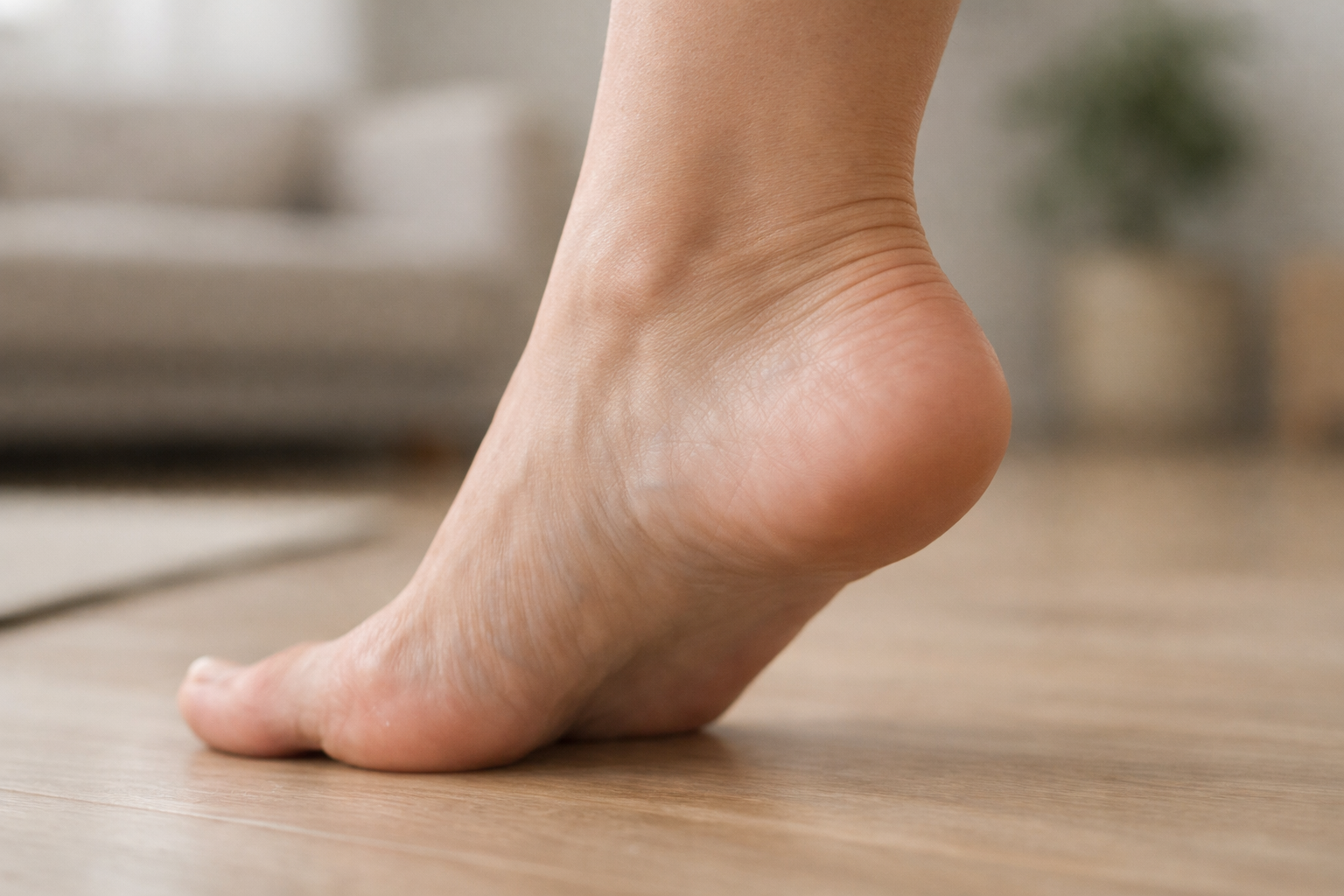
Most people who ask this question are six weeks or six months into something that isn’t getting better. They were told it was plantar fasciitis. They rolled a frozen bottle, stretched the calf, bought the shoes, maybe tried an insert or a night splint. Some of it helped a little. None of it stuck.
At that point there are really only two explanations worth considering. Either the label is wrong, or the label is right and the plan never included a way to rebuild what the foot could handle. Both are common. Both are fixable in the sense that there’s a clear next step. But they lead in different directions, so it’s worth knowing which one you’re dealing with.
If you want the broad survey of conditions that imitate plantar fasciitis, we’ve covered that separately in What Gets Mistaken for Plantar Fasciitis (And How to Tell). This article goes at it from a different direction: how to actually read your own symptoms, what the pattern tells us, and what one of the most frequently missed mimics (posterior tibial tendinopathy) looks like when it’s masquerading as arch pain.
Start With Where It Hurts, Precisely
When someone tells me “my arch hurts,” that could be four or five different structures. When someone can point with one finger, we’re already narrowing things down.
So take a minute and find the exact spot. Press around. Where is the tender point?
The inside front edge of the heel bone. This is where the plantar fascia anchors. Pain concentrated right there, worst with the first few steps out of bed, easing after a few minutes of walking, returning after sitting, can be consistent with plantar fasciopathy (the more accurate name for the persistent version of what most people call plantar fasciitis).
Behind and just below the inner ankle bone, running down into the arch. That’s the posterior tibial tendon, and it’s the one I see mislabeled most often. More on it below.
The center of the heel pad, feeling deep and bruised. The fat pad under your heel is a shock absorber that thins with age and with a lot of mileage on hard surfaces. Fat pad irritation tends to hurt in the middle of the heel rather than at the front edge, feels more like a bruise than a pull, and often gets worse on tile or concrete and better in cushioned shoes. Stretching does very little for it.
The back of the heel, where the Achilles attaches. That’s a different problem entirely, even though morning stiffness shows up there too.
Burning, tingling, electric, or radiating pain, or numbness. Nerves involved in heel pain can be irritated at the ankle, under the arch, or higher up in the leg or back. Nerve-related pain often behaves oddly: present at rest, worse at night, not clearly tied to how much you walked.
Deep, diffuse, achy pain across the whole heel that doesn’t warm up. Bone stress deserves consideration here, especially if activity ramped up quickly. Plantar fascia pain typically loosens up in the first several minutes of walking. Bone stress pain usually gets worse the longer you’re on it.
The Mimic That Fools Everyone: Posterior Tibial Tendinopathy
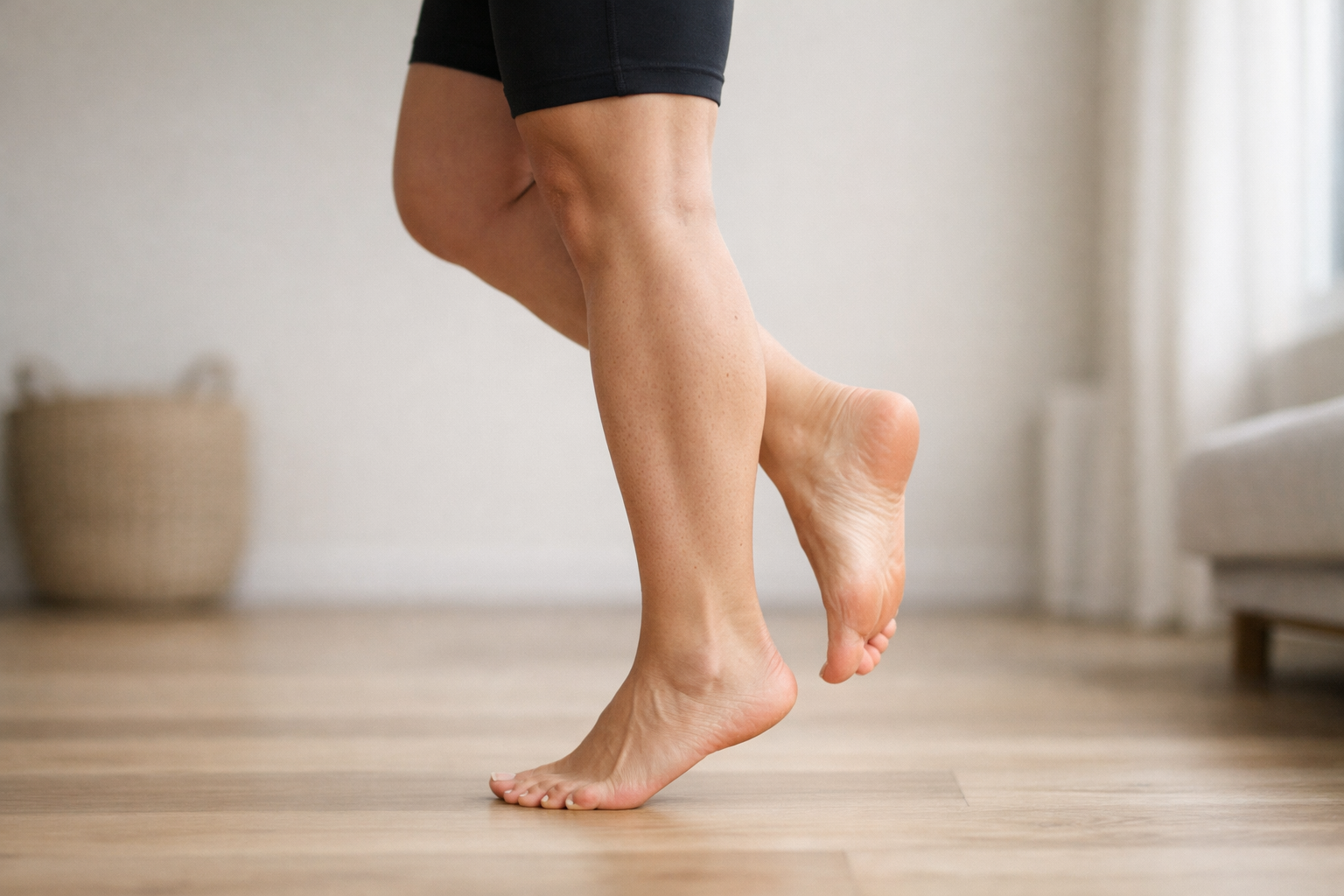
The posterior tibial tendon runs down the inside of your ankle, wraps under the bony bump, and fans out into the bones of your arch. Its job is to hold the arch up and control how much your foot rolls inward every single step. It’s working constantly.
When it gets overloaded, the pain shows up in the arch and the inner ankle. Patients describe it as arch pain. The word “arch” makes everyone think plantar fascia. The label gets applied and the plan gets built around the wrong tissue.
Some things that tend to separate it:
- It gets worse the longer you’re on it, rather than warming up. A plantar fascia problem often eases after the first minutes of the day. A cranky posterior tibial tendon usually feels fine early and complains at hour three of standing, or at the end of a long walk.
- Tenderness follows the tendon, behind the inner ankle bone and forward into the arch, not at the front-inner corner of the heel bone.
- Rising onto one toe is hard or painful. Standing on the involved leg and lifting the heel off the ground is a direct test of that tendon. Weakness, wobble, or reproduction of the exact pain is meaningful.
- The arch may look different between sides, especially when standing. Sometimes there’s swelling or fullness behind the inner ankle bone.
- Pushing off hurts. Hills, stairs, walking fast, carrying something heavy.
This matters because the treatment differs. Calf stretching and fascia-specific work won’t do much for a tendon that needs progressive strengthening in the specific direction it’s failing. And posterior tibial problems tend to reward early attention.
Timing Tells You Almost As Much As Location

Pain has a schedule. Learning to read it takes a lot of the mystery out.
Worst with the first steps in the morning, then better. This is the classic plantar fascia pattern, and it’s worth understanding why it happens, because the explanation is reassuring. Your foot spent seven or eight hours with essentially no load through it. Sensitive tissue that hasn’t been loaded in hours protests when you suddenly ask it to hold your body weight. It is a sensitivity pattern, not evidence that something tore overnight or got worse while you slept. Once tissue is warmed and loaded, the sensitivity settles.
Worst at the end of the day, or after a long stretch on your feet. This points more toward a cumulative load problem: tendon, bone stress, fat pad. The tissue held up fine for a while and then ran out of tolerance.
Worse at night, in bed, without any relationship to activity. Nerve irritation is more likely to behave this way. So are some inflammatory conditions. This one deserves an evaluation rather than a guess.
Pain that showed up over a couple of days and hasn’t budged, in someone who recently increased mileage. Bone stress moves up the list. So does a fascia that was pushed past what it could handle.
Symptoms in both heels at once, especially in a younger adult, or alongside back stiffness, other joint pain, eye or skin issues, or morning stiffness lasting well over an hour. This can point toward an inflammatory process rather than a mechanical one, and it changes the whole approach.
“How Did I Suddenly Get Plantar Fasciitis?”
Usually it wasn’t sudden. It was cumulative, and it announced itself suddenly.
Every tissue in your foot has a certain amount it can currently handle. That capacity is built from what you’ve been doing over the past weeks and months. When the demand goes above the line for long enough, tissue gets irritated.
So look back at the two to three weeks before the pain started, not the day it started:
- New shoes, or old shoes that finally gave out
- A vacation with a lot of walking, often in flat, unsupportive footwear
- A job change involving more standing, or a change in flooring
- A jump in running mileage, speed work, or hills
- A new fitness class
- Going barefoot at home a lot more than usual
- A period of doing much less, followed by returning to normal activity at the old volume
That last one catches people off guard. Capacity drops when it isn’t used. Coming back from an injury, an illness, or a sedentary stretch and picking up exactly where you left off is a classic setup.
Symptoms also lag. The walk that caused the problem was often a day or two before the pain arrived, which is why people so often blame the wrong thing.
“How Do I Know If It’s Plantar Fasciitis or Something Else?”
Honestly, the self-check above gets you a reasonable hypothesis. What it can’t do is test the tissue under load, and that’s where an in-person evaluation earns its keep.
A good evaluation is not just pressing on your heel until you flinch. It should include:
- Mapping the tender points precisely, and comparing sides
- Loading each suspect structure specifically (rising onto one toe, bending the big toe back while pressing the fascia, hopping if appropriate, squeezing the heel bone from the sides if bone stress is a question)
- Checking strength through the calf, the muscles that hold the arch, and the hip, since what happens above the foot changes what the foot absorbs
- Screening the nerves and the low back when the symptom description is suspicious
- Asking detailed questions about your week, your work, your shoes, and your training
About imaging: a scan can show a heel spur or a thickened fascia, but those findings do not automatically explain your pain. Heel spurs are common in people with no heel pain at all, and they’re generally a consequence of long-standing stress rather than the source of the symptom. Recovery goes about the same whether or not one is present. Fascia thickening on ultrasound reflects tissue adapting to stress. It’s information, not a verdict about your future.
When Two Things Are True At Once
This part gets missed. It’s entirely possible to have plantar fasciopathy and an irritated fat pad. Or a fascia problem that started first, followed by a posterior tibial tendon that got overloaded because you spent three months walking on the outside of your foot to avoid the heel.
Compensation creates its own problems. So when someone tells me the pain “moved,” I don’t assume the original diagnosis was wrong. I assume the load moved, and something else ran out of tolerance.
“How Long Is Too Long?”
I’d frame it as checkpoints rather than deadlines.
If you’ve been dealing with heel or arch pain for more than a few weeks without any clear direction of travel, that’s a reasonable point to get it looked at rather than continuing to guess. If you’ve been doing a specific plan for six to eight weeks and nothing about your capacity has changed (not the pain number necessarily, but how far you can walk, how long you can stand, how quickly you settle after activity), the plan needs reassessment. Something is either mislabeled, under-dosed, or being undone by the rest of your week.
And if you’re a year in, that’s not a reason to give up. It’s a reason to start lower and build more gradually than you’d like to. Recovery is built, not waited for.
“What Helps Plantar Fasciitis Immediately?”
A few things genuinely take the edge off within minutes to hours, and I have no problem with any of them:
- Calf and foot stretching before the first steps of the day
- Temporarily switching to a shoe with more cushion and some heel elevation
- Reducing barefoot time on hard floors for a stretch
- Taping the arch
- Brief periods of doing less of whatever aggravates it most
But be clear with yourself about what these are doing. They reduce how sensitive the tissue is right now. They don’t change what the tissue can handle. That’s why the relief evaporates the moment you go back to a full day on your feet. It isn’t a sign you did something wrong. It’s a sign that calming and building are two different jobs, and only one of them has been done.
Rest is genuinely useful in small doses. In large doses it becomes the problem, because the foot gets less capable while you wait for the pain to leave, and then the pain comes back the moment real life returns.
“What Finally Cured My Plantar Fasciitis?”
When people ask this, they’re usually hoping for a single item: an insert, an injection, a stretch, a shoe. Sometimes one of those things really is the missing piece for a particular person. More often, what actually changed things was less dramatic and took longer.
What tends to work looks like this. Find an amount of loading the foot can tolerate right now, which for many people means keeping discomfort at or below roughly a 4 out of 10 during the activity and settling back down within about a day. Do that consistently. Then ask for a little more. Stay at each level long enough for the tissue to adapt before advancing. For many people, meaningful structural change takes something in the range of eight to twelve weeks of consistent loading, sometimes longer if the problem is long-standing. Early improvements often come faster than that, which is exactly why people stop too soon and end up back where they started.
Consistency beats intensity here. Three hard sessions and then nothing for ten days does less than steady, unglamorous work.
Along the way, expect a bumpy line. You’ll have a day where the foot complains more, usually after a heavier day of walking or standing or an unusually long stretch on concrete. That’s not the plan failing. Look at what changed, adjust the next few days, and keep the larger trend in view. Total load is everything you did, not just the exercises.
And measure more than pain. Walking farther, standing through a full shift, recovering by the next morning instead of two days later: those count. Function matters as much as the pain number, and it often improves first.
When to Get It Looked At Sooner
Most heel and arch pain is a load problem and responds to a sensible plan. A few things deserve prompt attention rather than a trial of home care:
- Pain after a specific injury, a pop, or a fall
- Inability to put weight on the foot
- Numbness, spreading tingling, or weakness
- Significant swelling, redness, or warmth, or fever
- Pain that is severe at night and not clearly related to activity
- Heel pain in both feet plus other joint symptoms, or morning stiffness that lasts hours
- Any foot pain if you have diabetes, neuropathy, or circulation problems
And if you’ve been at this a while with no real progress, an evaluation is worth it even if nothing on that list applies. Sometimes the answer is that the diagnosis needs correcting. Sometimes the diagnosis was right the whole time and what was missing was a way to progress. Those feel identical from the inside, and they’re not hard to tell apart once someone actually loads the foot and watches how it responds.