Shoes for Wide Feet: How to Find Fit That Actually Works
A practical guide to choosing footwear when your feet are wider than average, including how to judge fit, what shoe shapes help, why sizing up usually backfires, and how shoes fit into the bigger picture of foot pain.
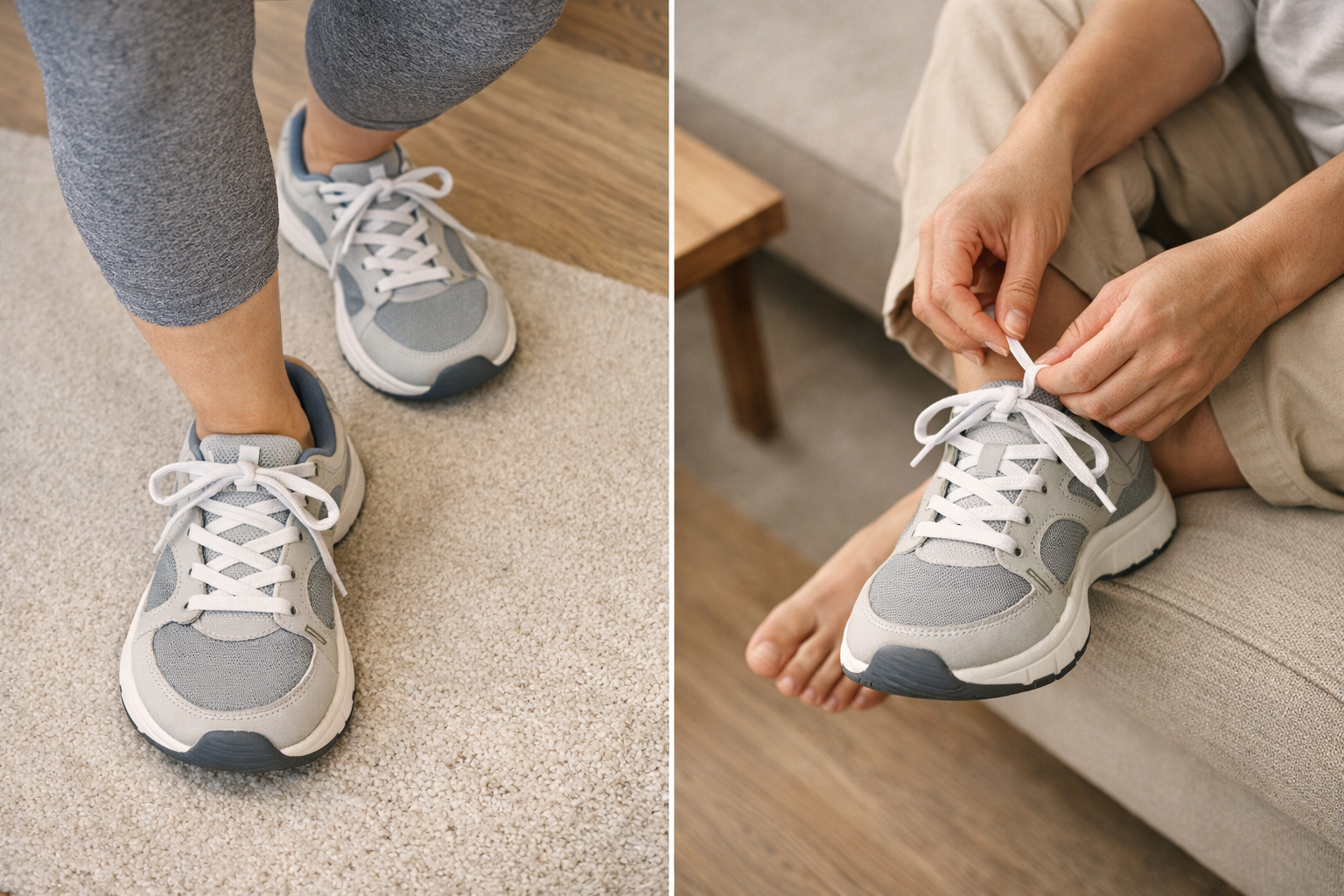
Most people who come in asking about shoes for wide feet have already tried the obvious thing. They went up half a size. Then another half. The shoe stopped pinching across the ball of the foot, sort of, but now the heel slips and the toes slide forward on every step. Or they bought the widest shoe they could find, felt great for two weeks, and the foot pain came back anyway.
So let’s start with the honest version of this: fit matters, and it matters more than most people are told. But a shoe doesn’t build capacity. It changes how load is distributed and how comfortable you are while you’re on your feet. That’s genuinely useful. It’s also not the whole job.
I’ll cover both. First, how to actually get the fit right. Then, where footwear fits into the larger picture if you’ve got heel, arch, or forefoot pain that keeps coming back.
What “wide” actually means, and why the letter on the box misleads people
Shoe widths get labeled with letters. For women, B is typically standard, D is wide, and 2E or wider is extra wide. For men, D is standard, 2E is wide, 4E is extra wide. Sounds tidy.
Here’s the problem. Width letters are measured at the ball of the foot, at one specific length. A 2E in a size 8 is a different absolute measurement than a 2E in a size 12. And every brand applies the sizing differently, because they’re each building over their own last (the foot-shaped form a shoe is constructed around). A wide shoe from one company can be narrower than a standard shoe from another.
There’s also more than one way for a foot to be wide:
- Wide at the forefoot, normal heel. Very common. You need volume up front and a snug heel, which is exactly what most shoes don’t offer.
- Wide throughout. Heel, midfoot, and forefoot all broader than average. Usually easier to fit in a true wide-width shoe.
- High volume rather than wide. Your foot isn’t especially broad side to side, but it’s thick top to bottom. This feels like tightness across the top of the foot, and going wider doesn’t always solve it. A different lacing pattern or a deeper toe box does.
- Wide because of a bunion or splayed toes. The width is at a specific spot, and pressure right at that spot is the issue.
Those four situations call for different shoes. Which is why “what’s the best shoe for wide feet” doesn’t have one answer, and why anyone who gives you a single answer is guessing.
What shape of shoe is best for wide feet?
Forget width for a second and look at shape from above.
Most athletic and dress shoes taper to a point somewhere near the second toe. Your foot doesn’t do that. Your foot is widest across the ball, and the toes should be able to spread out beyond that. A shoe that tapers squeezes the toes toward the midline, whether or not the shoe is technically a wide width.
What you want is an anatomically shaped toe box, sometimes called a foot-shaped last. The widest part of the shoe sits over the widest part of your foot, and the toe box stays broad all the way to the end rather than coming to a point. Some brands build this into their standard shoes. Others sell a wide version of a shoe that’s still tapered, which just gives you a bigger version of the same problem.
Three more shape details worth knowing:
Toe box height. Width without vertical space still presses on the top of the toes. If you have a bunion, a hammertoe, or thick toes, height matters as much as width.
Heel counter. This is the stiffer cup around the back. You want it to hold your heel reasonably still. If you’ve got a normal heel and a wide forefoot, a shoe with a well-shaped heel counter and a roomy front is the combination worth hunting for.
Upper material. Knit and soft mesh give a little. Stiff leather or heavily structured synthetics don’t. A soft upper can make a slightly-too-narrow shoe tolerable, which is a real advantage, but it can also disguise a fit problem that will show up as a hot spot after mile three.
Should you size up for wide feet?
Usually not, and this is the single most common mistake I see.
Going up a full size makes the shoe longer, not meaningfully wider. Length gained is roughly a third of an inch. Width gained is a couple of millimeters. So you relieve a little pressure across the ball of the foot and create a new set of problems:
- The widest part of the shoe now sits ahead of the widest part of your foot, so the shoe bends in the wrong place relative to your toe joints.
- Your heel has room to move, which means more friction and more work from the small muscles trying to stabilize you.
- Your toes slide forward with each step, especially downhill or when you stop quickly. That’s where a lot of toenail and forefoot complaints come from.
If your only options are up a size or too tight, up a size might be the lesser problem in the short run. But it’s a workaround, not a fit. The real answer is a wider shoe in your actual length, or a shoe built on a broader last.
One exception: many people do need a half size longer than they think, because feet spread and lengthen over the years, and because your foot swells during the day. That’s a length issue, not a width fix. Judge length by having about a thumb’s width between your longest toe (not always the big toe) and the end of the shoe, measured while standing.
What brands are best for wide feet?
People want a brand name here, so here’s how I’d think about it rather than a ranking.
A few categories tend to be productive:
Athletic brands with genuine width runs. New Balance, Brooks, Saucony, and Hoka offer wide and often extra wide versions of several models, in real width increments rather than just a stretchier upper. New Balance has historically had the broadest width range across sizes, which is why it comes up so often in these conversations. Altra is built on a wider toe box as its standard shape rather than as an option.
Brands built around foot-shaped lasts. Companies in the minimalist and “barefoot-style” space (Lems, Altra, Topo, Xero, Softstar and similar) design the toe box wide by default. Worth noting: many of these also have less cushioning and a lower heel-to-toe drop. If you’re coming from a cushioned, elevated shoe and you have heel or Achilles pain, switching abruptly changes how much load goes through the arch and the calf. The shape may suit you while the drop and stack height need a slower transition.
Comfort and orthopedic-oriented brands. Companies that specialize in wider, deeper shoes with removable insoles (so you can put your own insert in without losing volume) are often the practical answer for work and dress shoes, which is where wide-footed people struggle most.
What I’d rather you do than chase a brand: find two or three brands whose shape fits your foot, and then stay in that ecosystem. Last shape is the variable that matters, and it’s reasonably consistent within a brand. Once you know that Brand X’s forefoot works for you, you’ve narrowed the problem enormously.
What shoes do podiatrists and physical therapists actually recommend?
When clinicians agree on footwear, it’s usually about features rather than logos. The common ground looks something like this:
- Enough width and depth that nothing is compressed at the ball of the foot or the toes
- A heel that’s held reasonably securely
- A removable insole, so an orthotic or insert can go in without stealing space
- A sole that isn’t so flexible that it collapses in the middle and isn’t so rigid that you can’t move through your step, matched to what your foot currently tolerates
- Adjustability, meaning laces or straps, so you can manage swelling and volume through the day
Where clinicians differ is in how much support or cushioning to recommend, and that difference is legitimate. Someone with an irritated plantar fascia may do better in the short term with more cushion and a bit more arch support, because it reduces demand on a sensitive tissue. Someone whose foot is calm and who wants a stronger, more capable foot long term may do better gradually spending more time in a less supportive shoe. Both can be right, at different points in the same person’s recovery.
That’s the part that gets lost in shoe recommendations. The best shoe depends on what your foot can currently handle, not just on the shape of your foot.
What shoes to avoid with wide feet?
Not a list of forbidden objects. A list of things that reliably cause trouble, with the reasoning:
Pointed dress shoes and pointed flats. The taper starts well behind the toes, so it squeezes the forefoot even in a larger size. If you have a bunion or a neuroma-type pain between the toes, this is often the aggravator.
Narrow racing or “performance fit” athletic shoes. These are intentionally snug. Great for someone with a narrow foot. Predictable hot spots and forefoot pain for someone who isn’t.
Shoes you’re planning to “break in.” Leather stretches some. A last doesn’t change shape. If it’s wrong out of the box in width, it’ll be slightly less wrong later.
Anything with a stiff overlay right where your foot is widest. Look at where the stitched or welded panels sit. A seam directly over a bunion is a problem regardless of the shoe’s width rating.
Backless shoes and loose slides for long days on your feet. They’re often the only thing that feels good when a foot is swollen and sore, and I understand the appeal. But your toes end up gripping to hold the shoe on, and your heel gets no support at all. Fine for short stretches. Rough for a full shift.
High heels with a narrow toe box. The combination pushes body weight forward into the narrowest part of the shoe. If you wear them, shorter exposures and a wider toe box shape help.
I’d add one more: the shoe that used to work but has 700 miles on it. Midsoles compress, uppers stretch out of shape, and the shoe that fit you well in March is a different shoe by November. A sudden increase in foot pain that has no obvious cause is worth checking against how old your shoes are.
Where to buy shoes if you have wide feet
The honest answer is that you’ll have better luck in fewer places, and that’s fine once you know where they are.
A specialty running store or a shop that does fitting. Not because they’ll diagnose you, but because they’ll measure both feet (they’re usually different), they stock width options, and they’ll let you walk or jog in the shoe. Being able to try three widths in one visit is worth more than any online review.
Comfort shoe and orthopedic-oriented retailers. Usually the best bet for dress and work shoes in wider widths, which is the hardest category to solve.
Online, with a real return policy. Many brands only sell their full width range direct. Order two widths, try both on carpet at the end of the day when your feet are largest, send one back. This works well if you already know your brand and size.
A few practical habits:
- Shop later in the day. Feet are measurably bigger by evening.
- Bring the socks you’ll actually wear, and your orthotic or insert if you use one.
- Measure length and width, both feet, every couple of years. Feet change, particularly after pregnancy, weight changes, and with age.
- Trust the ten-minute walk around the store more than the first thirty seconds standing still.
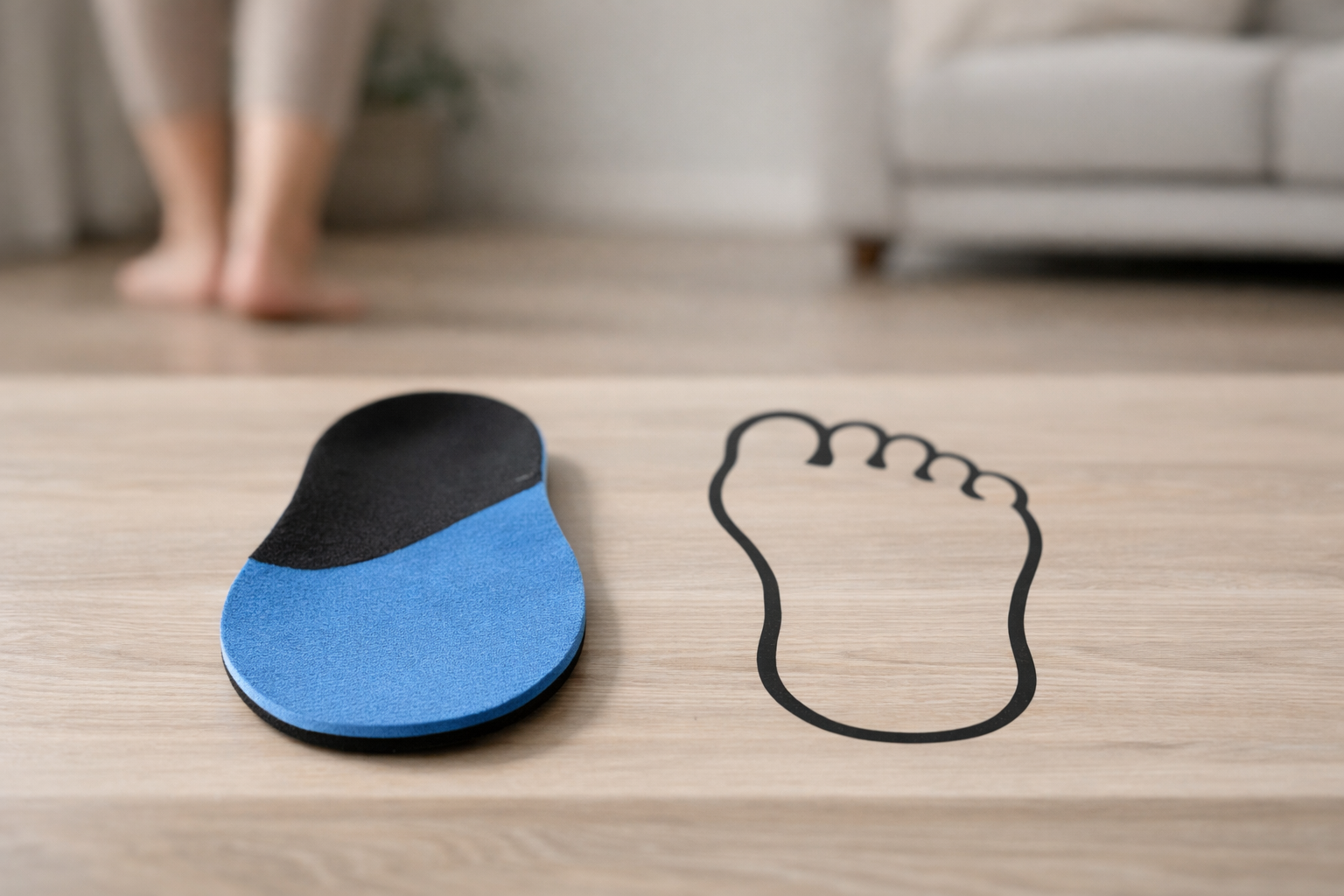
One trick that removes a lot of guesswork: pull the insole out of the shoe, set it on the floor, and stand on it. If your foot overhangs the edge at the ball or your toes hang off the front, that shoe is too small for you no matter what the box says. It’s crude and it’s remarkably accurate.
Lacing changes that buy you real room
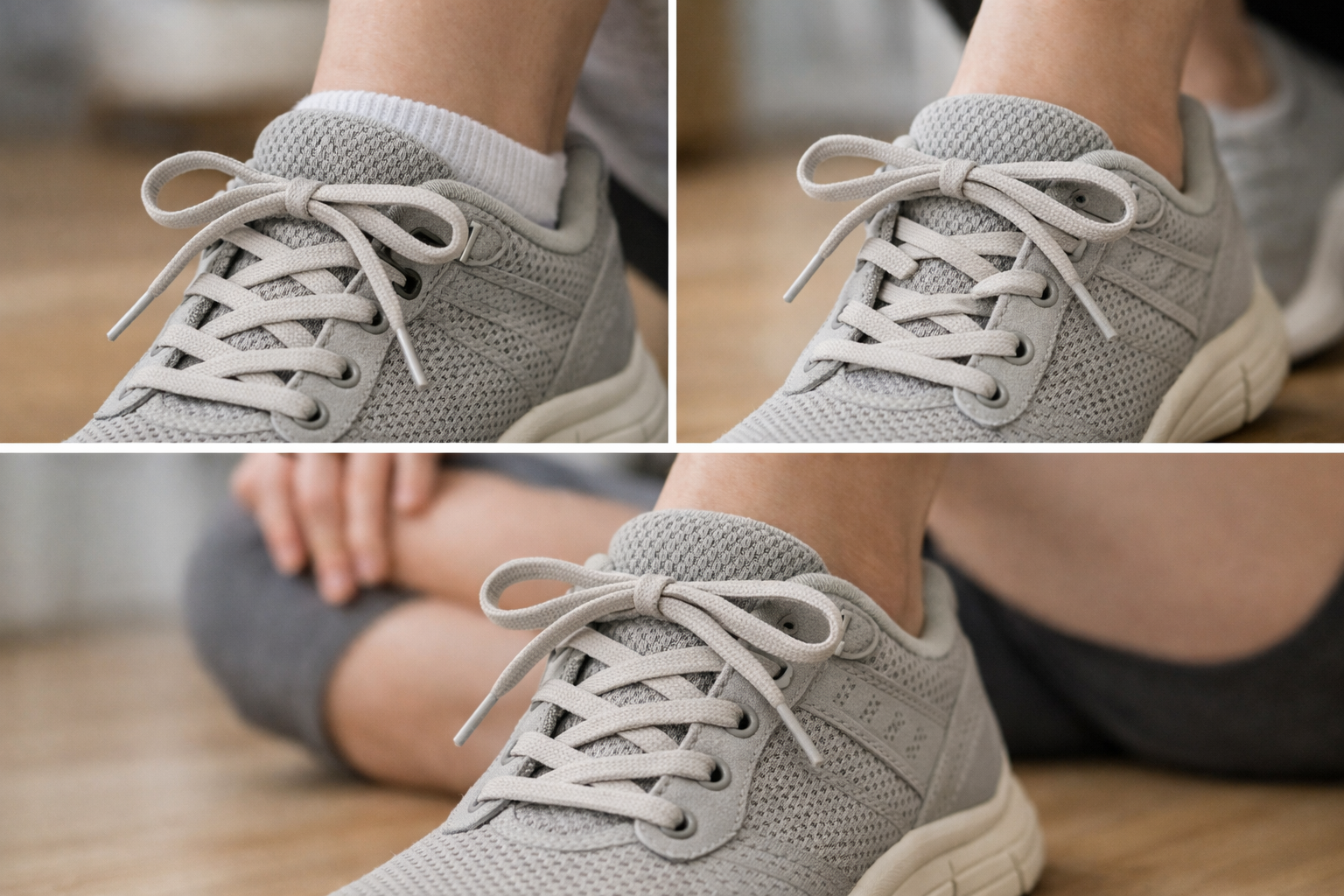
Before you conclude that nothing fits, try adjusting how you lace. These help most when the shoe is close but not quite right.
For a wide forefoot with a narrow heel: skip the bottom eyelets entirely to open up the front, and use a heel-lock (runner’s loop) at the top two eyelets to keep the heel from slipping.
For pressure across the top of the foot: skip the eyelets over the sore spot and lace around it, so the pull happens above and below rather than directly on it.
For a bunion or a specific hot spot: lace the forefoot loosely, snug the midfoot, and lock the heel. Most people lace uniformly tight from bottom to top, which is rarely what any foot wants.
Also worth checking: swap out a thick, cushioned stock insole for a thinner one. You can gain surprising volume that way, though if you rely on that insole for arch support, you’re trading one thing for another.
Where footwear fits in if you have ongoing foot pain
Here’s the part I care most about, because it’s where a lot of people spend years and a lot of money.
If you have heel pain, arch pain, or pain under the ball of the foot, and it keeps coming back, fixing your shoe fit is worth doing. Poorly fitting shoes add demand to a system that’s already struggling. Getting the fit right lowers that demand.
But lowering demand only takes you so far. Foot and tendon problems generally develop when what you’re asking the tissue to do exceeds what it can currently tolerate. You can attack that from either side. Reduce the demand (better shoes, an insert, less standing, more rest) or raise what the tissue can handle. Most people spend years working only the first side. Symptoms get quieter while the load is off, then return the moment life ramps back up, because nothing actually changed about the foot’s capacity.
This is why the shoe that felt like the answer for two weeks stopped feeling like the answer. It reduced sensitivity. It didn’t make the plantar fascia, the calf, or the foot muscles more capable. That takes progressive loading over weeks to months, starting at a level your foot tolerates and building from there. Recovery is built.
So my honest framing on footwear: it’s a load-management tool, and a good one. It’s not the treatment. A well-fitting shoe plus a plan to gradually ask more of your foot tends to work far better than either alone.
A note on morning pain and heel spurs, since they come up here constantly
If your heel hurts most in the first steps out of bed and eases after a few minutes, that pattern can be consistent with plantar fasciopathy, the persistent form of what most people call plantar fasciitis. It isn’t a sign that your foot got worse overnight. It’s a sensitivity pattern after hours with no load on the tissue. New shoes often help the rest of the day and do nothing for those first steps, which confuses people. It shouldn’t. Different mechanism.
And if an X-ray showed a heel spur, that usually reflects long-term stress at that spot rather than being the source of your pain. Plenty of people have spurs and no symptoms. Recovery tends to follow the same path whether or not one is there.
When to get it looked at
Shoes are a reasonable place to start on your own. Some things deserve an actual evaluation:
- Pain that’s been hanging around for more than a few weeks despite sensible changes
- Numbness, tingling, or burning between the toes or into the arch
- Pain that’s sharp and localized enough that you can point to it with one finger, particularly along a bone
- Swelling, redness, or warmth that doesn’t settle
- Pain that’s clearly getting worse week over week rather than fluctuating
- Any foot symptom if you have diabetes or known circulation or nerve issues, where a fit problem can become a skin problem quickly
Not every heel or forefoot pain is plantar fasciitis. Nerve irritation, stress reactions in bone, tendon problems, and fat pad issues can all feel similar to the person experiencing them, and they don’t all respond to the same approach. An in-person assessment sorts that out faster than another shoe purchase will.
If you’ve already tried the wide shoes, the inserts, the stretching, and the rest, and you’re still stuck, the missing piece often isn’t one more product. It’s a clear plan for how to build your foot back up to the walking, standing, and working you actually want to do.