Plantar Fasciitis and Heel Pain: Are They the Same Thing?
Heel pain is a symptom. Plantar fasciitis is one explanation for it, and the most common one, but not the only one. Here's how the two relate, what the pattern usually looks like, and what actually rebuilds a heel that's been hurting.
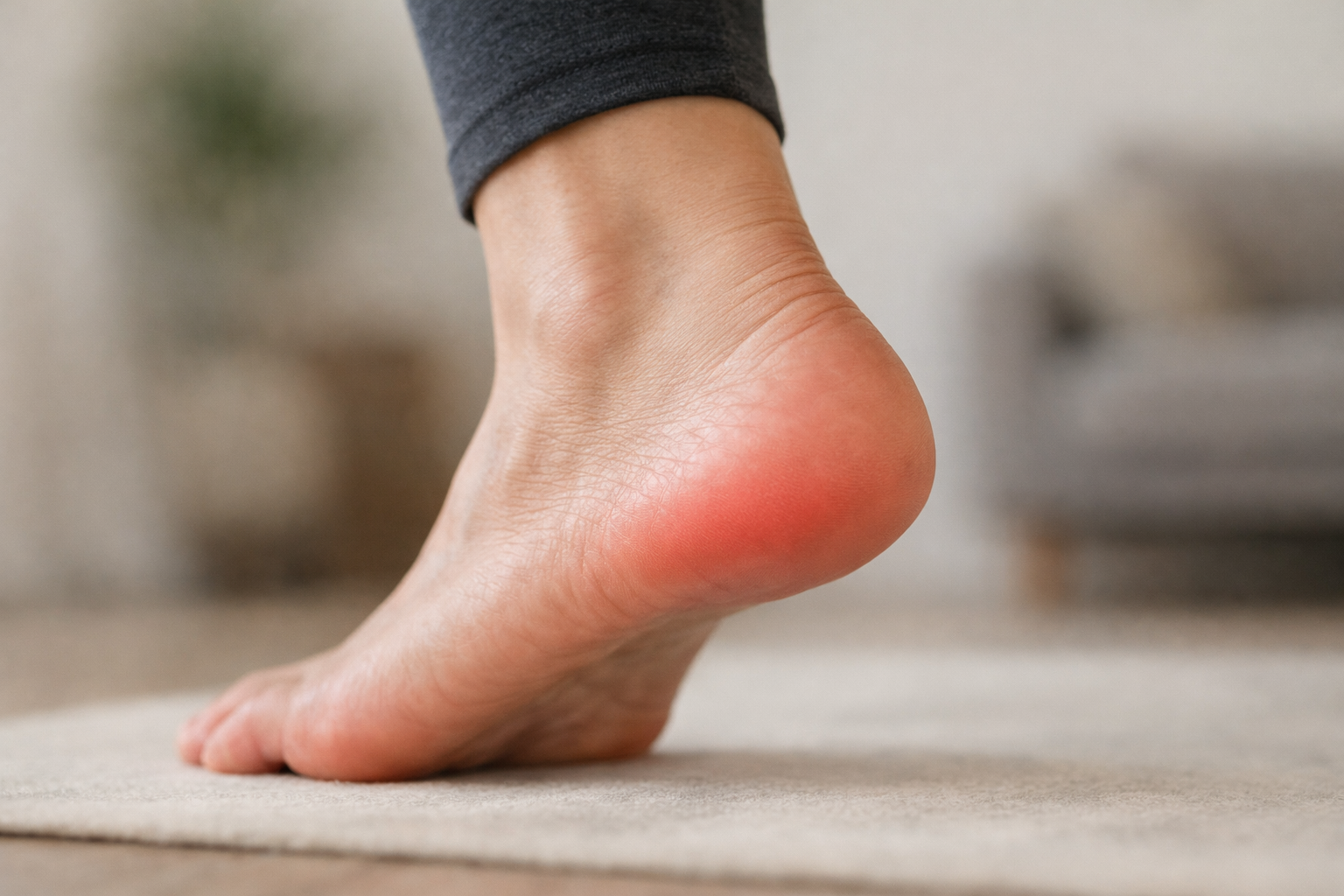
Most people arrive with some version of the same sentence: “I’ve got plantar fasciitis.” When I ask how they know, the answer is usually that their heel hurts, it’s worst in the morning, and someone (a friend, a search bar, a coach) put a name to it.
That’s a reasonable guess. It’s often right. But it’s worth separating two things that get used interchangeably, because the difference changes what you do next.
Heel pain is a symptom. It’s the thing you feel. Plantar fasciitis is one explanation for that symptom, and the most common one, but the heel is a small, busy piece of anatomy with several structures capable of hurting.
So: not the same thing. Overlapping heavily, but not the same.
Why the Words Get Used Interchangeably
Because the overlap is genuinely large. When someone has pain on the bottom of the heel that’s worse with the first steps out of bed, plantar fascia irritation is the most likely explanation by a wide margin. The shorthand is usually accurate.
The problem shows up in the minority of cases where it isn’t. If you assume plantar fasciitis and it’s actually a nerve, a bone stress reaction, or a fat pad that’s lost its cushioning, you can spend months rolling your arch on a frozen water bottle and wondering why nothing changes.
There’s also a naming issue worth clearing up. “Fasciitis” implies inflammation, and the assumption for a long time was that this was an inflammatory problem. When tissue samples from people with long-standing heel pain get examined, what shows up more often is degenerative change in the fascia rather than active inflammation. That’s why you’ll see the term plantar fasciopathy used for the persistent version. It sounds like a technicality. It isn’t. If the tissue is inflamed, calming inflammation is the treatment. If the tissue has become disorganized and weakened from stress it couldn’t keep up with, calming things down is only step one. The tissue also has to be rebuilt.
That single distinction explains why so many people get partial relief that keeps evaporating.
How Do You Know If Heel Pain Is Plantar Fasciitis?
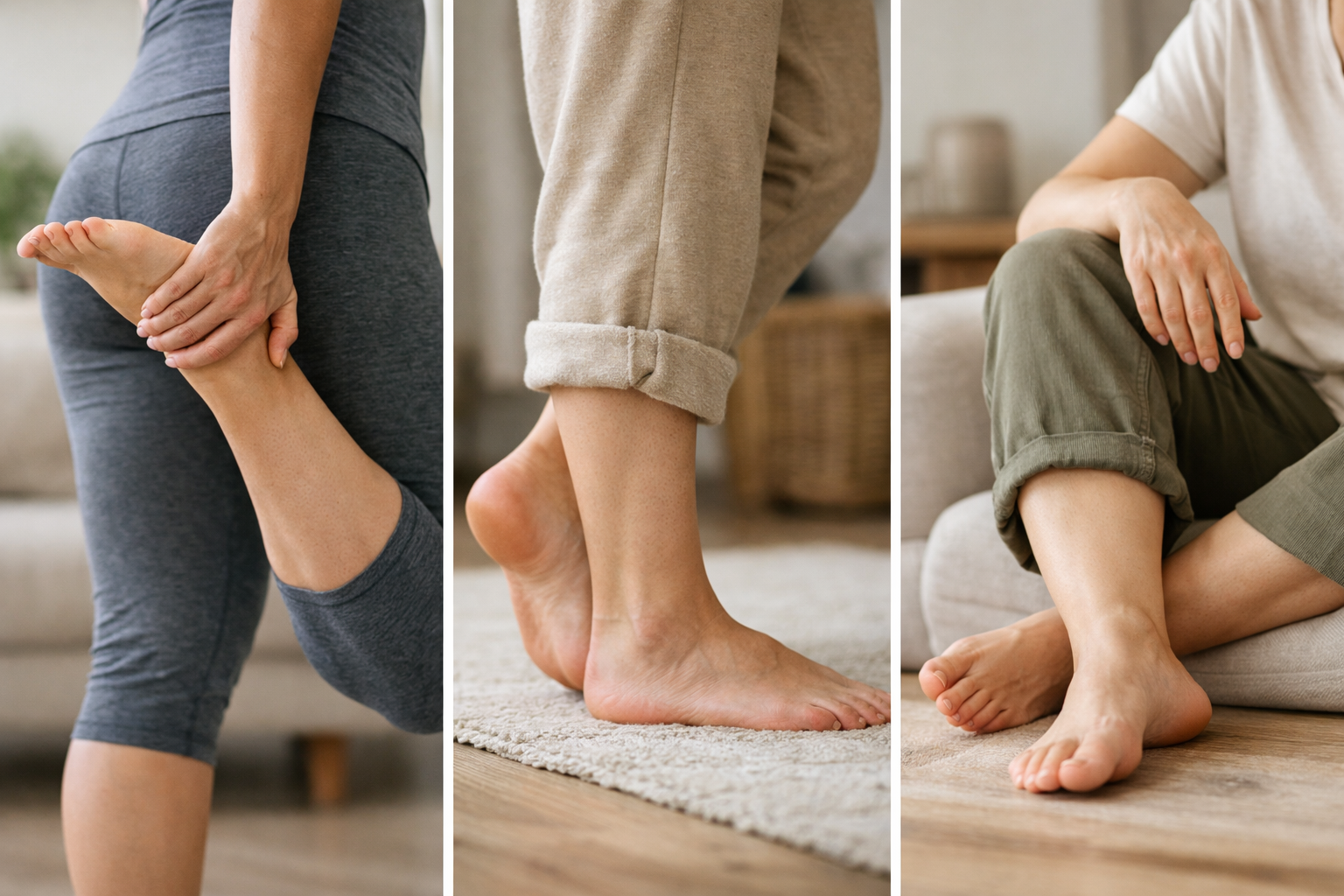
There’s a pattern, and it’s fairly recognizable. This can be consistent with plantar fasciitis when most of the following line up:
- Location. Bottom of the heel, usually slightly toward the inside, right where the fascia anchors into the heel bone. You can often point to it with one fingertip.
- Morning pain. The first several steps after waking are the worst of the day. Sharp, sometimes described as stepping on a stone or a bruise.
- It eases with movement, then returns. Ten or twenty steps in, it loosens. Then after sitting through a meeting or a car ride, those first steps hurt again.
- It’s worse late in a long day. Standing on concrete, a travel day, a big walking day. The pain often shows up that evening or the next morning rather than during the activity.
- It built gradually. Most people can’t name the exact day it started. They can name the month.
When those pieces fit together, the picture is fairly clear. When several of them don’t fit, that’s the signal to look harder.
Why does it hurt so much in the morning?
This is the question I get most, and the answer takes a lot of the fear out of it.
Overnight, your foot sits still with no load through it for seven or eight hours. The tissue isn’t being damaged during that time. It’s the opposite: it’s unloaded, and it becomes sensitive to being loaded again. Then you stand up and ask it to take your full body weight in one step, with no warm-up at all.
Morning pain is a sensitivity pattern, not evidence that your foot got worse overnight. Same thing happens after sitting at a desk for an hour. The tissue quiets down, and the first steps feel like a jolt.
Worth knowing, because most people interpret morning pain as proof that something is deteriorating while they sleep. It isn’t.
Can Heel Pain Be Mistaken for Plantar Fasciitis?
Yes, and it happens often enough that it’s worth a real evaluation if things aren’t moving.
A short list of what else can produce heel pain:
- Achilles tendon problems. Pain at the back of the heel or just above it, not the bottom. Different tissue, different loading, different rehab.
- Fat pad irritation or thinning. The heel has a built-in shock absorber. When it gets bruised or loses volume, the pain sits more centrally under the heel and feels deep and achy, more like a bruise than a sharp stab, and it’s often worse barefoot on hard floors.
- Nerve irritation. Branches of the tibial nerve run near the inside of the heel. Nerve-driven pain tends to burn, tingle, or radiate, and it may bother you at rest or at night, which fascia pain usually doesn’t.
- Bone stress reactions. Pain that is present with nearly every step, doesn’t warm up with activity, and keeps escalating rather than settling.
- Inflammatory conditions. Certain systemic conditions can cause heel pain, sometimes at multiple tendon attachment points, sometimes with prolonged morning stiffness elsewhere in the body.
If you want the deeper version of this, we’ve written a separate piece on what gets mistaken for plantar fasciitis and another on heel pain red flags. For our purposes here, the takeaway is simpler: if your pain doesn’t warm up with movement, wakes you at night, burns or tingles, or is getting steadily worse week over week, the plantar fasciitis label deserves a second look.
What Is the Heel Squeeze Test?
It’s a simple screening maneuver. You (or a clinician) squeeze the heel bone from both sides at once, compressing it side to side rather than pressing up into the sole.
The logic: plantar fascia irritation lives on the underside of the heel, at the attachment point. Squeezing the heel from the sides doesn’t put much stress on that spot. If side-to-side compression reproduces sharp pain, it raises suspicion for something within the bone itself, like a stress reaction or stress fracture, rather than the fascia.
It’s a clue, not a verdict. A positive squeeze test doesn’t confirm a fracture, and a negative one doesn’t rule one out. It’s one input among several: how the pain started, whether your walking volume jumped recently, whether the pain warms up or worsens, whether it hurts with every single step. Clinicians use it as a reason to ask more questions, not as a diagnosis on its own.
Same goes for the other tests you’ll read about. Pressing on the inside of the heel, pulling the toes back to put the fascia on stretch, checking calf flexibility. Each one adds information. None of them stands alone.
Why Did I Suddenly Get Plantar Fasciitis?
The word “suddenly” is usually doing some work here. Most of the time the tissue had been quietly accumulating more demand than it could handle for a while, and one particular day tipped it over.
What I look for is what changed in the four to eight weeks before it started:
- New shoes, or old shoes that finally wore out
- A new job, a new floor surface, a move from sitting to standing
- A jump in running mileage, or coming back from a layoff at the volume you left at
- A vacation with a lot of walking, often in flat sandals
- Starting a new training program, especially one with jumping or hill work
- A change in body weight, which changes the load through the foot with every step
- A different injury elsewhere that quietly changed how you walk
None of that is a moral failing. It’s arithmetic. Your foot has a certain capacity to tolerate load right now, built up over years of whatever you’ve been doing. When the demand goes up faster than the capacity can adapt, the tissue starts to complain. The fascia isn’t weak because you did something wrong. It’s just behind.
And here’s the part that trips people up: the load that caused today’s pain often happened yesterday or the day before. Symptoms lag. You’ll walk five miles on Saturday, feel fine, and wake up Monday morning wondering what you did. You did Saturday.
How Do I Get Rid of Plantar Fasciitis in My Heel?

Two jobs, not one. Most treatment plans do the first and stop.
Job one: bring the sensitivity down. Temporarily reduce whatever is spiking the load. Not to zero. Just enough. Swap the flat shoes for something with more support for a few weeks. Break a long standing shift into segments. Cut the run and add the bike. Some people get real relief from taping, a heel cup, or an insert. Stretching the calf and the bottom of the foot often helps things feel better in the short term. Night splints work for some people, mostly by keeping the tissue from settling into a shortened, sensitive position overnight.
All of that is legitimate. None of it is the whole plan.
Here’s why. Everything in job one works by lowering the demand or dialing down sensitivity. It doesn’t change what the tissue can handle. So when your life goes back to normal, the demand goes back up, the capacity is still where it was, and the heel starts talking again. That’s the loop people get stuck in for years. It looks like failure. It’s actually just an incomplete plan.
Job two: rebuild what the foot can handle. This is loading, and there’s no shortcut around it. Tissue adapts to being asked to do progressively more, in a dose it can recover from, repeated over weeks.
In practice that usually means:
- Calf and foot strengthening under real load. Heel raises are the backbone of it, progressed over time: two feet, then one foot, then with the toes propped on a towel or step edge so the fascia is put on stretch as you rise. Slow. Controlled. Heavy enough to be work.
- Intrinsic foot work. The small muscles inside the foot share load with the fascia. When they’re capable, the fascia carries less.
- Building tolerance for the actual thing you want to do. If you want to stand for eight hours or run a 10K, at some point the plan has to include standing and running, built up in steps.
- Enough time at each level. Early improvements come largely from your nervous system getting better at recruiting what you already have. Actual structural change in the tissue takes longer. For many people, meaningful adaptation happens over something like eight to twelve weeks of consistent loading, sometimes longer with a long-standing problem. This is where consistency beats intensity, because three good sessions a week for three months does far more than two heroic weeks.
A practical guideline I use with a lot of people: keep pain during and shortly after loading at or below roughly a 4 out of 10, and check in with your foot about 24 hours later. If it’s settled back to your normal baseline by the next morning, the dose was reasonable. If it’s still elevated a day later, that dose was too much for right now. Scale it back, not to nothing, and try again.
Those numbers are a general starting frame, not a prescription. Some feet tolerate more, some less, and a good clinician adjusts based on what yours actually does.
Is Walking Good for Plantar Fasciitis?
Usually yes, in the right amount.
Walking loads the fascia, and load is what eventually makes the tissue more capable. It also keeps your calf, hip, and ankle working normally, keeps circulation moving, and keeps you from building the guarded, limping pattern that creates new problems in the knee or the other leg.
The question isn’t walk or don’t walk. It’s how much, on what surface, in what shoes, broken up how.
Some things that make walking work better while your heel is irritable:
- Shorter, more frequent walks instead of one long one
- Supportive shoes for now, even indoors on hard floors, with barefoot time added back later
- Softer surfaces where you have the choice
- A brief warm-up before the first steps in the morning: a few ankle circles, a gentle calf stretch, some toe curls, before your foot hits the floor
What I want to steer you away from is the instinct to shut everything down until the pain is gone. Complete rest calms the tissue and shrinks its capacity at the same time. You come back to the same activity with less to work with than you had before. Rest equals rust. Short doses of relative rest are useful. Weeks of it usually aren’t.
What’s the Worst Thing You Can Do for Plantar Fasciitis?
The honest answer is less dramatic than most lists suggest. It’s not one exercise or one shoe brand. It’s the two ends of the spectrum.
Pushing straight through, unchanged. Same mileage, same shift, same shoes, every day, telling yourself it’ll settle. It generally doesn’t, and the tissue stays permanently over its limit with no window to recover.
Shutting down entirely and waiting. This is the more common one, and it’s more subtle because it feels responsible. You rest, it feels better, you go back, it hurts again, so you rest longer. Months go by. Nothing rebuilt.
A few smaller things that tend to work against people:
- Aggressive deep massage or rolling on something hard when the foot is already highly irritable. Some soft tissue work helps. Grinding an angry heel into a lacrosse ball usually just raises the sensitivity.
- Stretching as the entire plan. Stretching can feel good and can help in the moment. It doesn’t build capacity on its own.
- Restarting at your old volume the day it stops hurting. Pain resolving and tissue being ready are two different milestones, and the second one comes later. Stopping in that gap is the single most common reason this comes back.
- Chasing a new treatment every two weeks. Loading takes time to work. If you keep switching before anything has had a chance, you never find out what would have.
What Is “Stage 4 Plantar Fasciitis”?
You’ll see staging systems online, usually four stages running from occasional morning twinges up to constant pain with tissue degeneration or a partial tear. Some are borrowed from tendon research, some are invented for content.
There isn’t a single accepted staging system for this that clinicians use to guide treatment. What matters more, and what I actually assess, is a few practical things:
- How long it’s been going on. Weeks behaves differently from years.
- How easily it gets stirred up. Does it take a five-mile walk to provoke it, or does standing to make coffee do it?
- How long it takes to settle. An hour, or two days?
- What you can currently do. How far you can walk, how long you can stand, how you feel the next morning.
Those four answers tell me where to start and how fast to move. A stage number doesn’t add much.
And if you’ve had this for a year or three, hear this clearly: persistent doesn’t mean permanent. What it usually means is that you’re starting from a lower baseline and the progression needs to be more patient. Not that the tissue has passed some point of no return. Feet that have hurt for a long time still adapt. The work just takes longer and requires better pacing.
A Quick Word on Heel Spurs
This comes up constantly, so it’s worth being direct. Plenty of people with a heel spur on X-ray have no pain at all. Plenty of people with classic plantar fascia pain have no spur.
A spur is generally a response to long-term stress at the attachment site, not the thing generating your pain. Same with fascia thickening on ultrasound: it reflects that the tissue has been adapting to stress, which is information, not a sentence. A scan can show structural changes without telling us why you hurt.
The rehab plan is the same either way.
When to Get It Looked At
If your heel pain has been hanging around more than a few weeks without improving, if it’s getting worse rather than better, if it wakes you at night, if it burns or tingles or shoots into the arch or toes, if it hurts with every single step and never warms up, or if it followed a specific injury, get it evaluated. An in-person exam can sort out which structure is actually involved, which changes the plan considerably.
That’s also true if you’ve been doing the right general things for a couple of months and nothing’s shifting. Sometimes the missing piece isn’t another treatment. It’s someone figuring out where your foot is right now and building a progression from there.
The heel is a symptom. Plantar fasciitis is one answer. Getting the right answer is what makes the work worth doing.