Massage for Plantar Fasciitis: Techniques and Safety Considerations
A practical look at self-massage and professional massage for plantar fasciitis, including techniques, realistic expectations, and where massage fits into a load-based recovery plan.
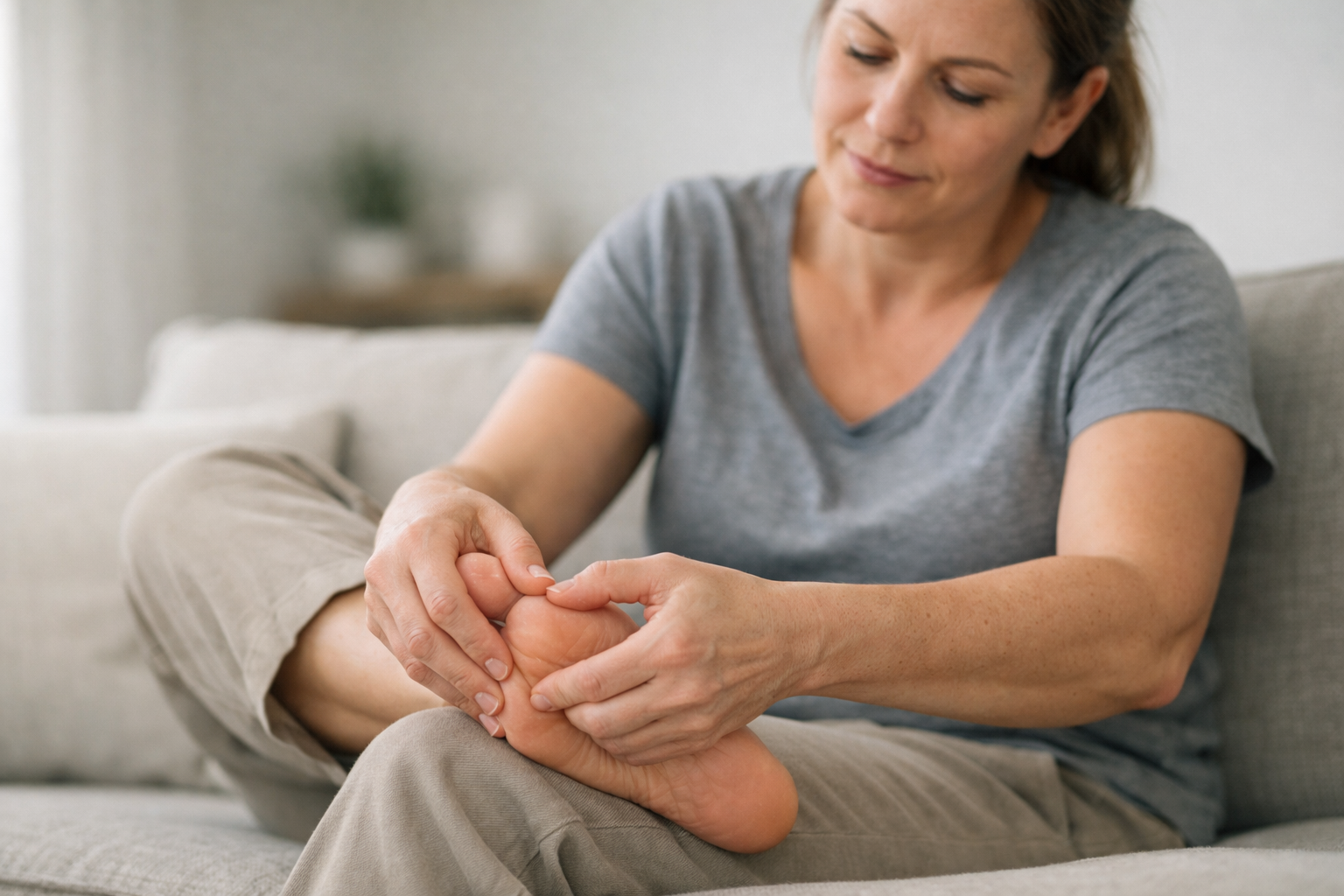
Massage feels good on a sore arch, and for many people it genuinely helps take the edge off heel pain. But it’s worth understanding what massage can and can’t do before you build your whole recovery plan around it. This article covers the techniques, the safety questions people ask most, and where massage fits alongside the rest of a load management approach.
Can Plantar Fasciitis Be Massaged Out?
Not on its own, and it helps to understand why. Massage works on sensitivity. It increases local blood flow, reduces muscle guarding in the calf and foot, and can genuinely turn down the volume on pain signals for a few hours. That’s worth having in your toolkit.
What massage doesn’t do is rebuild the mechanical capacity of the fascia itself. The plantar fascia is a load-bearing structure, and tissue that’s been overwhelmed by demand (standing all day, a new running mileage, a change in footwear) needs progressive loading over weeks to adapt and get stronger, not just less irritated. Think of massage as something that manages sensitivity while the more important structural work happens elsewhere, usually through graded loading exercises. If you haven’t seen our guide on plantar fasciitis exercises, that’s where the actual tissue-building work lives.
So the honest answer is: massage can make the foot feel better, sometimes considerably better, but it isn’t the mechanism that resolves fasciopathy by itself.
Self-Massage Techniques You Can Do at Home
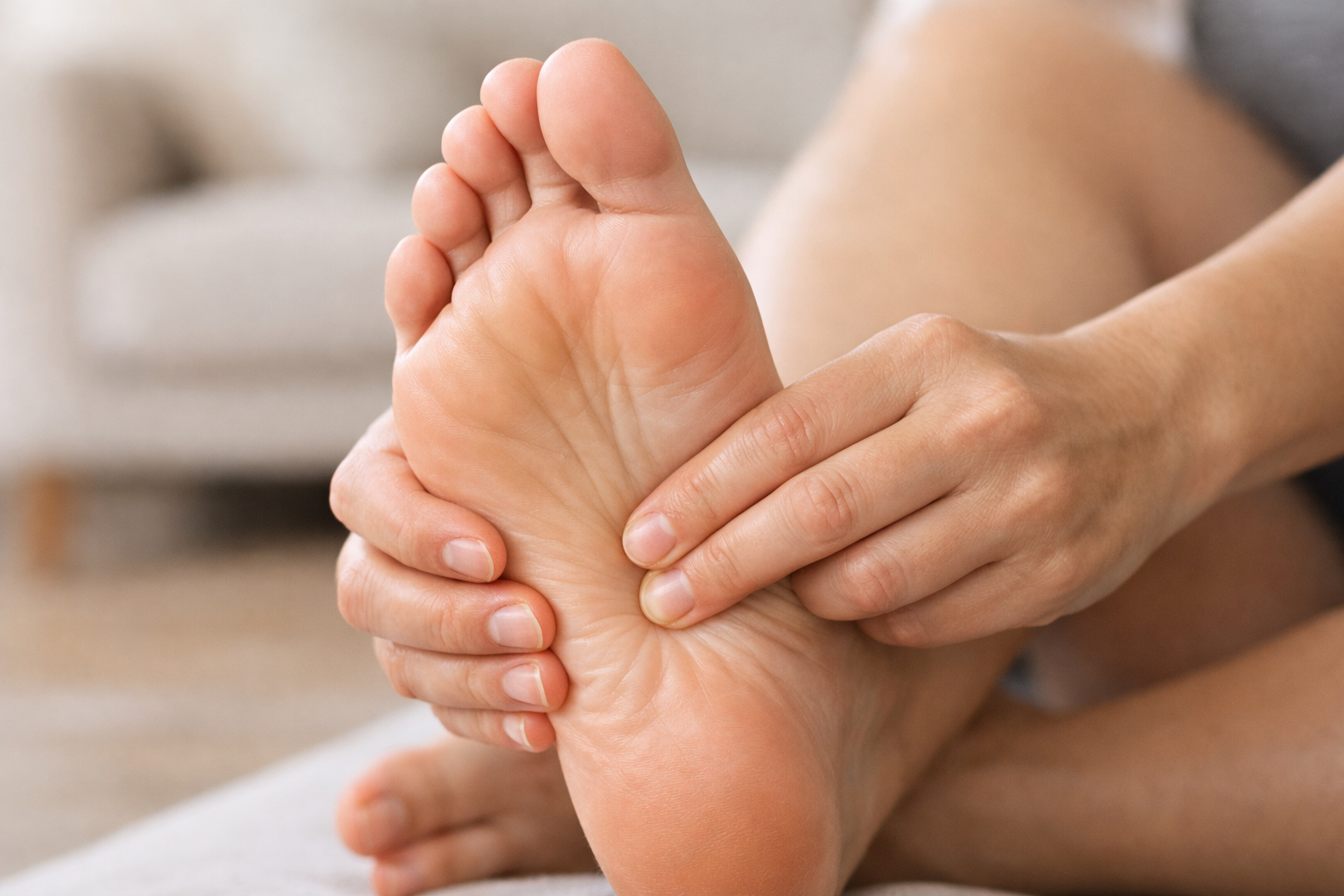
These are simple, low-risk, and worth trying as part of a daily routine. None of them require special equipment.
Thumb strokes along the arch. Sit with your foot crossed over the opposite knee. Using both thumbs, apply firm but comfortable pressure starting at the heel and working toward the ball of the foot, following the length of the arch. Repeat for one to two minutes.
Cross-friction over the heel area. Using your thumb or knuckle, apply small side-to-side strokes just in front of where the fascia attaches to the heel bone. Keep pressure moderate. This area is often the most sensitive, so there’s no need to dig in hard for it to help.
Ball or roller rolling. Rolling the arch over a tennis ball, lacrosse ball, or a frozen water bottle is a common approach. The cold from a frozen bottle can add a mild numbing effect on top of the mechanical pressure, which some people find useful after a long day on their feet.
Calf and Achilles work. The calf muscles and Achilles tendon share a functional line with the plantar fascia through the back of the leg. Massaging the calf, particularly if it feels tight or restricted, can indirectly ease tension through the whole chain.
A reasonable routine is two to three minutes per foot, once or twice a day, ideally paired with your loading exercises rather than as a replacement for them.
Is There a Specific Pressure Point for Plantar Fasciitis?
People often ask about a single spot that unlocks relief. There isn’t one specific point backed by strong evidence, but the area just in front of the heel bone, where the fascia originates, tends to be the most reliably tender and the most commonly targeted spot in both self-massage and professional treatment. Pressing here with moderate, sustained pressure for thirty to sixty seconds is a common technique. Some approaches, including certain traditional Chinese medicine and reflexology methods, focus on points along the sole and heel as well, though the evidence behind targeting a single point for lasting relief is limited. Used as one part of a broader plan, it’s a reasonable thing to try. Used as the only intervention, it’s unlikely to change the underlying tissue capacity.
Professional Massage: What It Adds
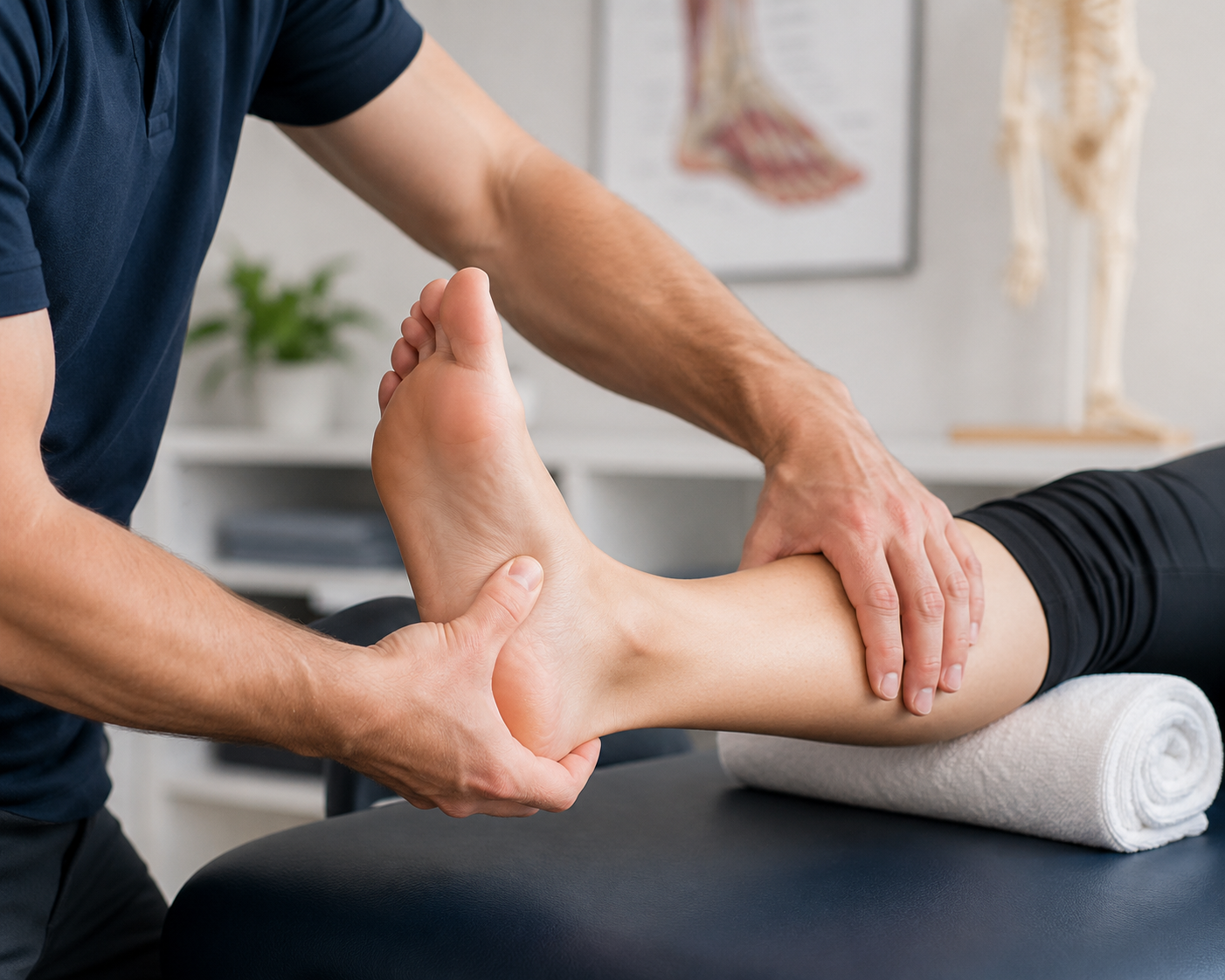
A physical therapist, massage therapist, or manual therapist can do a few things a self-massage routine typically can’t.
They can assess the whole kinetic chain, not just the arch. Tightness or restriction in the calf, Achilles, or even the hip can change how load moves through the foot with every step. Addressing those areas sometimes reduces strain on the fascia more effectively than working the arch alone.
They can apply techniques like instrument-assisted soft tissue mobilization or deep friction massage with more precision and consistency than most people can manage on their own foot.
And they can tell you if something else is going on. Not all heel and arch pain is plantar fasciitis. Tarsal tunnel syndrome, fat pad atrophy, nerve entrapment, and even a stress fracture can produce similar symptoms and get mistaken for plantar fasciopathy. A clinician who examines the foot can usually sort out what’s driving your specific pain rather than guessing from symptoms alone.
What About Massage Guns?
Percussive massage devices have become popular, and they can offer similar sensitivity relief to manual massage, sometimes with less effort. If you use one, keep the intensity moderate and avoid pressing directly and forcefully into the heel bone attachment site, since that area can be quite reactive. A lighter setting applied to the calf and the fleshier part of the arch is generally more comfortable and just as useful for most people.
Is There a Way Massage Can Make Things Worse?
Yes, and this is worth taking seriously. Overly aggressive deep tissue work, especially right at the heel attachment, can flare up an already sensitive area. Pain is a protective output of the nervous system, and pushing through sharp or worsening pain during massage isn’t productive, it’s just adding more load to a tissue that’s already struggling to keep up with demand.
A general guide: discomfort during massage is fine if it stays in a mild to moderate range, roughly a 3 or 4 out of 10, and settles down within a day. If a session leaves you noticeably worse the next morning, or if pain climbs during the massage itself, that’s a signal to ease off pressure and duration next time, not a sign you need to push harder.
What’s the Worst Thing You Can Do for Plantar Fasciitis?
Outside of massage specifically, the two most common mistakes are opposite ends of the same problem. Going completely sedentary, avoiding all walking and standing to “protect” the foot, lets capacity decline further and often makes the tissue more reactive when you do move again. On the other end, pushing through sharp pain during high-impact activity like running or long shifts on hard floors, hoping it’ll just work itself out, tends to keep the fascia in a state of irritation that never gets a chance to adapt. The middle path, staying active within a tolerable range while gradually building capacity, is what tends to work for most people. We cover this in more detail in our article on plantar fasciitis exercises.
Why Did I Suddenly Develop Plantar Fasciitis?
It rarely happens for no reason, even when it feels sudden. Common contributors include a jump in walking or running volume, a new job that involves more standing, a change in footwear, weight change, or simply an accumulation of daily load that finally exceeded what the tissue could tolerate. None of these are personal failures. They’re just examples of total load, the sum of exercise, work, and daily life, outpacing capacity at a given point in time. Symptoms can also lag a day or two behind the activity that caused them, which is why people often can’t immediately pinpoint what triggered a flare.
What Is Stage 4 Plantar Fasciitis?
You may see plantar fasciitis described in stages online, with later stages implying tearing, chronic degeneration, or structural failure of the fascia. In clinical practice, this staging isn’t a standardized diagnostic system most physical therapists or physicians use day to day. What’s more accurate is describing the condition on a spectrum from acute irritation to a more chronic state, often termed plantar fasciopathy, where the tissue has undergone changes in response to prolonged stress rather than active inflammation. Chronic doesn’t mean permanent. It usually means starting from a lower baseline and progressing more patiently, not that recovery is off the table.
What Finally Resolves Plantar Fasciitis for Most People?
There’s no single technique that works for everyone, and be cautious of any claim promising a fast, universal fix. What tends to work, based on general physical therapy principles, is a combination: manageable activity modification (not complete rest), footwear that supports rather than aggravates the foot, and a structured, progressive loading program that gradually rebuilds the fascia’s tolerance over roughly eight to twelve weeks. Massage, stretching, and other symptom-modifying tools can support that process, but the loading progression is usually the piece doing the heavy lifting. The principles are sound even though the timeline and details differ from person to person.
A Quick Note on Other Approaches
Orthotics, night splints, and even corticosteroid injections all have a role for some people, generally as tools to manage load or reduce sensitivity while capacity is being rebuilt. None of them are a cure on their own, and none should be viewed as a failure if you need them. They’re tools, not verdicts on how serious your case is.
When to See Someone
If your heel or arch pain is severe, doesn’t improve after a few weeks of sensible self-care, or is accompanied by numbness, tingling, or swelling that seems out of proportion to activity, it’s worth getting evaluated. This can be consistent with plantar fasciopathy, but it can also reflect something else entirely, and a proper exam sorts that out faster than months of guessing. Many people improve with a well-structured plan. Massage can be a helpful part of that plan, just not the whole plan.