Is Walking Safe with a Heel Spur? Guidelines for Staying Active
A practical, load-based guide to how much walking is reasonable with a heel spur, how to tell productive activity from a setback, and what actually needs to happen for the pain to settle.
If you’ve been told you have a heel spur and you’re wondering whether you should keep walking, you’re asking the right question. Most of the advice out there splits into two unhelpful camps: “rest completely until it stops hurting” or “just push through it.” Neither one reflects how bone, tendon, and fascia actually adapt. The better question isn’t whether walking is good or bad. It’s how much walking your foot can currently tolerate, and how to build that tolerance up over time.
The Spur Isn’t Usually the Problem
A heel spur is a small calcium deposit that forms where the plantar fascia or Achilles tendon attaches to the heel bone, usually after months or years of repetitive tension at that spot. It’s a marker of chronic stress on the tissue, not the source of your pain. Most people with a spur on imaging have no pain at all, and plenty of people with significant heel pain have a completely normal x-ray. The pain almost always comes from irritated soft tissue around the spur, most often the plantar fascia, not the bony point itself.
That distinction matters for your walking question. You’re not trying to protect a fragile piece of bone from being worn down. You’re trying to manage the load on soft tissue that’s currently more sensitive than it should be.
What Happens If You Keep Walking on a Heel Spur
Walking on a heel spur doesn’t damage the bone further, and it doesn’t grind the spur down or make it grow. What can happen is that the surrounding fascia or tendon, already irritated, gets pushed past what it can currently handle. That shows up as more pain during the walk, more pain afterward, or pain that’s worse the next morning.
None of that means you’re causing structural harm. It means the day’s total load exceeded the tissue’s current capacity. The tissue registers that as increased sensitivity, and your nervous system responds with more pain output as a protective signal. It’s uncomfortable, but it’s not the same as tissue failure. The practical issue is that repeated days of overload without recovery keep the tissue in an irritated state and slow down the process of building it back up.
Does Walking Make Bone Spurs Worse?
No. The spur itself is a fixed, bony structure. Walking doesn’t enlarge it, sharpen it, or drive it further into the tissue. What walking can worsen is the soft tissue irritation around it, if you’re doing more than your foot currently tolerates. So the honest answer to “does walking make bone spurs worse” is that it doesn’t affect the spur at all, but it absolutely can affect your symptoms, for better or worse, depending on how it’s dosed.
Guidelines for Staying Active
Complete rest is rarely the answer. Tissue that’s unloaded for weeks doesn’t get stronger, it gets deconditioned, and pain often returns as soon as you resume normal activity because nothing about the tissue’s actual capacity has changed. At the same time, walking through significant pain every day keeps the area irritated and can delay recovery. The goal is somewhere in the middle: staying active at a level your foot can currently handle, then gradually increasing that level as it adapts.
A few patterns we use to guide that decision-making, offered as general guidelines rather than hard rules:
- Pain during and after activity. Many people do reasonably well keeping discomfort at or below roughly a 4 out of 10 during walking, and finding it settles back to baseline within about 20 to 30 minutes of stopping. Pain that climbs higher or lingers well past that point is a signal to shorten the walk or slow the pace, not necessarily to stop moving entirely.
- The next-day check. Symptoms from a walk often show up the following morning, not immediately. If you’re noticeably worse the next day, that’s more informative than how you felt mid-walk. A rough rule of thumb: if soreness hasn’t settled back down within about 24 hours, the prior day’s load was probably more than the tissue could absorb.
- Surface and duration matter more than whether you walk at all. Shorter walks on flatter, softer surfaces (grass, a track, a treadmill with some give) generally load the fascia less than long walks on concrete or uneven ground. If you need to be on your feet a lot for work, breaking the day into shorter bouts with brief sit-down breaks can help spread the load out.
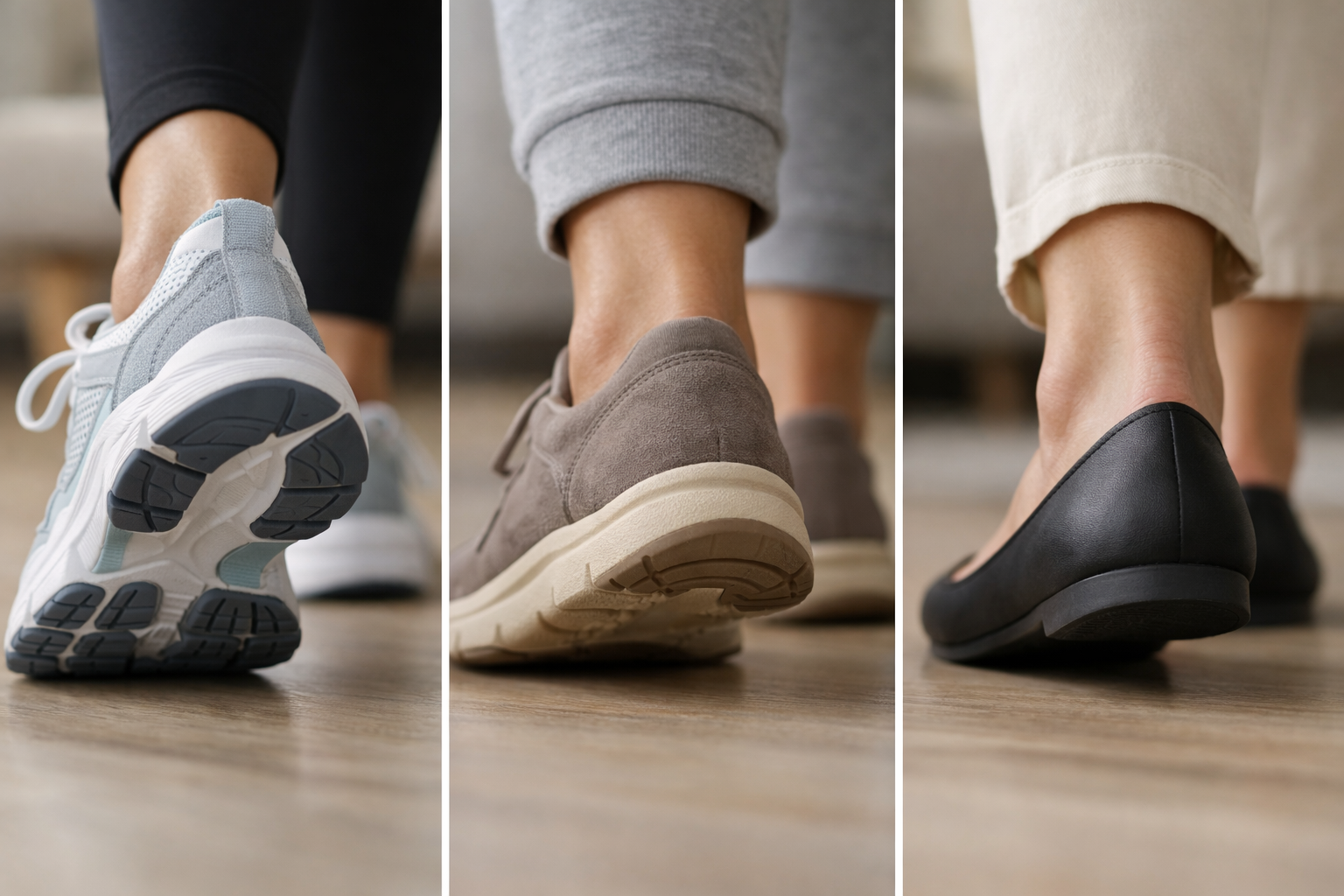
- Footwear is a load-management tool. A supportive shoe with adequate cushioning and a slight heel-to-toe drop reduces strain on the plantar fascia with each step. This doesn’t mean you need an expensive shoe or a permanent orthotic; it means your current footwear is either helping or working against you, and it’s worth paying attention to which.
- Total load counts everything. Your morning walk isn’t happening in isolation. If you’re also on your feet all day at work, standing at a counter, or chasing kids around, all of that adds to the same tissue’s daily workload. A walk that would be fine on a quiet day might tip things over on a day you were already on your feet for eight hours.
None of these numbers are guarantees or hard cutoffs, and they’ll vary from person to person. They’re a way to make decisions about pacing instead of guessing.
What Triggers a Heel Spur
Spurs form gradually, from repeated tension at the point where the fascia or tendon attaches to the heel bone. Common contributors include a sudden jump in walking or running mileage, standing jobs, worn-out or unsupportive footwear, higher body weight (which increases the load on the heel with every step, not a reflection of anything you did wrong), and biomechanical patterns like a tight calf or a flatter or higher arch that change how force travels through the foot. In most cases it’s not one single event but months or years of cumulative load exceeding what the tissue could adapt to at the time.
What Is the Fastest Way to Heal a Heel Spur, and Can You Dissolve One Naturally?
There isn’t a fast track, and there’s no natural remedy, supplement, or stretch that dissolves a bone spur. Once calcium has been laid down at the attachment point, it doesn’t reabsorb on its own. That sounds discouraging, but it’s actually good news in disguise: since the spur usually isn’t what’s causing your pain, you don’t need to get rid of it to feel better.
What actually resolves the pain is rebuilding the capacity of the fascia and surrounding tissue so it can tolerate your daily activity again. That happens through a progressive loading program, staying active within a tolerable range, and giving the tissue consistent, graded stress over roughly 8 to 12 weeks for many people, sometimes longer if symptoms have been present for a long time. Chronic doesn’t mean permanent. It usually just means starting from a lower point and being more patient with the progression.
Do Heel Bone Spurs Ever Go Away?
Once formed, spurs typically persist on imaging indefinitely; they don’t shrink or disappear even after the pain resolves. That can feel unsettling if you’re picturing the spur as the injury. It’s more useful to think of it as a permanent record of past stress, similar to a scar, rather than an ongoing problem. Plenty of people carry a spur on x-ray for years with zero symptoms.
What Will a Podiatrist or Physical Therapist Do for a Heel Spur?
Evaluation typically starts with a history and a physical exam to assess where exactly the pain is coming from, how your foot moves, and what’s driving the load pattern. Imaging may confirm a spur, but treatment decisions are based on your symptoms and function, not on the x-ray alone. From there, care generally includes a graded loading and stretching program targeted at the fascia and calf, footwear or orthotic recommendations to manage load in the short term, and activity modification guidance rather than blanket rest. In some cases, options like taping, night splints, or an injection are used to reduce sensitivity temporarily so you can tolerate the loading program more comfortably. Surgery is uncommon and generally reserved for cases that don’t respond after a genuine, sustained course of conservative care.
What Gets Mistaken for a Heel Spur
Heel pain has several possible causes, and not all of them are plantar fasciopathy or a bony spur. Fat pad atrophy (thinning of the natural cushioning under the heel), tarsal tunnel syndrome, a stress fracture, Achilles tendinopathy if the pain is at the back of the heel, and nerve entrapment can all produce similar symptoms. If your pain doesn’t fit the typical pattern, doesn’t respond to a reasonable trial of load management, or comes with numbness, tingling, or pain that’s worse at rest, it’s worth getting evaluated rather than assuming it’s a straightforward spur.
What Is the Best Exercise for Heel Spurs?
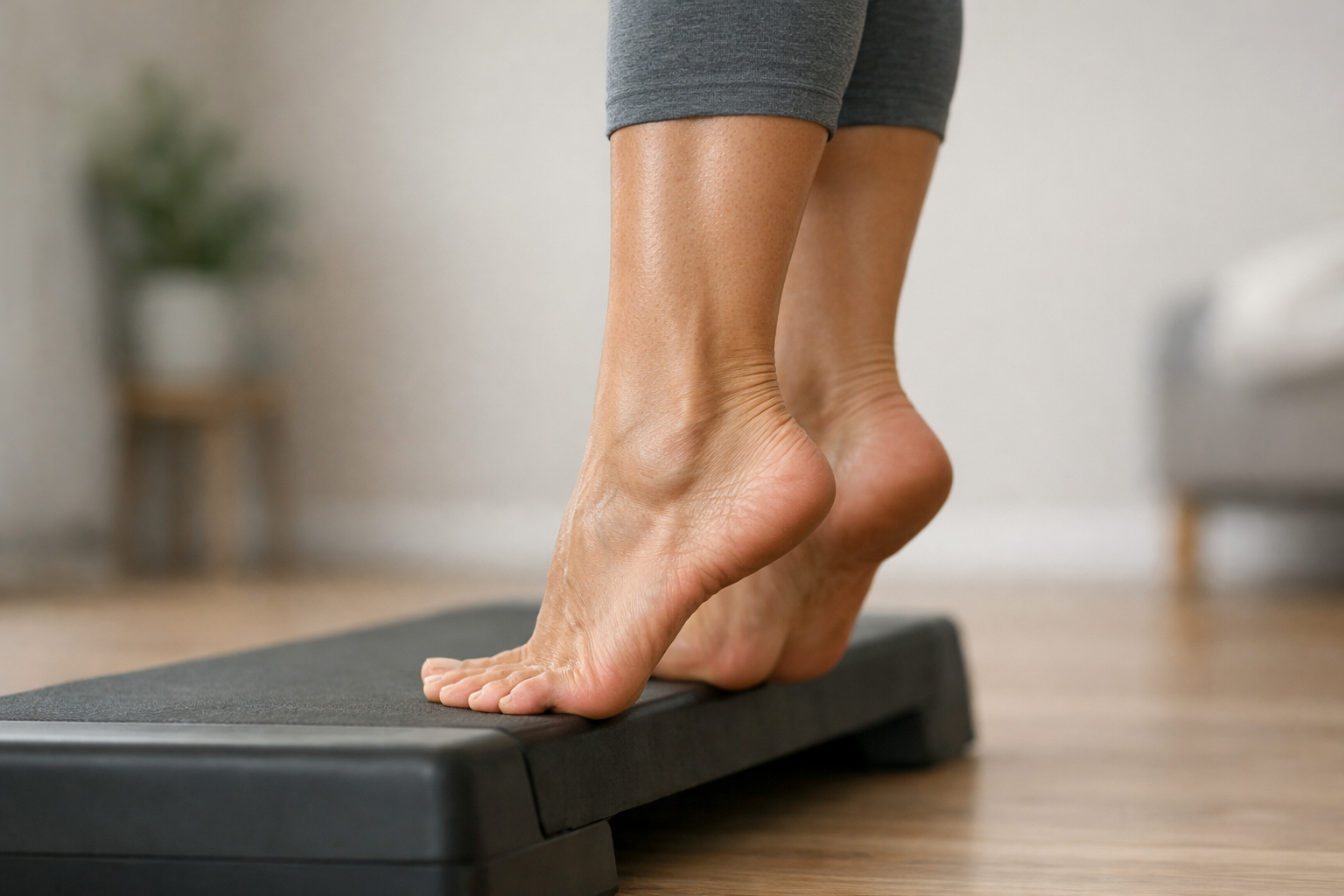
Calf raises, seated and standing, along with plantar fascia-specific loading exercises, tend to be the backbone of a good program, because they directly build the tolerance of the tissue that’s actually generating the symptoms. Stretching the calf and fascia can reduce sensitivity in the short term but doesn’t change the tissue’s underlying capacity by itself. For a fuller breakdown of what calms symptoms short-term versus what builds lasting tolerance, our article on heel spur pain relief walks through that progression in more detail.
When to See Someone
Most heel spur pain responds well to a sensible activity and loading plan over a matter of weeks, and many people improve without any dramatic changes to their routine. But if pain is severe, worsening despite modifying your activity, waking you at night, or accompanied by numbness or tingling, it’s worth having it evaluated rather than managing it on your own. An assessment can rule out the other conditions that mimic a spur and make sure the plan you’re following actually matches what’s going on in your foot.
Walking isn’t the enemy here. Done at the right dose, it’s part of how the tissue rebuilds the capacity it needs.