Plantar Fasciitis vs. Heel Spurs: What They Actually Mean
Heel spurs and plantar fasciitis get lumped together constantly, but they're not the same thing. Here's how they relate, what a spur really tells you, and why treatment usually looks the same either way.
The Short Answer
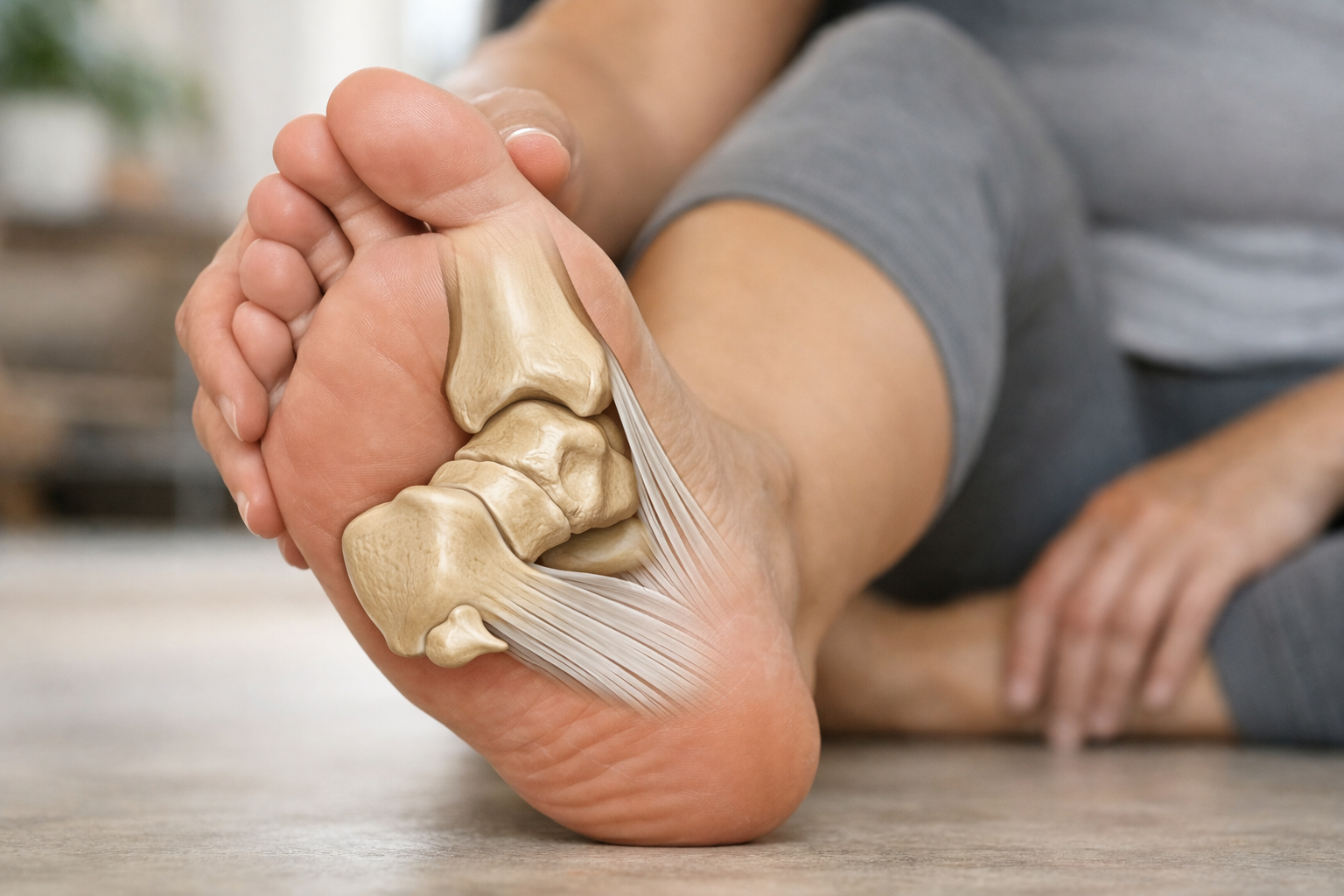
A heel spur is a bony growth. Plantar fasciitis (more accurately, in its chronic form, plantar fasciopathy) is a problem with the soft tissue on the bottom of your foot. They often show up in the same person, on the same X-ray, but one doesn’t cause the other in the way most people assume. Understanding the difference changes how you think about treatment, and it usually takes some pressure off, because the spur itself is rarely the villain it’s made out to be.
What a Heel Spur Actually Is
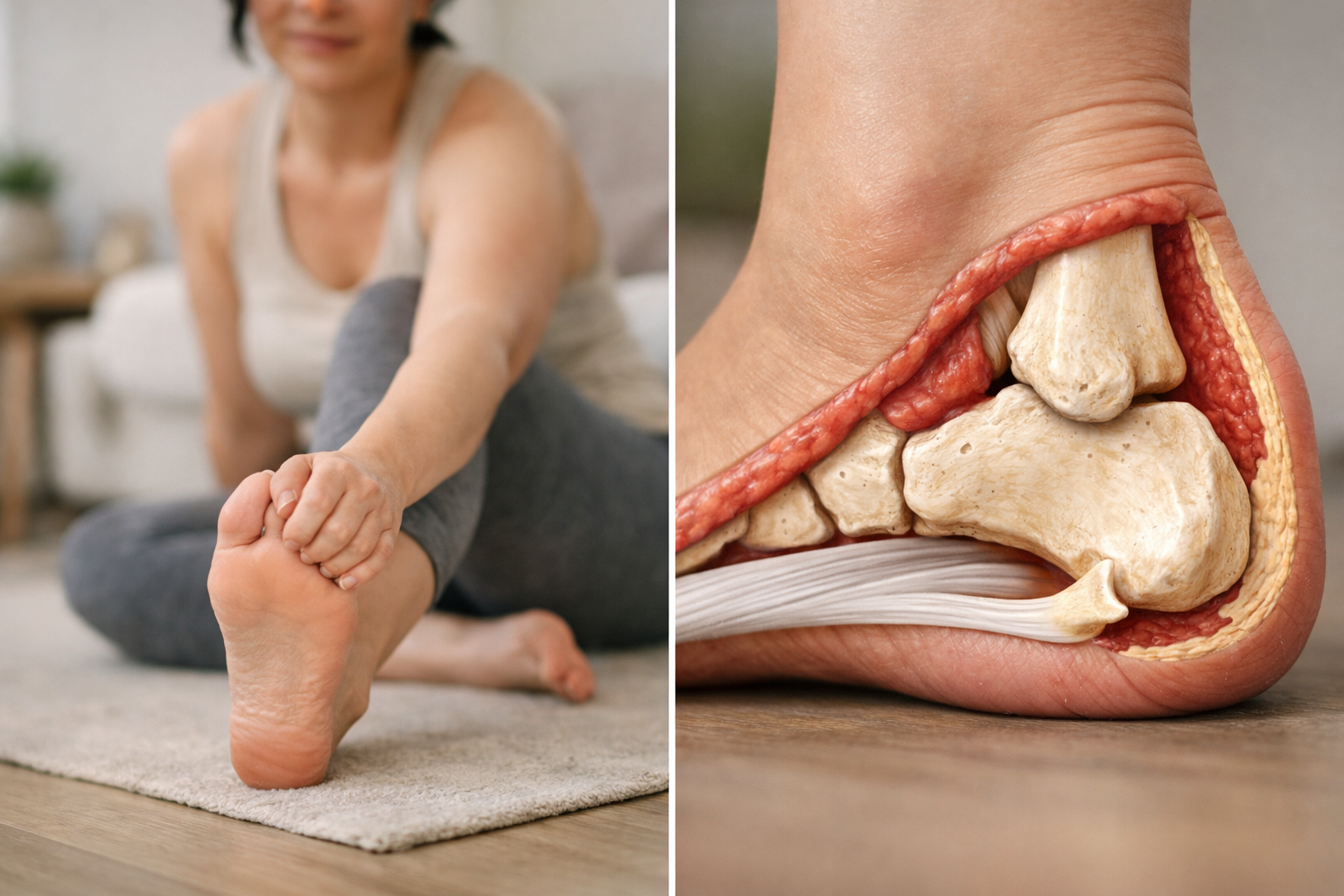
A heel spur is a calcium deposit that forms on the underside of the heel bone, usually where the plantar fascia or the muscles of the arch attach. It develops slowly, over months or years, in response to repeated tension at that attachment point. Think of it as the bone’s adaptation to chronic pulling, similar to how a callus forms on skin that takes repeated friction.
On an X-ray, a heel spur looks like a small hook or beak of bone projecting forward from the bottom or front edge of the heel, pointing toward the arch. Size varies a lot from person to person, and size doesn’t correlate well with pain. Some people have a spur the size of a fingernail clipping and feel nothing. Others have almost no visible spur and significant pain. This mismatch is the single most important thing to understand about heel spurs.
Does the Spur Cause the Pain?
Usually not directly. The pain most people associate with a heel spur is actually coming from the plantar fascia and surrounding soft tissue, which is inflamed or sensitized from carrying more load than it currently has the capacity to handle. The spur formed for the same underlying reason, chronic tension at that attachment site, but it’s a marker of that history, not the source of nerve signals firing in the moment.
This is why two people with an identical-looking spur on imaging can have completely different symptoms. The bone spur is a snapshot of past stress. The pain is a live readout of current tissue sensitivity. Recovery focuses on the second one, and it looks the same whether or not a spur happens to be visible on your X-ray.
Degenerative Heel Spurs and Arthritis
Some heel spurs are described as degenerative, meaning they form gradually as part of general wear-related changes in the tissue around the heel, rather than from one specific overuse pattern. This is more common with age and with longstanding biomechanical stress on the foot.
Heel spurs can also show up alongside inflammatory arthritic conditions, including certain types of spondyloarthritis, where bone spur formation (enthesophytes, technically) happens at multiple tendon and ligament attachment points throughout the body, not just the heel. If you have heel spurs along with joint pain elsewhere, morning stiffness that lasts well over an hour, or a personal or family history of inflammatory arthritis, that’s worth mentioning to your physician, since the workup and treatment differ from a straightforward load-related heel spur.
What Happens If You Keep Walking on a Heel Spur?
Walking on a heel spur itself doesn’t damage the bone further in any meaningful way for most people. The bone isn’t fragile, and normal walking loads don’t grind it down or make it grow. What matters is whether the total load on your foot, walking included, exceeds what the plantar fascia and surrounding tissue can currently tolerate.
Complete rest isn’t the answer here either. Staying almost entirely off your feet reduces sensitivity temporarily, but it also lets capacity drop further, so pain often comes right back, sometimes worse, once you resume normal activity. The more useful approach is staying as active as you reasonably can while keeping pain in a manageable range, generally at or below about a 4 out of 10 during and after activity, and adjusting from there. That’s intelligent load management, not pushing through pain and not shutting everything down.
What’s Often Mistaken for a Heel Spur
A lot of heel pain gets labeled a heel spur simply because that’s the term patients have heard. Several other conditions can produce similar symptoms in a similar location:
- Fat pad atrophy, where the natural cushioning under the heel thins with age or repetitive impact, causing a deep bruised feeling with each step
- Tarsal tunnel syndrome, a nerve compression issue that can cause burning, tingling, or radiating pain rather than the more localized ache typical of plantar fascia irritation
- Stress fractures of the calcaneus, more common in runners or people who have recently increased activity sharply
- Achilles tendon problems, if the pain is at the back of the heel rather than the bottom
- Sever’s disease, in adolescents whose growth plate is still active
We’ve covered how plantar fasciitis differs from tendonitis specifically in a separate piece if that distinction is what you’re trying to sort out. The broader point here is that heel pain has more than one likely cause, and an evaluation is what actually sorts out which one you’re dealing with rather than guessing from symptoms alone.
How Can You Treat a Heel Spur?
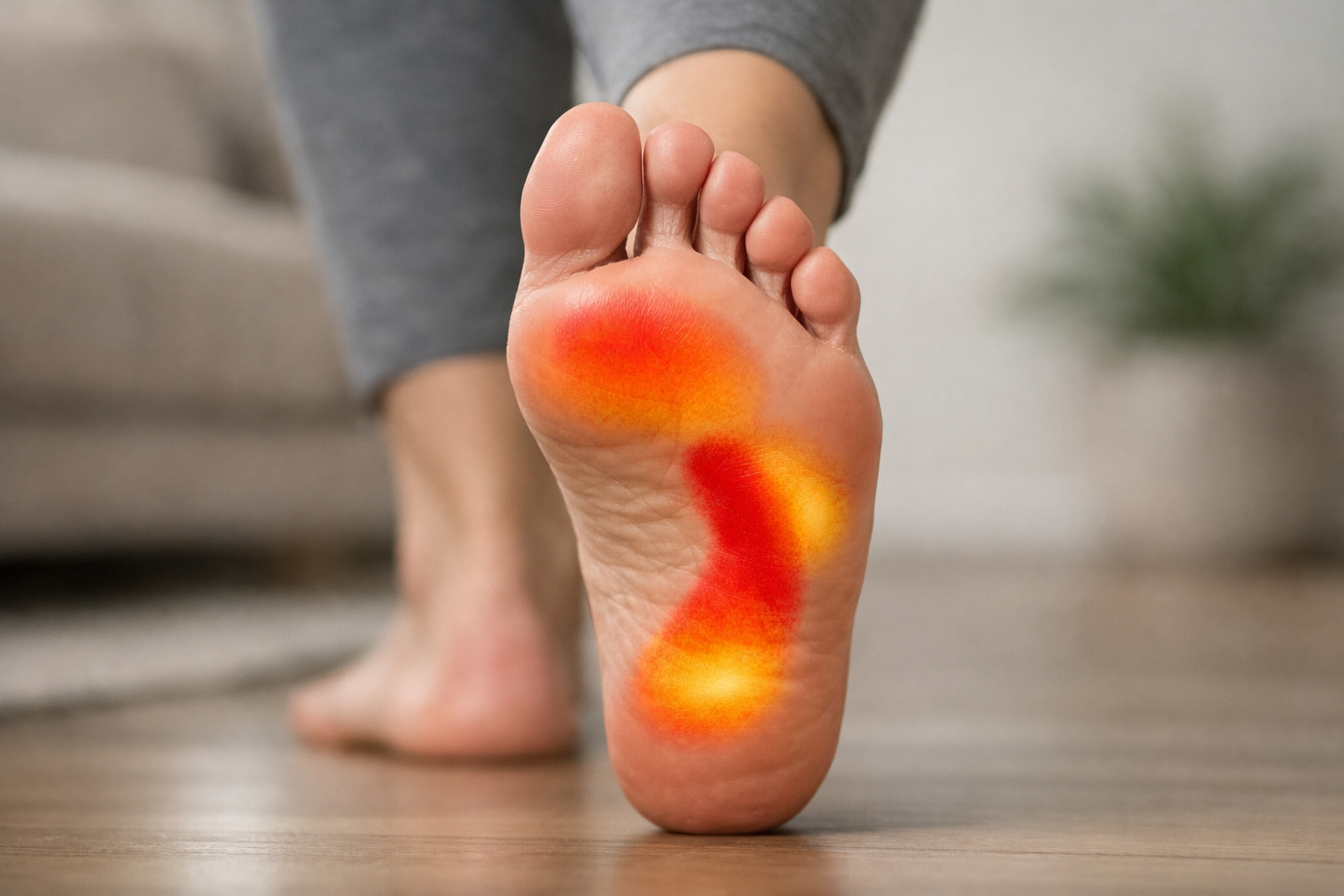
Because the spur usually isn’t the pain generator, treating a heel spur in practice means treating the surrounding tissue’s sensitivity and rebuilding its capacity. That generally includes:
- Graded, progressive loading of the plantar fascia and calf/foot muscles over weeks to months, not days
- Footwear that manages load reasonably well for your foot and activity, without expecting the shoe alone to fix things
- Orthotics or heel cups when they help redistribute pressure, understood as a load-management tool rather than a cure
- Activity modification that reduces total daily load without eliminating movement altogether
- Anti-inflammatory approaches or injections in select cases, aimed at calming acute sensitivity so loading work becomes tolerable, not as a standalone fix
This is the same general framework used for plantar fasciopathy without a visible spur. The presence of a spur on imaging doesn’t usually change the treatment plan.
What Will a Podiatrist or Physical Therapist Do for a Bone Spur?
A thorough evaluation typically starts with a history and physical exam to identify where exactly the pain originates and what’s provoking it, sometimes followed by imaging to rule out fracture or confirm a spur is present. From there, most clinicians start conservatively: activity and load adjustments, targeted exercises, footwear or orthotic changes, and sometimes taping or bracing to reduce strain during the day.
Surgical removal of a heel spur is uncommon and reserved for cases that haven’t responded to months of conservative care, since removing the spur doesn’t reliably resolve the underlying tissue sensitivity that caused the pain in the first place. When surgery is considered, it’s usually done alongside a plantar fascia release rather than as an isolated spur removal.
Do Heel Spurs Ever Go Away on Their Own?
Not typically, at least not the bone itself. Once calcium has deposited and the spur has formed, it generally stays, similar to how a callus doesn’t disappear just because the friction stops, though it can become less prominent over very long periods in some cases. The encouraging part is that this doesn’t matter much for your recovery. Pain associated with a heel spur often improves substantially with the same progressive loading approach used for plantar fasciopathy, even though the spur remains visible on future imaging. The goal isn’t to make the spur vanish. It’s to rebuild the tissue’s tolerance so the spur becomes an incidental finding rather than a source of daily pain.
Will Insurance Cover Bone Spur Removal?
Coverage for surgical removal of a heel spur depends on your specific insurance plan and generally requires documentation that conservative treatment, typically several months of it, has been tried and hasn’t resolved symptoms. Purely cosmetic or preventive removal without a clear functional problem is rarely covered. If surgery becomes a real consideration for you, your surgeon’s office is the right place to sort out prior authorization and coverage specifics, since policies vary widely.
A Note on Getting Evaluated
Most heel spur pain responds well to a patient, progressive approach that rebuilds the tissue’s capacity over time. That said, if pain is severe, worsening despite rest and reasonable load management, or accompanied by numbness, significant swelling, or symptoms elsewhere in your joints, it’s worth getting evaluated by a physical therapist or physician rather than guessing at the cause. An accurate diagnosis is what makes the rest of the plan actually work.