How Long Does It Take to Heal Plantar Fasciitis?
An honest look at how long plantar fasciitis actually takes to improve, what speeds it up, what stalls it, and why the timeline depends more on your response to loading than on the calendar.
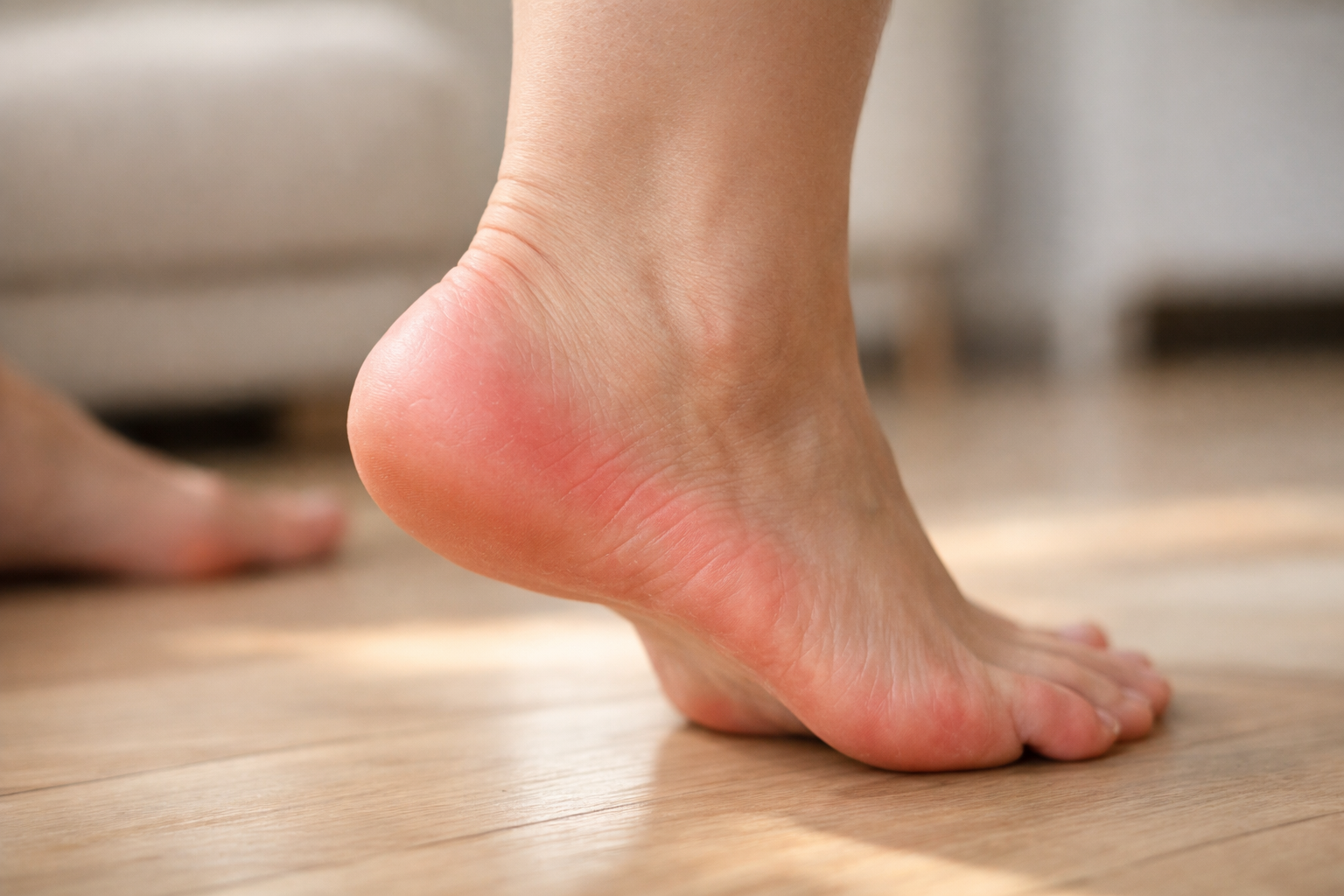
The Real Question Isn’t “What Is This,” It’s “How Long”
Most people already know they probably have plantar fasciitis by the time they’re searching for answers. The sharp heel pain with the first steps in the morning, the ache after standing at work, the way it eases up once you’re moving and then comes back after you sit for a while. What they actually want to know is different: how long is this going to last, and what determines that?
It’s a fair question, and it deserves a real answer instead of a generic “it varies.” It does vary, but not randomly. There are specific reasons some people improve in six weeks and others are still working on it at six months. Understanding those reasons changes how you approach your own recovery, and it takes a lot of the fear out of a flare-up along the way.
Why There’s No Single Number
Plantar fasciitis develops when the demand on your plantar fascia outpaces what it can currently tolerate. Maybe you started running more mileage. Maybe your job moved you from a desk to eight hours on concrete. Maybe nothing obvious changed and it built up slowly over months. Either way, the fascia’s capacity fell behind the load being asked of it.
Healing means closing that gap. Rest can calm the irritation for a while, but rest doesn’t build capacity. The fascia (and the muscles and other tissues around it) eventually have to be asked to do more, gradually, so they adapt. That process takes time no matter who you are, but the amount of time depends on a few things: how far behind capacity actually is, how consistently you load the tissue afterward, and how much daily demand your foot is under while it’s trying to recover.
That’s why two people with what looks like the same heel pain can have very different timelines. It’s not that one person is doing something wrong. It’s that they’re starting from different places.
A Realistic Timeline

With all the hedging that honest medicine requires, here’s a general pattern many people follow. Individual results differ, and this isn’t a promise about your specific case.
The first couple of weeks. This is usually about calming things down. Pain and irritability often start to settle a bit as you adjust activity, footwear, and how much time you spend on your feet without a break. This early relief is encouraging, but it doesn’t mean the tissue has changed yet. It means the fascia is less angry, which is a different thing.
Weeks two through six. This is where actual loading typically begins in earnest, if it hasn’t already. Symptoms often fluctuate here. Some days feel like real progress, some days feel like nothing has changed, and that’s normal. Early improvements at this stage are mostly your nervous system and movement patterns adapting, not the fascia itself being structurally different yet.
Weeks six through twelve. This is usually when the tissue itself starts to adapt, not just your tolerance of it. Meaningful structural change in fascia and tendon tends to take somewhere in the range of eight to twelve weeks of consistent, progressive loading, sometimes longer for cases that have been around a while. This is also usually when people notice they can do more (stand longer, walk farther, get through a workday without their foot dictating the schedule) even if some soreness is still present now and then.
Three to six months. For a lot of people, this is where the problem starts to feel genuinely behind them. Not necessarily zero sensation ever, but the foot handles normal life without much thought.
Beyond six months. If plantar fasciitis has been present for a long time before real treatment started, the timeline usually stretches. That doesn’t mean it’s a different, harder problem to solve. It usually means starting from a lower point and moving through the same stages more patiently.
Why It Doesn’t Move in a Straight Line
Recovery is not a straight line, and this is one of the most important things to understand going in. You have a good week, push a little further, then wake up with more soreness than you expected. That is not proof the plan failed or that something got re-injured. Pain is information, not always damage. It often means the day’s total load (the walk, the exercise, the extra time on your feet at work) added up to more than the foot could comfortably absorb that day.
The useful response isn’t to panic or abandon the plan. It’s to look at what changed, back off slightly if needed, and keep going. A flare-up is not failure. It’s feedback. Function matters as much as pain here: if you’re walking farther and standing longer than you were a month ago, occasional soreness doesn’t erase that progress.
What Stretches the Timeline Out
A few things reliably slow recovery down, and none of them are about willpower.
Waiting a long time before addressing it. The longer plantar fasciitis goes untreated, the more the tissue has adapted to being under-loaded and irritated, which usually means a lower starting point.
Total daily load, not just exercise. A standing job, a new pair of shoes, extra weight on the frame during an injury (which is a load issue, not a character issue), or a lot of walking on hard surfaces all add to what the foot has to tolerate, on top of whatever specific exercises you’re doing.
The rest-flare-rest cycle. Backing off completely when it hurts, then jumping back to full activity once it feels better, without ever building capacity in between. This cycle can repeat for months without real progress because the tissue never gets the gradual, progressive loading it needs to actually change.
Chasing zero pain before adding anything. Waiting until pain is completely gone before doing anything to build capacity often delays things further, because the fascia needs appropriate load to adapt, not just an absence of irritation.
“What Finally Cured My Plantar Fasciitis?” There Usually Isn’t One Thing
People often go looking for the single treatment that worked for someone else: a specific stretch, a night splint, a particular shoe, an injection. The honest answer, for most people who improve and stay improved, is less exciting than a single trick. It’s usually a period of consistent, gradually increasing load on the foot over weeks to months, alongside reasonable management of overall daily demand.
That’s not to say individual treatments don’t help. Ice, taping, better shoes, and stretching can all reduce sensitivity in the short term, and that relief is real and worth having. But relief and healing aren’t the same thing. Consistency beats intensity here. A moderate, steady approach applied for months usually outperforms an intense burst of effort applied for two weeks and then abandoned.
How to Fix Plantar Fasciitis Quickly
Everyone wants the fast version, and it’s worth answering honestly rather than pretending a shortcut exists. There isn’t a way to change how fast fascia adapts. What you can do quickly is reduce the day-to-day misery: better shoes, less time barefoot on hard floors, some taping or a compression sock during the day, easing off whatever spiked things in the first place. Those steps often bring real relief within days to a couple of weeks.
But relief isn’t the same as rebuilding what your foot can handle. If you stop there, symptoms tend to come back the moment you resume normal activity, because the underlying capacity gap never closed. For specific exercises that build that capacity, the article “Plantar Fasciitis Exercises That Actually Help Heel Pain” on this site walks through what’s actually worth your time.
What Not to Do
A few patterns tend to set people back rather than move them forward:
- Complete rest for weeks at a time. It calms symptoms temporarily, but the foot loses whatever capacity it had, and pain often returns as soon as normal activity resumes.
- Pushing through sharp, worsening pain. Some soreness during recovery is normal. Sharp pain that gets worse as you continue an activity is your foot asking you to stop, not a hurdle to push through.
- Stopping the moment pain goes away. This is one of the most common reasons plantar fasciitis comes back. Early relief usually happens before the tissue has structurally adapted.
- Ignoring it and hoping it resolves on its own. Sometimes mild cases do settle with basic changes, but for most people, waiting it out without any loading strategy just extends the timeline.
- Relying only on passive treatments. Ice, massage, and stretching can reduce sensitivity, but they don’t build the capacity that prevents recurrence.
Why Do I Have Plantar Fasciitis in Only One Foot?
This comes up constantly, and it makes sense once you think about how load actually gets distributed. Very few people load both feet perfectly evenly. A dominant leg, a habit of favoring one side, a job that has you pivoting or standing asymmetrically, a past ankle or knee issue that changed how you walk on one side, even something as simple as always carrying a bag on the same shoulder can shift more cumulative load onto one foot over time. It doesn’t usually point to something more serious. It just means that foot crossed its capacity threshold first.
Why Did I Suddenly Get Plantar Fasciitis?
Often it doesn’t feel sudden to the fascia, even if it feels sudden to you. A change in shoes, a jump in walking or running distance, a new job that has you on your feet more, or a period of weight change can all shift the load enough to outpace capacity within a few weeks. By the time you notice pain, the mismatch has usually been building for a bit. This is covered in more depth in “Arch Pain in the Foot: Is It Plantar Fasciitis or Something Else?” if you want to dig into the specific triggers.
Is There Really a “Stage 3” Plantar Fasciitis?
You’ll see this term online, but it’s not a formal, universally used medical staging system the way some other conditions have. What people usually mean by a later “stage” is a longstanding case where the fascia has developed more chronic changes: thickening, reduced elasticity, and less of the acute inflammatory quality that early cases have. At that point, the more accurate clinical term is plantar fasciopathy rather than fasciitis, since “itis” implies active inflammation that isn’t usually the main driver anymore.
The practical takeaway isn’t about the label. It’s that longstanding cases generally need a lower starting point and a more patient, gradual progression. Chronic doesn’t mean permanent. It means the rebuilding takes a bit more time and a bit more consistency.
The Sock Trick, Briefly
The daytime “sock trick” usually refers to compression sleeves or arch taping worn during the day to reduce strain on the fascia while you’re up and moving. It can genuinely take the edge off, especially during a flare. It’s a symptom-management tool, not a healing mechanism on its own, and it works best alongside a plan to actually rebuild capacity rather than as a replacement for one. “Plantar Fasciitis vs. Tendonitis: How to Tell the Difference” goes into more detail on how it’s applied.
How Long Is Too Long?
A reasonable general benchmark: if you’ve been consistent with appropriate loading and daily load management for a few months and you’re seeing no meaningful change in what your foot can tolerate, that’s worth a conversation with a physical therapist or physician rather than continuing to guess on your own. The same goes for symptoms that are getting worse rather than fluctuating, pain that shows up with numbness or tingling, pain that wakes you up at night unrelated to position, or anything following a specific injury or trauma. Not all heel pain is plantar fasciitis. Nerve issues, stress fractures, and a few other conditions can mimic it, and an evaluation sorts out which one you’re actually dealing with.
Can Plantar Fasciitis Really Go Away?
Yes. Many people improve substantially and go back to walking, standing, and exercising without their foot running the show. The principles behind that recovery, rebuilding what the tissue can tolerate through gradual, consistent load, are sound and well established, even if no one can promise you an exact date on the calendar.
What matters just as much as getting there is staying there. Feet don’t get a permanent exemption once symptoms resolve. If load creeps back up faster than capacity is maintained (a new job, a return to heavy mileage, a long stretch of inactivity followed by doing too much too soon), symptoms can return. That’s not a sign the first recovery didn’t work. It’s the same load-versus-capacity story playing out again.
Recovery is built, not waited for. The calendar gives you a rough sense of what to expect, but your foot’s actual response to what you ask of it, week to week, is what tells you whether you’re on the right track.