Heel Spurs vs. Plantar Fasciitis: How to Tell the Difference
Heel pain is common, and the two labels people hear most are plantar fasciitis and heel spur. Here's how to sort out what you're actually feeling, what a spur does and doesn't change, and what to do next.
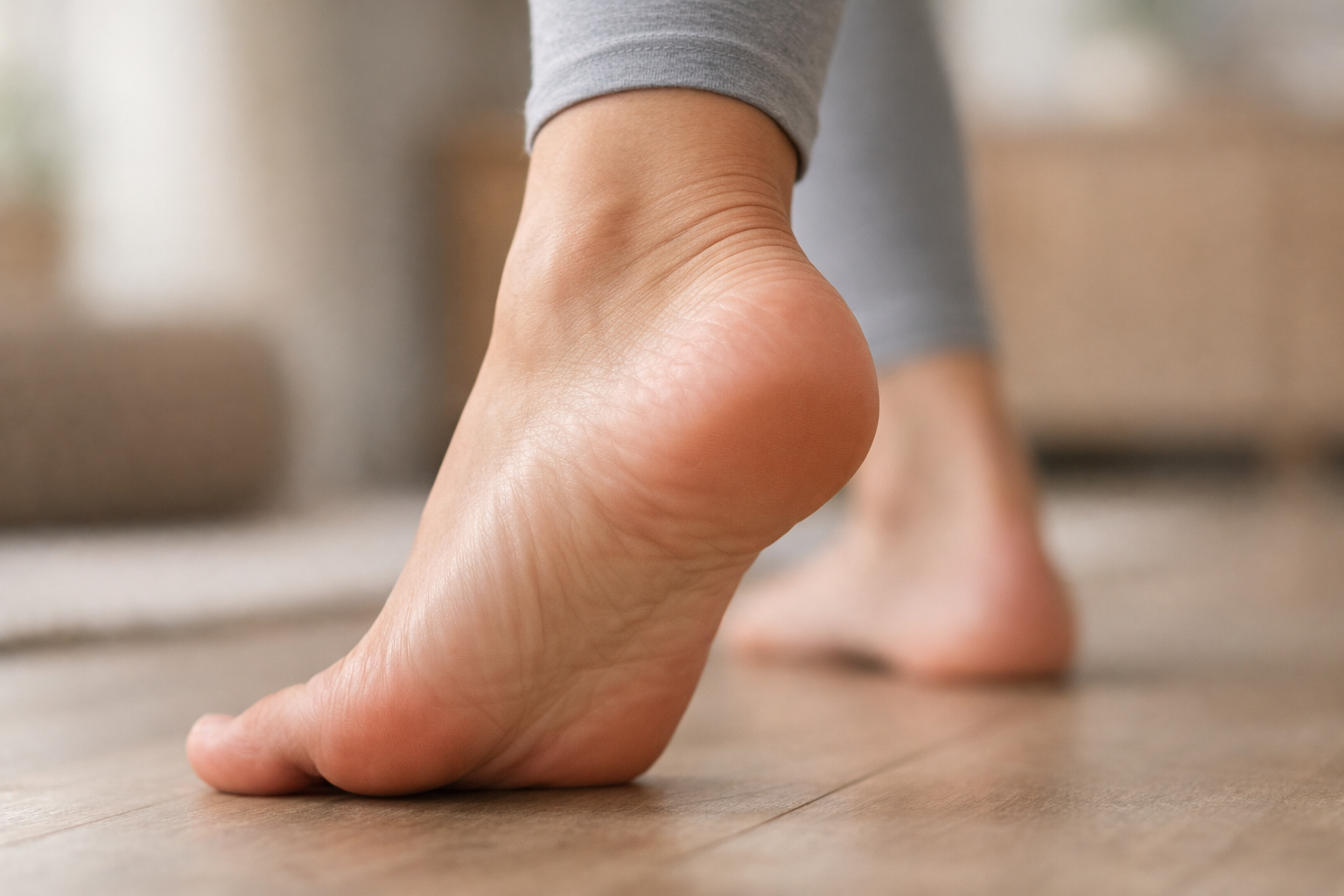
Most people arrive at this question the same way. The heel hurts. They looked it up, found two different names, and now they want to know which one they have. Sometimes an X-ray got involved and someone pointed at a little hook of bone on the screen, and now the spur feels like the explanation for everything.
So let’s answer the question directly, then make it useful.
The short version
You usually can’t tell the difference by feel alone, because a spur by itself rarely produces symptoms. A spur is visible on imaging. What you’re feeling is almost always coming from the soft tissue on the bottom of the foot, the plantar fascia and the muscles and tendons around it.
Here’s the part that surprises people: plenty of people walk around with heel spurs and no pain at all. And plenty of people have textbook heel pain with no spur anywhere on the X-ray. The spur and the pain just don’t track together as reliably as the name suggests.
So when someone asks “how do I tell if I have plantar fasciitis or a bone spur,” the honest answer is that it’s often not an either/or. You may have both. The one that’s generating your symptoms is usually the tissue, not the bone.
(If you want the deeper explanation of what a spur actually is and how it forms, we covered that separately in “Plantar Fasciitis vs. Heel Spurs: What They Actually Mean.” This article is about telling your own symptoms apart and knowing what to do about them.)
What heel pain from the fascia typically feels like
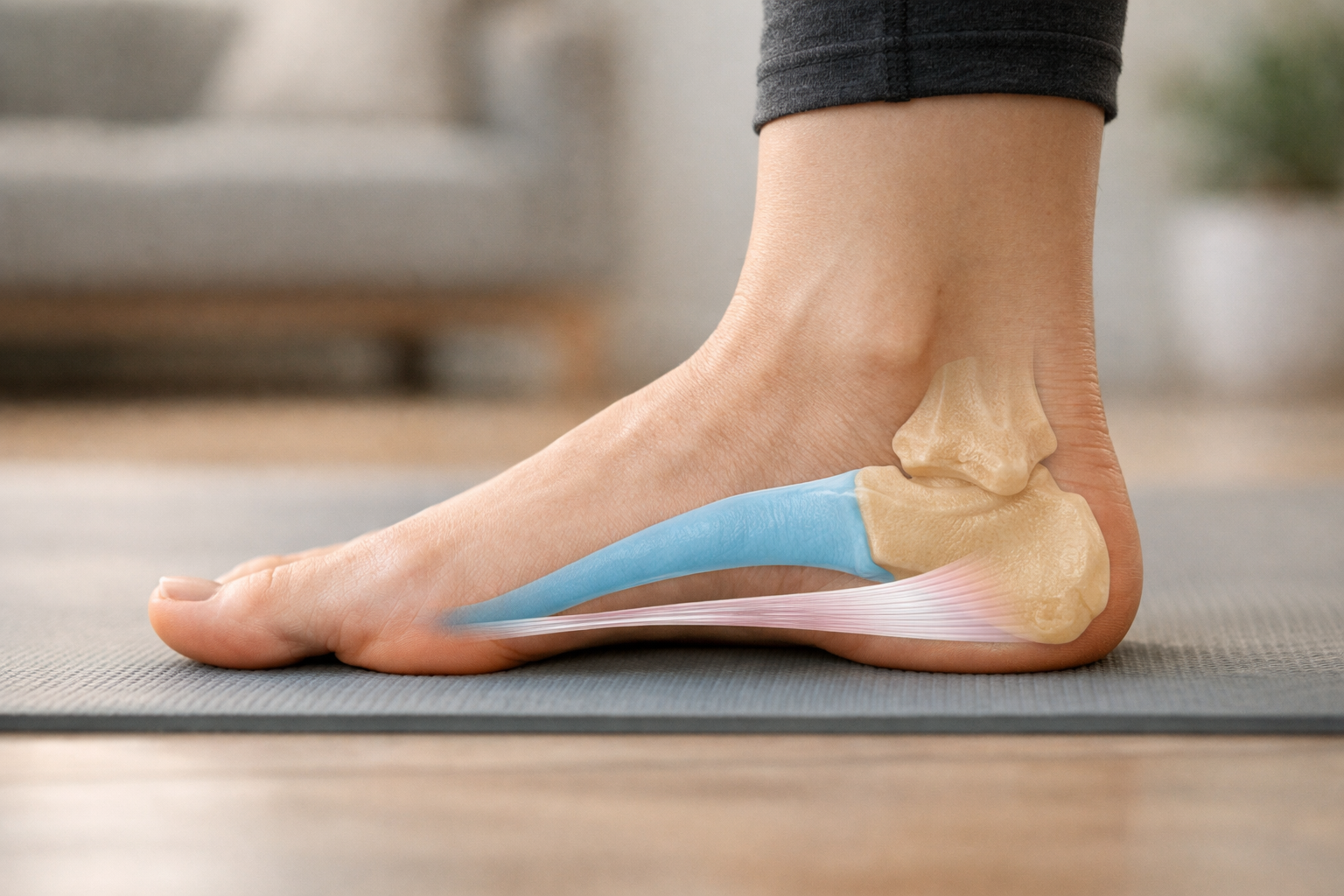
This pattern can be consistent with plantar fasciitis, or more accurately with plantar fasciopathy when it’s been going on a while:
- First steps in the morning hurt the most. Sharp, sometimes stabbing, right at the inside front edge of the heel bone or just into the arch.
- It eases after a few minutes of walking, then often creeps back later in the day, especially after standing or a long stretch on your feet.
- Standing up after sitting for a while does something similar. Not as bad as the morning, but the same flavor.
- Pressing on one specific spot near the front-inside corner of the heel reproduces it.
- It’s worse the day after a big day. A long walk, a travel day, a shift in new shoes.
That morning pattern confuses a lot of people. It feels like the foot got worse overnight. It didn’t. When you sleep, the tissue spends hours with essentially no load on it, and a sensitive tissue that goes from zero demand to full body weight in one step is going to protest. That’s a sensitivity pattern, not overnight damage.
Can a bone spur be mistaken for plantar fasciitis?
It gets mixed up constantly, but usually in the other direction. Someone has classic fascia-related heel pain, gets an X-ray, a spur shows up, and the spur gets the blame. The pain was doing what fascia pain does. The bone was an incidental finding.
There are situations where the bone itself is genuinely involved. Deep, bruise-like pain in the middle of the heel pad that hurts with every step, including steps late in the day when fascia pain has usually settled, is a different pattern and worth an in-person look. So is pain that wakes you at night, pain with no obvious relationship to activity, numbness or tingling, or heel pain that showed up right after a fall or a hard landing.
A few other things can mimic this picture too: irritation of a nerve on the inside of the heel, a fat pad that’s lost some of its cushion, Achilles-related pain at the back of the heel, a stress reaction in the heel bone. They don’t all respond to the same approach. That’s the main reason an evaluation is worth it, not to name the tissue for its own sake, but because the plan changes.
What the X-ray actually tells you
An X-ray can show a spur. It can rule out a fracture. What it can’t do is tell you why you hurt.
Same with ultrasound findings of a thickened fascia. Thickening is the tissue responding to stress over time. It’s adaptation showing up on a screen, not a verdict about your future. A scan can show structural changes, but it doesn’t always explain the symptoms, and it definitely doesn’t set a ceiling on what your foot can do later.
I say this because imaging findings tend to stick in people’s heads. “I have a spur” becomes a permanent identity, and it quietly changes how people move. They walk less. They avoid hills. They stop doing the thing that was making the foot stronger. The picture starts running the plan, and it shouldn’t.
Do bone spurs from plantar fasciitis go away? How long do heel spurs last?
Once bone is laid down, it generally stays. Spurs don’t dissolve because you stretched more or bought better shoes. In that sense, they last indefinitely.
Here’s why that matters less than it sounds. The spur isn’t usually the pain source. People get better all the time with the spur still sitting there on the film, unchanged. What changed was the tolerance of the tissue around it.
So when people ask how to get rid of a plantar spur, the practical answer is that you’re usually aiming at the wrong target. Surgical removal exists and is occasionally appropriate, but it’s uncommon and it’s a decision made after a thorough workup, not a first step. The far more common path is building the foot’s ability to handle load until the symptoms stop being the thing that runs your day.
What happens if a bone spur is left untreated?
For most people, nothing dramatic. A spur that isn’t causing symptoms doesn’t need treating. It’s not a slow leak that eventually bursts.
What can get worse if it’s ignored is the pain, and that’s a separate issue from the bone. Heel pain that goes unaddressed for months tends to follow a predictable arc. You walk less. You change how you push off. The calf tightens up, the other hip starts working harder, and now you’ve got a foot with less capacity than it had at the start, plus a couple of new complaints. The foot didn’t get more damaged. It got less capable, because it was doing less.
That’s the actual cost of waiting. Not structural catastrophe. Deconditioning.
Is walking good for a heel spur?
Generally yes, in amounts your foot handles. Walking loads the fascia and the whole foot in a way that maintains and builds tolerance. Avoiding walking makes the foot less able to walk.
The qualifier matters. Appropriate walking is not the same as walking until it hurts and then pushing through. A reasonable rule of thumb for most people: symptoms staying at or below roughly a 4 out of 10 during the activity, and settling back near your usual baseline within about a day. Pain that climbs to an 8 and stays there for three days is telling you the dose was too much. Pain that bumps to a 3 and is gone by the next morning is telling you that you’re in a workable range.
The response tells you what comes next. Not the calendar, and not an article on the internet that doesn’t know your foot.
What aggravates this kind of heel pain
The usual suspects, and most of them are about the total amount of load, not about any one villain:
- A sudden jump in standing or walking. New job, vacation, a big cleaning day, a concert, a museum.
- Barefoot on hard floors, especially first thing in the morning at home.
- New shoes, or very worn-out ones, or switching from a supportive shoe to a flat one abruptly.
- A change in running volume, surface, or pace that happened faster than the tissue could adapt.
- Long periods of sitting followed by standing up and walking immediately.
- A stiff calf and ankle, which shifts more demand onto the bottom of the foot.
And a point people miss: everything adds up. Your exercise, your commute, your work shift, your errands. If you did your foot exercises and then walked eight thousand steps at a wedding, the foot doesn’t itemize. It also lags. Symptoms often show up a day or two after the load that caused them, which is why people blame the wrong thing.
Body weight, a standing job, a busy season at work, these all raise the total demand on the system. That’s a load math problem, not a character flaw. It just means the starting point and the rate of progression need to account for what the foot is already doing all day.
What’s the worst thing you can do?
Two things, and they look like opposites.
Complete rest as the strategy. Staying off it entirely will quiet things down, which feels like progress. The problem is that unloaded tissue gets less tolerant of load, so the minute you return to normal life the pain comes back and it feels like you’re starting over. Rest is a useful tool in small, targeted doses. As a long-term plan, rest equals rust.
Pushing through hard pain and hoping. Running through an 8 out of 10, standing all day on a foot that’s already flared, adding intensity because you’re frustrated. That keeps the tissue irritated and never lets it adapt.
The useful middle is narrower than people expect but wider than they fear. Find an amount the foot can handle. Stay there long enough that it stops being hard. Then ask for a little more.
One more thing worth naming: aggressive stretching as the entire plan. Stretching often feels good and can reduce sensitivity in the moment. But relief while the tissue is unloaded isn’t the same as the tissue becoming more capable, which is exactly why the pain returns the moment you stand up and go. Stretching is a fine ingredient. It’s a thin plan on its own.
“What finally cured my plantar fasciitis?”
This is the most-searched version of the question and I understand why. People want the one thing.
What I see in the people who genuinely turn the corner is less exciting than one thing and more durable. They stop chasing relief and start building capacity. Specifically:
- Loading the tissue on purpose, not just avoiding pain. Calf and foot work that’s heavy enough and slow enough to matter, done consistently over weeks.
- Progressing it. Same exercise at the same level for three months isn’t a program, it’s a habit. The load has to go up as the foot gets better at it.
- Managing the rest of the day. Not eliminating walking and standing, but spacing them, breaking up long stretches, being intentional about the big days.
- Staying with it past the point where the pain quiets down. This is the one that separates people who get better from people who get better and then relapse in the spring. Early improvement is largely your nervous system getting less protective. The actual structural change in fascia and tendon takes longer, often on the order of 8 to 12 weeks of consistent loading, sometimes more. Stopping when it stops hurting means stopping before the tissue finished adapting.
Shoes, inserts, night splints, injections, manual work: any of these can help in the right situation, and I’m not against them. They tend to work best as support for the rebuilding, not as a replacement for it. Consistency beats intensity here, every time.
If this has been going on a long time
Persistent doesn’t mean permanent. What it usually means is that the starting point is lower and the ramp is longer. A foot that’s been irritated for two years may only tolerate a small amount of loading at first, and that’s fine. Small and repeatable beats ambitious and abandoned.
And when things flare, and they will at some point, that’s not evidence the plan failed. You’ll have a heavy weekend, a travel day, a long shift on concrete, and the heel will remind you. Look at what changed. Back the dose off a notch. Keep going. The trend over six weeks matters more than any single bad morning.
Progress also shows up in places other than the pain number. Walking farther before it talks to you. Fewer bad steps in the morning. Recovering by lunch instead of by bedtime. Those count. Function matters as much as pain.
When to get it looked at
Most heel pain is manageable without anything dramatic. Get it evaluated in person if:
- The pain started after a specific fall, jump, or impact
- It’s severe, getting worse, or not budging after several weeks of sensible management
- You have numbness, tingling, or burning that spreads into the foot or toes
- The heel is red, hot, swollen, or you have fever
- The pain wakes you at night or is there constantly regardless of activity
- You have diabetes, poor circulation, or reduced sensation in your feet
An exam sorts out what imaging can’t. It tells you which tissue is actually irritable, how easily it gets stirred up, and what amount of loading is a reasonable place to start for your foot. That’s the piece that’s usually missing. Not another treatment. A plan for how to build back up.