Heel Fat Pad Syndrome: What It Is and How Physical Therapy Can Help
A practical look at heel fat pad syndrome, why it feels different from plantar fasciitis, and how a physical therapist helps you keep walking and standing while the heel rebuilds what it can tolerate.
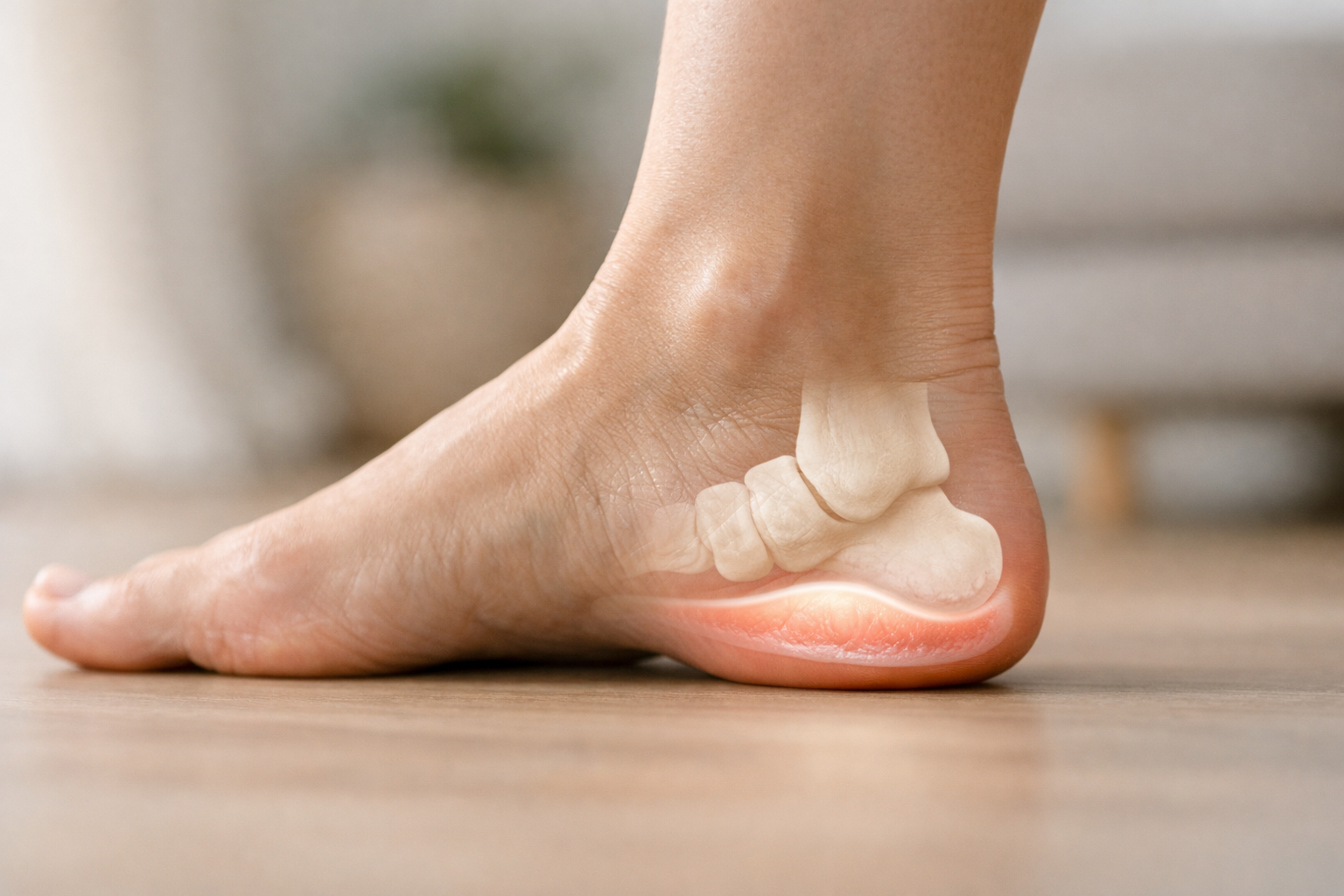
If your heel hurts right in the middle, like you’re walking on a stone or a bruise, and it’s worse barefoot on tile than it is in shoes, you might already suspect this isn’t your typical plantar fasciitis story. A lot of people with this pattern have already tried the usual advice, stretch the calf, roll a ball under the foot, get new orthotics, and it hasn’t quite fit. That mismatch is often the first clue toward heel fat pad syndrome.
What Heel Fat Pad Syndrome Actually Is
Under your heel bone sits a specialized pad of fat, arranged in small fibrous chambers, that acts like a built-in shock absorber. It’s not just fat the way it is elsewhere in the body. It’s a structured, springy cushion designed to compress under load and rebound with every step, absorbing a good portion of the force that would otherwise travel straight into bone.
Heel fat pad syndrome (sometimes called heel pad syndrome or fat pad atrophy) happens when that cushion thins out, loses its elasticity, or shifts out of position under the heel bone. Less cushioning means more direct force on the bone and surrounding tissue with every step, which is what produces the deep, bruise-like pain people describe.
This is a different mechanical problem than plantar fasciitis, even though both can cause heel pain and even coexist. The plantar fascia is a band of tissue that gets irritated by tension and stretch. The fat pad is a cushion that gets irritated by direct compression. That distinction matters because it changes what actually helps.
How to Tell It Apart From Plantar Fasciitis
A few patterns tend to point toward the fat pad rather than the fascia:
- Pain is centered under the middle of the heel, not toward the arch side.
- Pain is often worse barefoot on hard floors and noticeably better in cushioned shoes.
- It doesn’t always follow the classic “worst with the first steps in the morning” pattern seen with plantar fasciitis, though some people have both.
- Pressing directly on the heel pad reproduces the pain, more than stretching the arch does.
These are patterns, not a diagnosis you can confirm on your own. Heel pain has several possible sources, and an evaluation is the only reliable way to sort out what’s actually driving yours, especially if the pain doesn’t fit neatly into one pattern. If you’re also noticing numbness, pain that woke you from sleep, or a heel that suddenly became hot and swollen, that’s a different conversation, and worth reading about separately since those can be signs something else is going on.
What Causes Fat Pad Atrophy
The fat pad thins for a few overlapping reasons, and it’s rarely about one single cause:
- Age. The pad naturally loses some thickness and elastic recoil over the decades, which is why this shows up more often in older adults.
- Repeated corticosteroid injections into the heel. These can weaken the fibrous structure that holds the fat pad’s chambers intact.
- Prior heel trauma or surgery that disrupted the pad’s architecture.
- Body weight and load distribution, which affects how much force passes through the heel with each step. This isn’t about blame. It’s about the total demand on a structure that has a finite capacity to absorb force.
How Do I Know If I Have It?
Beyond the pain pattern above, people often notice the heel feels different to the touch, less padded, sometimes visibly flatter or wider than the other side if only one foot is affected. Standing on hard floors becomes noticeably harder to tolerate than it used to be. Walking on grass, sand, or carpet often feels fine or even good, while tile, concrete, or hardwood bring the pain on quickly. None of this replaces a hands-on exam, but it’s useful information to bring with you.
Can Heel Fat Pad Syndrome Be Cured?
This deserves an honest answer rather than a reassuring one. Fat pad tissue that has genuinely thinned doesn’t fully regenerate the way some other tissues do. So if “cured” means the pad returns to exactly what it was at twenty-five, that’s not a promise anyone can honestly make.
But that’s not the same as saying nothing can be done. Most people with this condition can significantly reduce their pain and get back to walking, standing, and being on their feet without constant discomfort. That happens by improving how well the foot tolerates load, protecting the area appropriately, and building capacity in the surrounding muscles and tissues that share the job of shock absorption. Function can improve a great deal even when the underlying tissue change is permanent.
How Do You Fix Heel Fat Pad Syndrome?
There’s no single fix, but there is a workable approach, and it looks a lot like managing load rather than chasing a cure:
Reduce the direct impact. Cushioned footwear, heel cups, or padded insoles redistribute pressure away from the thinnest part of the pad. This calms symptoms while you work on the rest.
Don’t rest completely. Total rest lets the surrounding tissues get deconditioned, which can make the foot more vulnerable, not less. The goal is staying active at a level the heel can currently tolerate, then gradually asking it to do more.
Build capacity elsewhere. The plantar fascia, the intrinsic muscles of the foot, and the calf all contribute to shock absorption and how forces move through the foot. Strengthening these doesn’t rebuild the fat pad, but it does help the whole system share the load better, which takes pressure off the heel itself.
Adjust activity gradually. If you’ve been avoiding hard floors or shortening your walks, that’s understandable, but it also means the foot has had less practice tolerating those surfaces. A physical therapist can help you find a starting point that’s low enough to stay comfortable and then increase it in a way your heel can keep up with.
Track your response, not just the pain number. If you can stand longer at work, walk further on tile, or recover faster after a long day than you could a month ago, that’s real progress, even if some discomfort is still there on hard surfaces. Your response to each week’s activity tells us what to do next, more than the calendar does.
How Long Does It Take for a Heel Fat Pad to Heal?
There’s no fixed timeline, and anyone who gives you an exact number is guessing. What tends to happen for many people is a noticeable reduction in day-to-day discomfort within several weeks of consistent load management and footwear changes, with continued improvement in tolerance for hard surfaces and longer periods on your feet over the following months. Because the underlying tissue change can be structural, especially in longstanding cases, the more realistic goal is steady improvement in what you can comfortably do, not a specific day when it’s declared finished.
Can I Still Walk With Heel Fat Pad Syndrome?
Yes, and in most cases you should keep walking. The question isn’t whether to walk, it’s how much, on what surface, and in what shoes. A short walk on grass in supportive shoes is a very different load than an hour on concrete in flip-flops. Adjusting those variables, rather than stopping activity altogether, is usually the better path. If a particular walk leaves you noticeably worse the next day, that’s useful information about that day’s load, not a sign you should stop moving in general.
What Shoes Are Best for Heel Pad Syndrome?
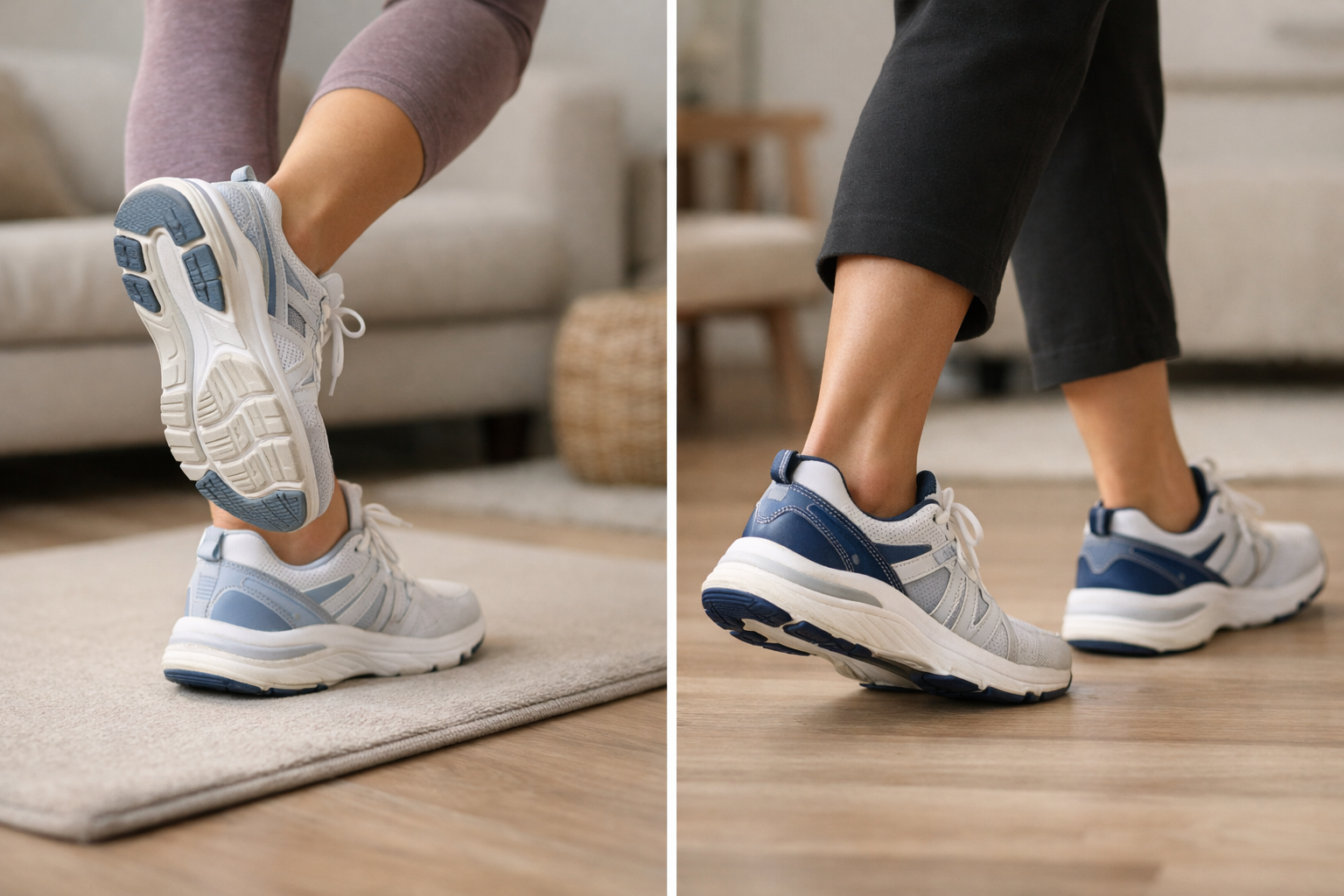
Look for shoes with real cushioning under the heel, a bit of structure through the midsole, and enough depth to add a heel cup or padded insole if needed. Rocker-bottom soles can help some people by reducing the direct impact at heel strike. What you’re aiming for is a shoe that does part of the shock-absorbing job the fat pad used to handle more of on its own.
A few specific things to watch for:
- Worn-out shoes with compressed midsoles offer far less cushioning than they did when new, even if they still look fine.
- Very flat, thin-soled sandals and flip-flops put nearly all the impact directly on the heel pad.
- Hard-soled dress shoes and minimal-cushion casual shoes are common culprits for flare-ups during long workdays.
What Exercises Are Recommended for Heel Fat Pad Syndrome?
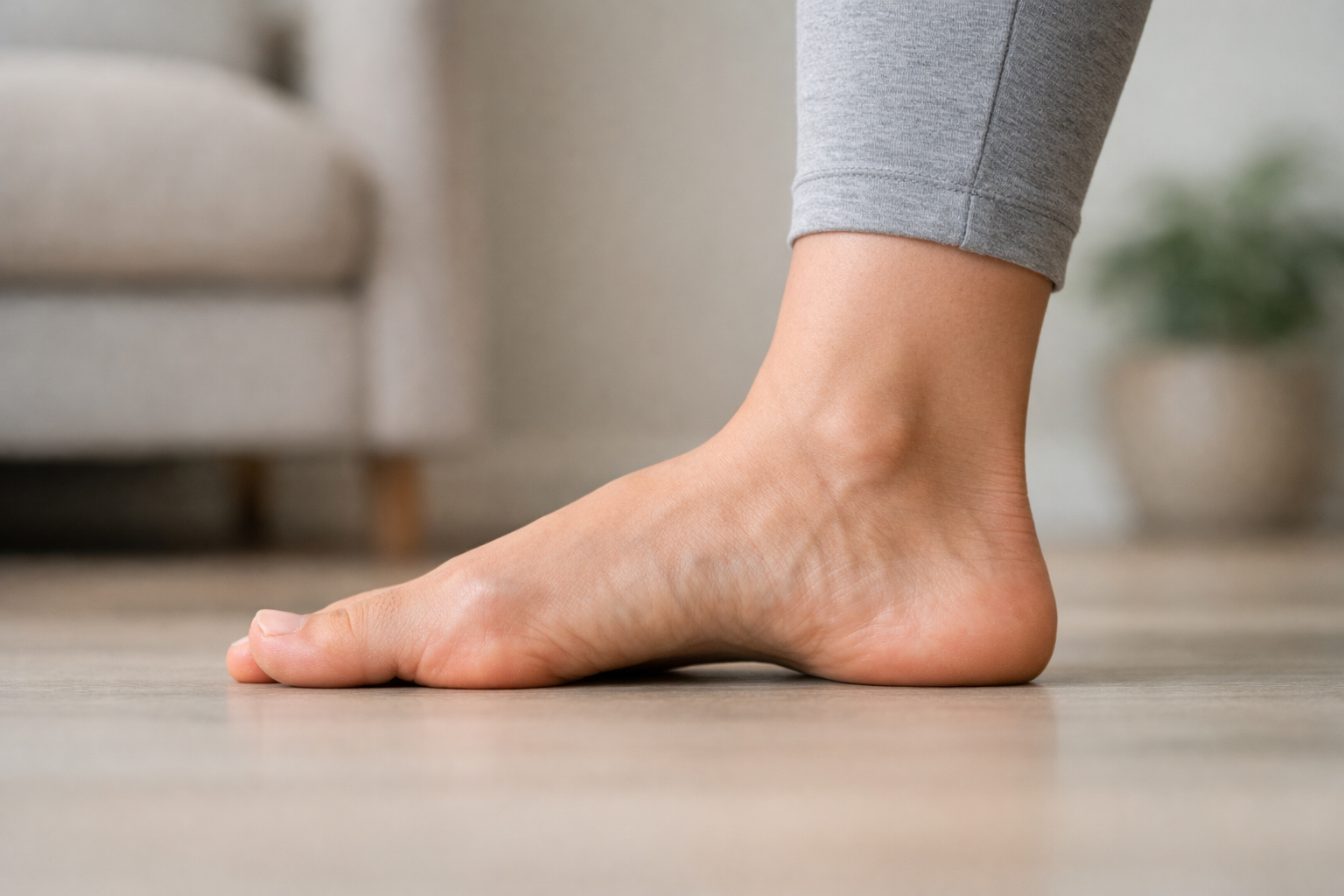
Exercise here isn’t about rebuilding the fat pad itself. It’s about improving how well the rest of the foot and lower leg absorb and manage load, so the pad isn’t doing all the work alone. Common pieces of a program include:
- Intrinsic foot strengthening (like short foot exercises or towel scrunches) to improve the small muscles that support the arch and help distribute pressure.
- Calf raises, progressed gradually, to build capacity in the calf and Achilles, which influence how force loads into the heel at push-off.
- Balance and proprioception work, which helps the foot make small, efficient adjustments to uneven or hard surfaces instead of absorbing impact in one concentrated spot.
- Gradual surface and duration progression, deliberately increasing time on harder floors in small steps rather than avoiding them indefinitely.
A physical therapist can tailor the specific starting point and progression to what your heel is handling right now, since jumping in at the wrong level can flare things up rather than help.
A Brief Note on When to Get This Checked
Most heel fat pad symptoms develop gradually and respond to the kind of load management described here. But if you notice sudden severe pain after a specific injury, significant swelling or bruising, numbness, or pain that’s steadily worsening despite rest and shoe changes, that’s worth having evaluated rather than managed on your own. A scan or exam can help sort out whether this is fat pad related, fascia related, or something else entirely, since more than one of these can look similar from the outside.
Heel pain with a thinned fat pad isn’t a life sentence of hard floors and painful mornings. It usually responds to a fairly practical combination of protecting the area, building capacity around it, and giving it a reasonable amount of time to adapt. Recovery here, like most things involving the foot, is rarely a straight line, but the trend is what matters.