Heel Bursitis: Symptoms, Causes, and How to Get Rid of It
A clinical, load-based guide to heel bursitis: what causes it, how it differs from plantar fasciopathy and Achilles issues, and how physical therapy helps rebuild capacity so pain doesn't keep coming back.
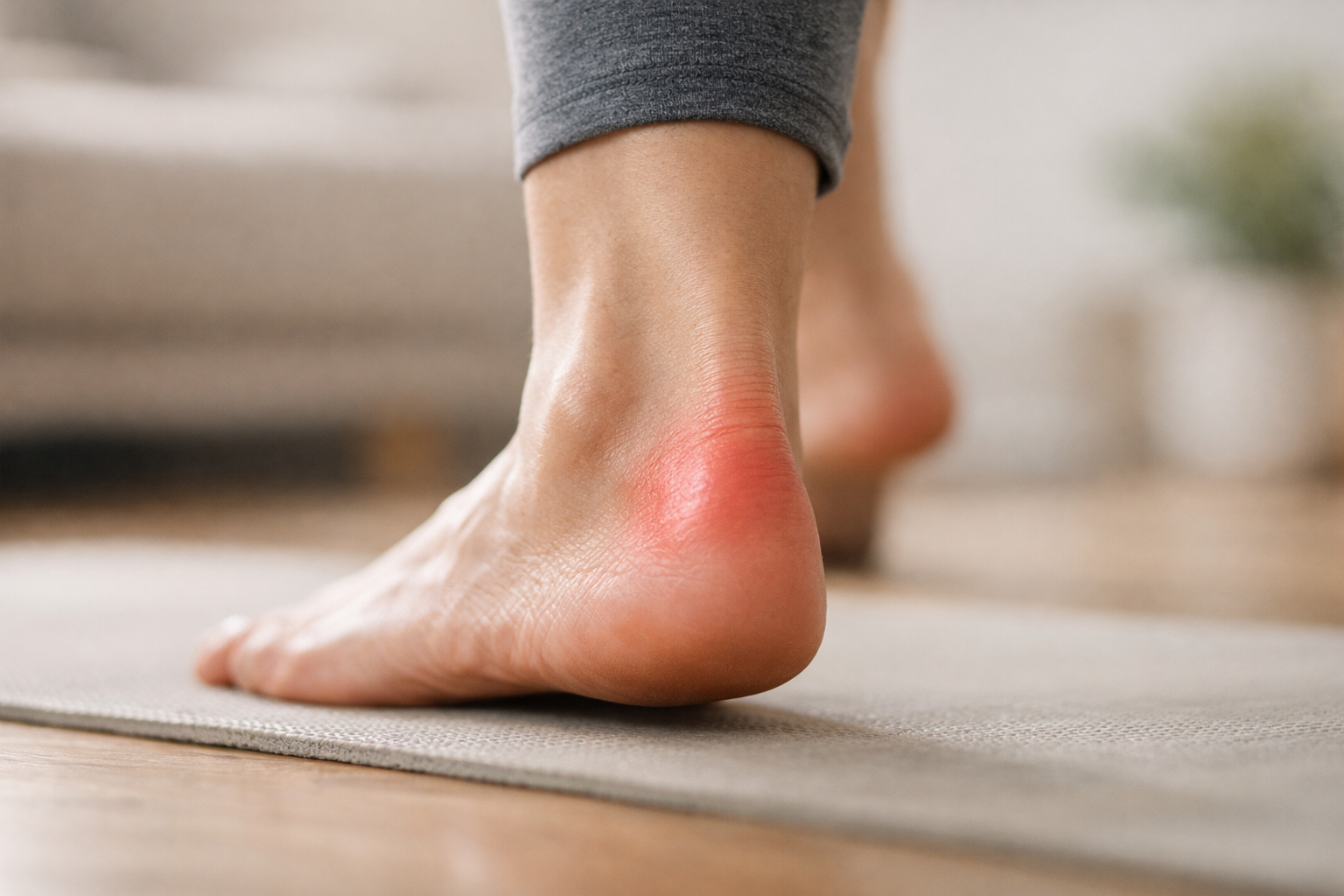
What Heel Bursitis Actually Is
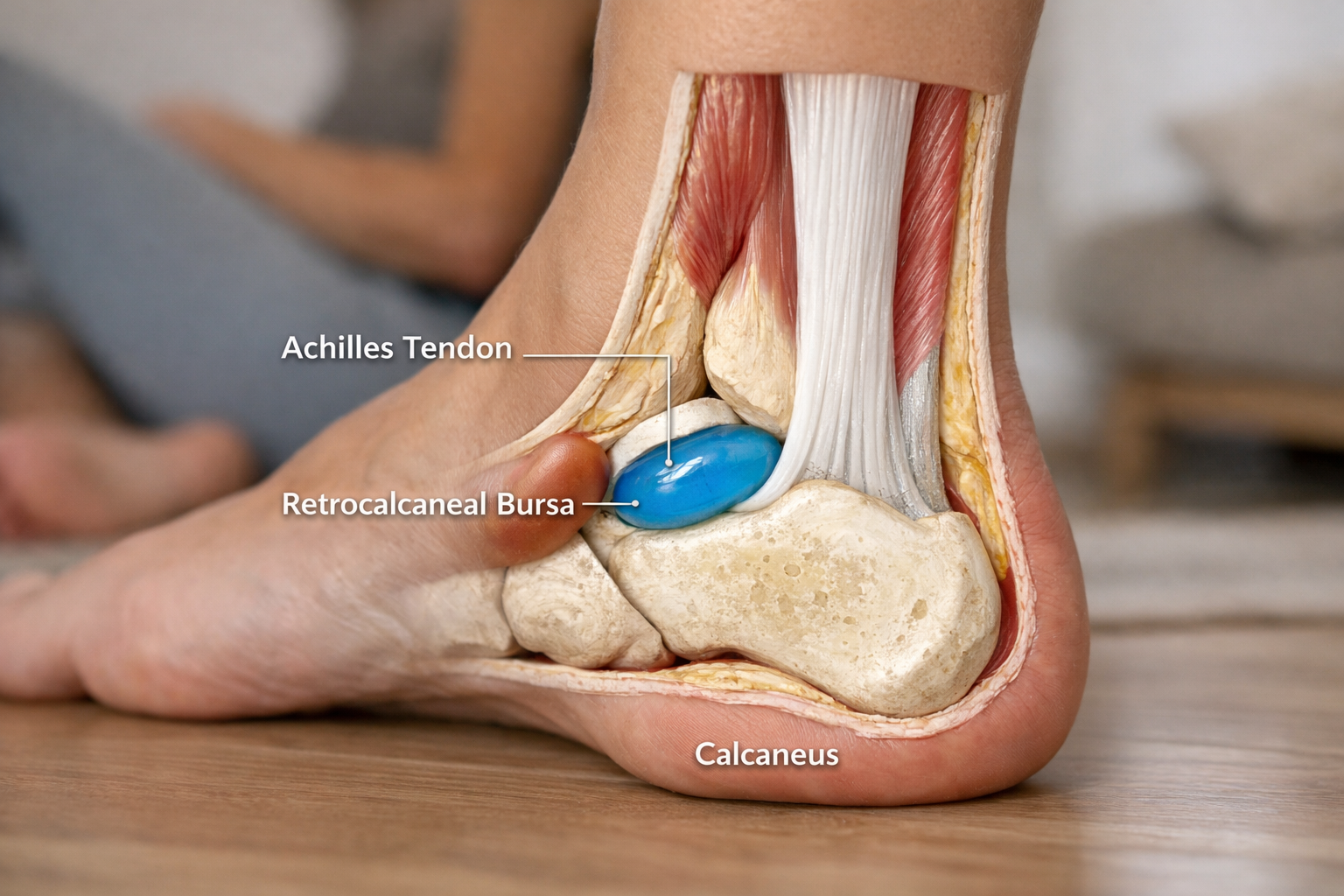
A bursa is a small fluid-filled sac that sits between bone and soft tissue to reduce friction. Around the heel, the retrocalcaneal bursa sits just in front of the Achilles tendon, and a smaller subcutaneous bursa can sit just behind it, closer to the skin. When one of these becomes irritated and inflamed, that’s bursitis.
Heel bursitis usually shows up as pain and swelling at the back of the heel, sometimes with visible puffiness or a tender, warm bump. It’s different from plantar fasciitis, which causes pain under the heel and into the arch, most notably with the first steps in the morning. It’s also different from Achilles tendinopathy, though the two can overlap since the retrocalcaneal bursa sits right next to the Achilles insertion. Not all heel pain is the same condition, and a proper evaluation matters because the management differs depending on which structure is actually irritated.
What Triggers Heel Bursitis
Bursitis develops when the demand on that tissue exceeds what it can currently tolerate. That’s the same load-versus-capacity framework we use for almost every foot and ankle problem we see, and it applies here too. Common contributors include:
- Footwear with a rigid or poorly padded heel counter that rubs against the back of the heel with every step
- A sudden increase in walking, running, or standing time
- Tight or shortened calf muscles that increase tension on the Achilles and the bursa beneath it
- Biomechanical factors like an abnormal gait pattern or a bony prominence at the back of the heel (sometimes called a “pump bump”)
- Repetitive friction from certain occupations or activities, such as jobs that involve a lot of standing, stair use, or hard-soled shoes
None of this is about personal failure. Body weight, a standing job, or a new pair of shoes aren’t flaws, they’re simply variables that add to the total load your heel tissue has to manage on a given day. Symptoms can also lag behind the activity that caused them by a day or two, so it’s not always obvious what triggered a flare.
Does Heel Bursitis Ever Go Away?
For most people, yes. Bursitis is generally a very treatable condition, and acute cases often settle within a few weeks with sensible load management. Chronic cases, where the bursa has been irritated for months, usually take longer and need a more patient, graded approach, but chronic doesn’t mean permanent. It typically means starting from a lower level of activity and building back up more gradually rather than assuming the problem can’t improve.
How to Get Rid of Heel Bursitis Fast
There’s no shortcut that skips the biology, but there is a faster path than doing nothing or doing too much. In the first days after symptoms flare, this often looks like:
- Reducing (not eliminating) the aggravating activity so the tissue calms down
- Icing the area for 15 to 20 minutes to reduce local sensitivity
- Switching to footwear that doesn’t rub against the inflamed area
- Addressing calf tightness with gentle mobility work once the acute irritation settles
What actually resolves the underlying problem, though, is restoring the tissue’s capacity to tolerate normal daily load without protesting. Rest and ice reduce sensitivity temporarily. They don’t change what the tissue can handle once you go back to real life. That change comes from a structured return to loading over weeks, not days.
Is Walking Bad for Heel Bursitis?
Walking itself isn’t the enemy, but the shoe you’re walking in and the total volume you’re doing might be. Complete rest is rarely the right answer for bursitis or any overuse condition in the foot and ankle. Staying almost entirely off your feet can calm symptoms short term, but it also lets capacity drop further, so pain often returns as soon as you resume normal activity.
A more useful approach is intelligent load management: keep walking, but modify the variables that are irritating the bursa. That might mean a different shoe, a shorter distance for a while, or a flatter, less rigid heel counter. Many people find that pain during or shortly after walking staying at a mild, tolerable level (often described as roughly a 4 out of 10 or under) is a reasonable signal that the activity is appropriate, while pain that climbs higher or lingers well beyond a day suggests the load was too much for now.
What Calms Down Bursitis?
In the acute phase, a few things reliably reduce sensitivity:
- Ice, applied for short periods several times a day
- Reducing direct friction or pressure at the back of the heel
- Over-the-counter anti-inflammatory medication, used as directed and best discussed with your physician if you have other health conditions
- Temporary heel lifts or padding to change the angle of pressure against the bursa
These measures address symptoms. They’re genuinely useful in the short term, but on their own they don’t rebuild the tissue’s tolerance for load, which is the part that prevents the problem from coming back every time you resume normal activity.
What Shoes Are Best for Heel Bursitis?
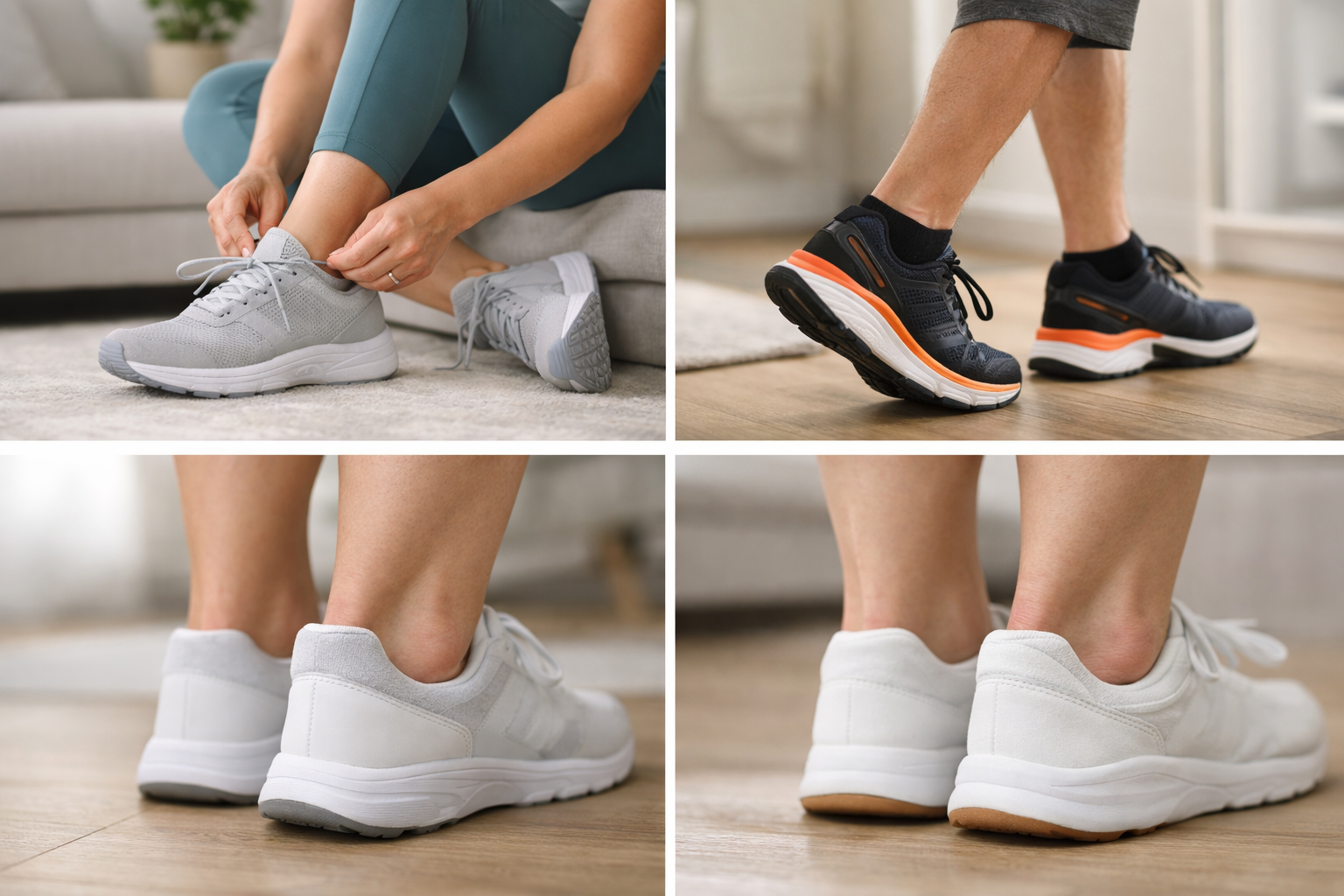
Footwear is one of the simplest load-management tools available, and it’s worth taking seriously rather than treating as an afterthought. Look for:
- A soft or padded heel counter that doesn’t press directly on the inflamed area
- A slightly higher heel-to-toe drop, which can reduce tension through the Achilles and the bursa beneath it
- Enough room in the heel that the shoe doesn’t grip tightly against the back of the foot
- Avoiding backless shoes or flip-flops that require gripping with the toes, which can alter your walking pattern
Shoes aren’t a cure, and they’re not something to feel like you failed at choosing correctly before this started. They’re one variable among several that affects the total load on the area, and adjusting them is often one of the easiest wins available.
Do Compression Socks Help Heel Bursitis?
Compression socks or sleeves can help some people manage swelling and provide mild support, and they’re low-risk to try. They’re not a primary treatment for bursitis, though, and they won’t address the underlying capacity issue. Think of them as a supportive add-on rather than a solution.
What Exercise Can I Do With Heel Bursitis?
Once the acute irritation has settled somewhat, graded loading is what rebuilds the tissue’s tolerance. A physical therapist will typically guide you through a progression rather than a fixed list, but common elements include:
- Gentle calf stretching to address tightness that increases tension on the Achilles and bursa
- Isometric calf holds, which are often well tolerated even when more dynamic movement isn’t yet
- Gradual reintroduction of standing calf raises, progressing load and range as symptoms allow
- Gait and footwear adjustments to reduce friction while capacity rebuilds
The progression matters more than any single exercise. Early improvements often come from your nervous system becoming less protective of the area, not necessarily from the tissue itself changing yet. Real structural adaptation in tendon and connective tissue generally takes longer, often in the range of 8 to 12 weeks of consistent, appropriately dosed loading. Stopping the program as soon as pain resolves, before that adaptation has actually occurred, is a common reason bursitis symptoms recur a few weeks later.
A useful general pattern many people use: keep pain at or below a mild level (around 4 out of 10) during and after exercise, and check that soreness resolves within about 24 hours. If it doesn’t, the next session usually needs a smaller increase, not a bigger one.
What Will a Podiatrist or Physical Therapist Do for Bursitis?
An evaluation typically starts with ruling out other causes of heel pain, since Achilles tendinopathy, plantar fasciopathy, and even stress reactions in the calcaneus can present with overlapping symptoms. From there, a clinician will usually assess your footwear, walking pattern, calf and ankle range of motion, and daily activity load to identify what’s driving the irritation.
Treatment often includes a combination of short-term symptom management (ice, footwear changes, temporary activity modification) and a longer-term loading program to rebuild capacity. In some cases, a physician may recommend an anti-inflammatory injection to calm a particularly stubborn flare, which can be a reasonable tool for reducing pain enough to begin active rehab. It’s not typically presented as a standalone fix, since it doesn’t change the tissue’s underlying capacity on its own.
When to See Someone
Most heel bursitis responds well to a sensible mix of load management and progressive exercise, and the principles here are sound for the majority of cases. That said, see a physician or physical therapist if you notice significant redness, warmth, or fever alongside the swelling (which can suggest infection), if pain is severe or rapidly worsening, or if symptoms haven’t improved after a few weeks of reasonable self-management. An evaluation can confirm what’s actually going on and make sure you’re not managing the wrong condition.