Heel Bone Spurs: Causes, Diagnosis, and Treatment Options
A practical guide to how heel bone spurs form, how they're diagnosed, what actually helps, and why the spur itself is rarely the whole story.
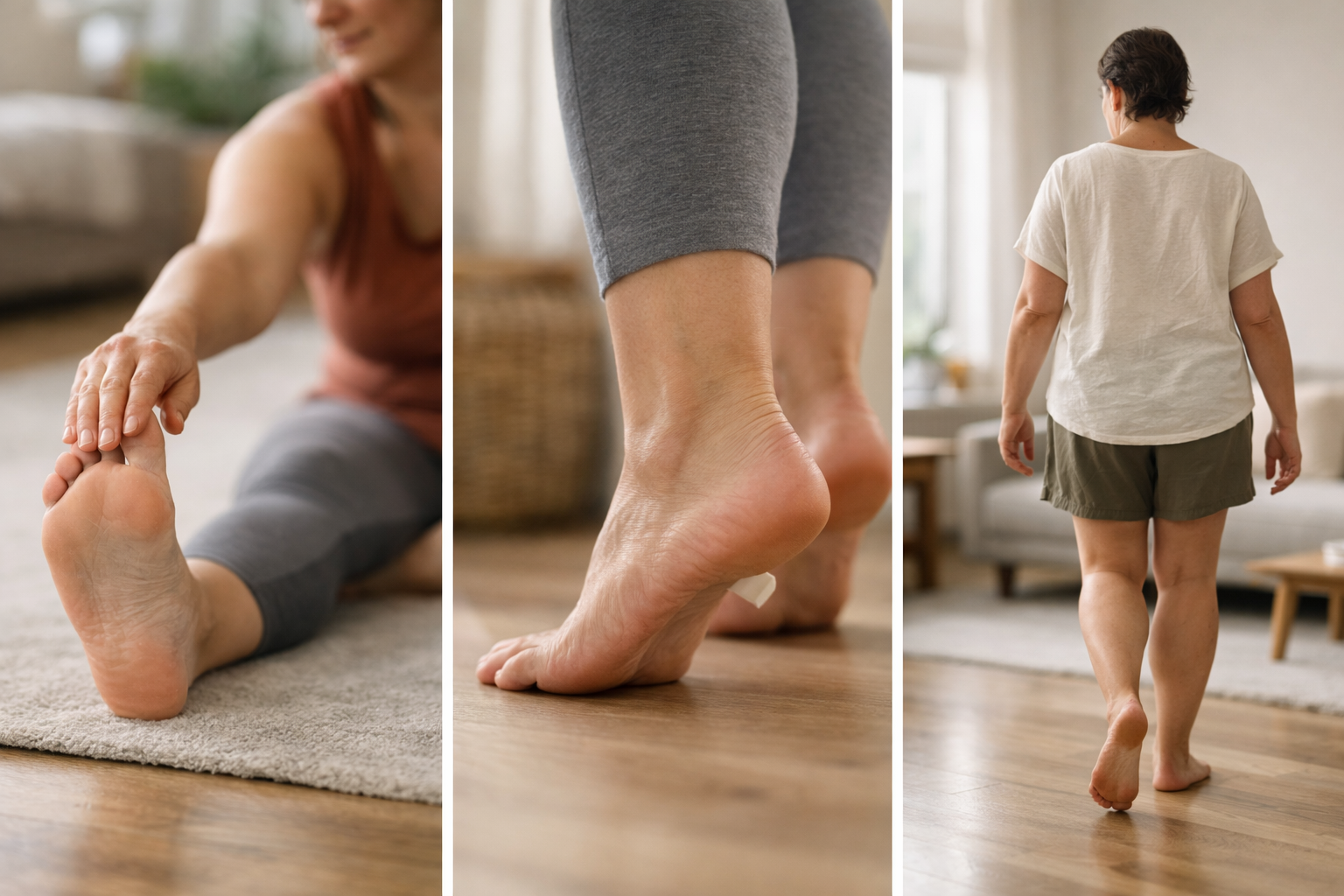
Heel bone spurs get blamed for a lot of foot pain, and sometimes that blame is misplaced. If you’ve had an X-ray that showed a spur, or you’re dealing with heel pain and wondering if a spur is the cause, this article walks through how spurs form, how they’re diagnosed, and what treatment actually looks like.
We’ve written elsewhere about how heel spurs relate to plantar fasciitis specifically, including whether the spur itself causes the pain. This article covers the broader picture: what spurs are, how they develop, how they’re found, and what to do about them.
What a Heel Bone Spur Is
A heel bone spur (calcaneal spur) is a bony growth that forms on the heel bone, usually where a tendon or the plantar fascia attaches. It’s the body’s response to sustained pulling or pressure at that attachment point over months or years. The bone lays down extra calcium along the line of stress, similar to how a callus builds up on skin that takes repeated friction.
Spurs form slowly. Nobody develops one from a single bad week of walking. They’re a marker of long-term load at that site, not an injury that happened yesterday.
How Spurs Form: The Load and Capacity Connection
The simplest way to understand a heel spur is through the same lens we use for most foot and ankle problems: load versus capacity. When the demand on a tissue (or in this case, a bone attachment point) consistently exceeds what it can comfortably handle, the body adapts. Sometimes that adaptation is tissue thickening. Sometimes it’s a bony spur.
Common contributors to that cumulative load include:
- Standing or walking for long stretches on hard surfaces
- A sudden increase in activity, like starting a new running program
- Footwear that doesn’t support the foot’s natural mechanics
- Extra body weight, which increases the load on the heel with every step
- Tight calves or a stiff ankle, which shifts more strain onto the heel attachment
None of these are personal failures. They’re just factors that add up to total load on the system. Two people can have the exact same job or the exact same shoes and end up with very different outcomes, because their tissue capacity, history, and biomechanics differ.
Plantar Spurs vs. Posterior Spurs
Not all heel spurs sit in the same spot, and location matters.
Plantar heel spurs form on the underside of the heel bone, where the plantar fascia attaches. These are the ones most often associated with plantar fasciitis, or more accurately, plantar fasciopathy in its chronic form.
Posterior heel spurs form at the back of the heel, where the Achilles tendon attaches. These often show up alongside Achilles tendinopathy and can cause a visible bump, redness, or irritation from shoe backs rubbing against the area.
The two locations behave differently, respond to somewhat different loading strategies, and can each be mistaken for the other if you’re just going by “heel pain” without a proper exam.
How Do You Know If It’s a Heel Spur?
Here’s the honest answer: you often can’t know for certain without imaging, and even then, the spur may not be what’s causing your pain.
A heel spur itself is a bone finding. It doesn’t have its own symptom pattern that’s distinct from the soft tissue problem next to it. What people typically notice is:
- Sharp or aching pain at the bottom or back of the heel
- Pain that’s worse with the first steps in the morning or after sitting
- Discomfort that eases somewhat with movement, then returns after standing or walking a lot
- A tender spot that’s sensitive to direct pressure
This pattern is consistent with several different heel conditions, not just a spur. Many people who have this exact symptom picture get imaging and find no spur at all, and plenty of people with a spur on X-ray have zero pain from it. The imaging finding and the symptom are only loosely connected.
What Else Gets Mistaken for a Heel Spur
Heel pain has several possible sources, and it’s worth knowing that “heel spur” isn’t the only explanation on the table. Conditions that can produce similar symptoms include:
- Plantar fasciopathy (with or without a spur present)
- Achilles tendinopathy, particularly at the back of the heel
- Fat pad atrophy or bruising, common with age or a hard fall onto the heel
- Tarsal tunnel syndrome, a nerve entrapment that can radiate into the heel and arch
- Stress fractures of the calcaneus, especially in runners or people who recently increased activity
- Bursitis at the back of the heel
This is exactly why a proper evaluation matters instead of self-diagnosing from an internet search. A clinician can sort out which structure is actually driving your symptoms and build a plan around that, rather than treating a bone spur that may be an innocent bystander.
Getting a Diagnosis: What a Podiatrist or Physical Therapist Will Do
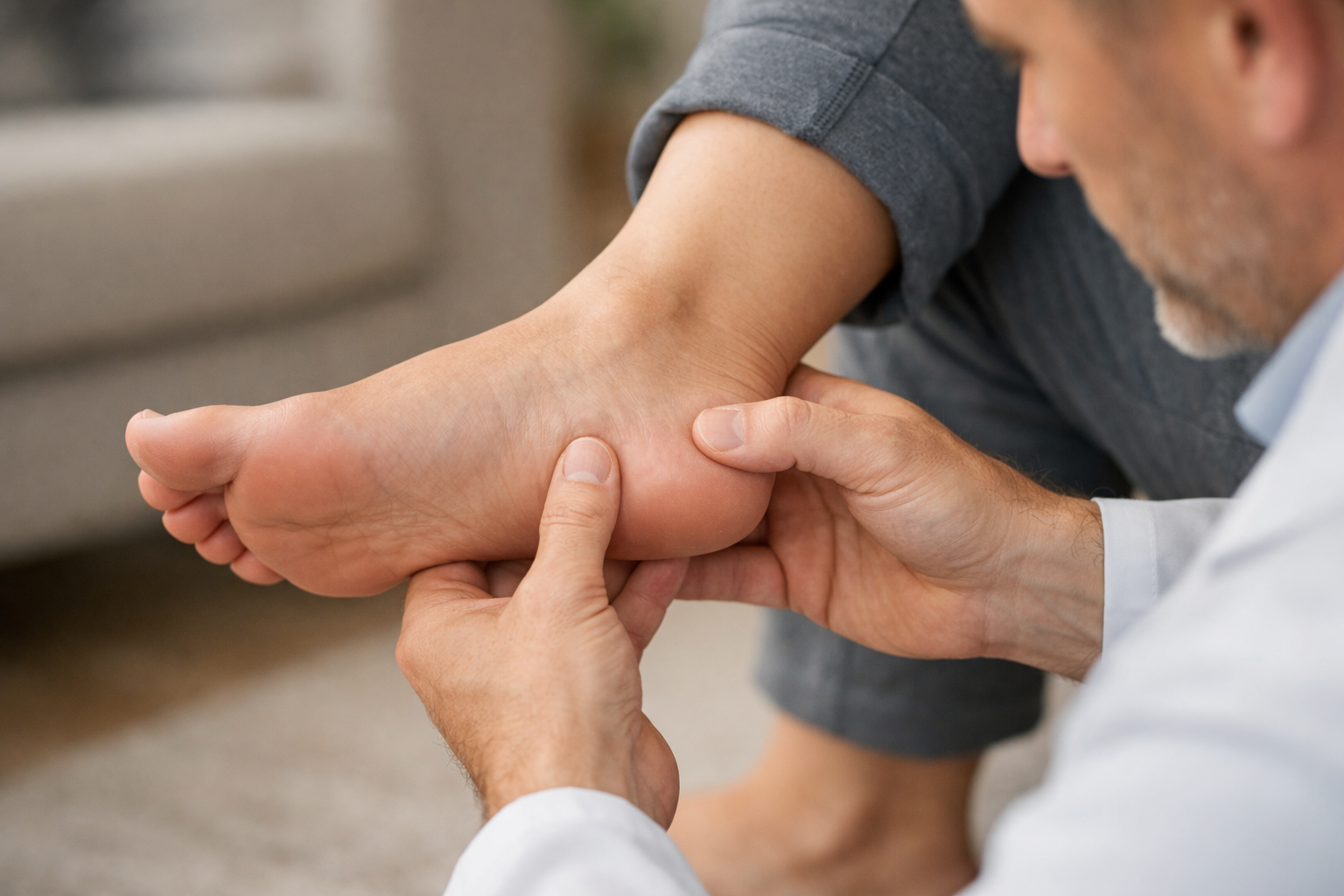
A thorough evaluation usually starts with a conversation about when the pain started, what makes it better or worse, your daily activity and standing time, footwear, and any recent changes in exercise or work. That history often tells us as much as the physical exam.
From there, expect:
- Palpation, pressing along the heel and arch to find the exact tender point
- Range of motion testing at the ankle, since a stiff ankle changes how load travels through the foot
- Gait assessment, watching how you walk and stand
- Imaging when indicated, typically an X-ray to look at bone structure, sometimes ultrasound or MRI if a soft tissue problem or stress fracture is suspected
A podiatrist or PT isn’t just confirming a spur exists. They’re figuring out whether the spur is relevant at all, and identifying what’s actually driving your pain and what’s limiting your capacity to tolerate normal activity.
Will a Heel Spur Go Away by Itself?
Once bone forms, it generally doesn’t dissolve or resorb on its own in any meaningful timeframe. The spur itself tends to be a permanent structural feature, similar to a healed callus.
The good news is that this usually doesn’t matter much. Most people don’t need the spur to disappear to get back to pain-free walking and standing. What resolves is the inflammation and sensitivity in the surrounding soft tissue, not the bone itself. Many people improve significantly even though the spur is still sitting there on a follow-up X-ray.
What Happens If a Heel Spur Goes Untreated?
The spur itself typically doesn’t get dramatically worse or spread if left alone. The more relevant question is what happens to the soft tissue condition around it, usually plantar fasciopathy or Achilles tendinopathy, if that goes unaddressed.
Left untreated, chronic heel pain tends to persist or worsen gradually, often because people unconsciously alter their gait to avoid the pain. That compensation can create new problems up the chain, in the arch, ankle, knee, or hip. It’s not that ignoring a heel spur causes some catastrophic event. It’s that the underlying tissue sensitivity rarely resolves through avoidance alone, and compensations have a way of creating a second problem on top of the first.
Treatment Options That Actually Work
Most heel spur treatment isn’t really about the spur. It’s about calming and then rebuilding the capacity of the soft tissue attached near it.
Activity and load management
The goal isn’t to stop moving. It’s to manage how much load you’re putting through the heel each day, factoring in exercise plus standing, walking, and work. A useful general guideline many clinicians use is keeping pain at or below roughly a 4 out of 10 during and after activity, and giving the tissue about 24 hours to show you whether it tolerated that load or not. Full rest for days or weeks at a time usually backfires, because the tissue loses capacity right along with the pain relief.
Stretching and manual therapy
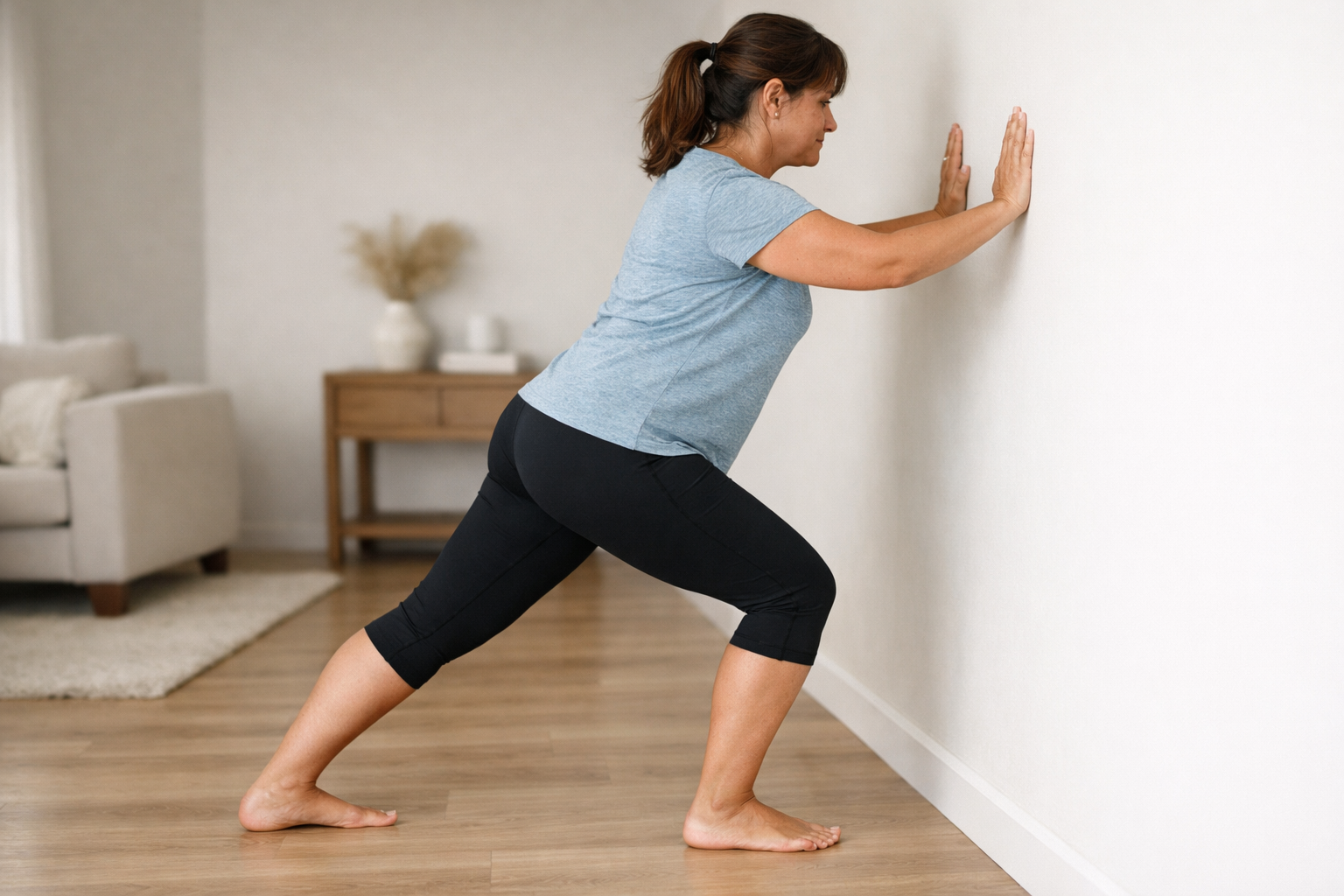
Calf and plantar fascia stretching, along with manual therapy from a PT, can reduce sensitivity in the short term. This is useful for taking the edge off, but it’s a temporary effect. Stretching calms an irritated tissue while it’s unloaded; it doesn’t build the tissue’s ability to handle load once you’re back on your feet.
Progressive loading
This is where lasting change happens. A structured program that gradually loads the calf, plantar fascia, and foot intrinsic muscles, starting low and increasing slowly, allows the tissue to actually adapt over time. This typically takes something in the range of 8 to 12 weeks to show meaningful structural change, not days. Early improvement is often more about the nervous system calming down; the deeper tissue adaptation comes later, which is why people who stop as soon as pain fades often see it come back.
Footwear and orthotics
Shoes and orthotics are load-management tools, not cures. A shoe with better cushioning or arch support can reduce the stress at the heel attachment while you’re rebuilding capacity, and that’s a legitimate short-term strategy. Orthotics work the same way. Neither one fixes the underlying tissue on its own, but neither one is something to avoid either. Think of them as reducing demand while you build capacity, not as a permanent crutch you can’t function without.
Injections
Corticosteroid injections can reduce inflammation and pain for a period of time, which can be genuinely helpful for someone who’s stuck and needs a window to start a loading program without being derailed by pain. They don’t rebuild tissue capacity by themselves, and repeated injections carry some risk to the surrounding tissue, so they’re generally used as part of a broader plan rather than a standalone fix.
Surgery
Surgical removal of a heel spur is uncommon and typically reserved for cases that haven’t responded to months of conservative care. Even then, surgery usually addresses the associated soft tissue problem (like a chronically inflamed plantar fascia) more than the spur itself, since removing the spur alone doesn’t reliably resolve heel pain.
Is Walking Good for a Heel Spur?
Generally, yes, in the right dose. Complete inactivity tends to reduce tissue capacity over time, which sets you up for pain to return the moment you resume normal activity. The goal is staying as active as you can tolerate, adjusting distance, pace, or surface if a particular walk consistently spikes your pain beyond that comfortable range. If a certain amount of walking keeps you under that manageable pain threshold and you recover within about a day, that’s usually a sign your current activity level is appropriate, not a signal to stop moving.
Can You Rub or Dissolve a Heel Spur Naturally?
Rubbing or massaging the area can feel good and may temporarily reduce sensitivity in the surrounding soft tissue, similar to how stretching helps in the short term. It’s not harmful for most people to do in moderation. What it won’t do is dissolve the bone spur itself. There’s no natural remedy, supplement, or massage technique that reliably removes bone once it has formed. If someone tells you a topical treatment or home remedy will dissolve a heel spur, treat that claim skeptically. The realistic goal is calming the soft tissue and rebuilding its capacity, not eliminating the bone.
When to See a Clinician
Most heel pain responds well to a sensible, progressive approach, but a few situations warrant a prompt evaluation rather than a wait-and-see approach: pain that’s severe, pain following a specific traumatic event, numbness or tingling, significant swelling or redness, or symptoms that keep worsening despite weeks of reasonable load management. Persistent heel pain of any kind is also worth getting evaluated, since so many different conditions can present the same way, and confirming what you’re actually dealing with makes treatment far more efficient.
A heel spur showing up on an X-ray isn’t a life sentence, and it isn’t proof that surgery or aggressive treatment is your only option. For most people, the path forward is the same one that helps most chronic foot pain: figure out what’s actually driving the symptoms, manage the total load on the area, and give the tissue a structured, patient progression to rebuild the capacity it lost.