Achilles Tendon Rupture: What It Is and How It Happens
A plain-language look at what a complete Achilles tendon rupture actually is, how to tell one from other calf and heel injuries, how the decision between surgery and non-surgical care gets made, and what the months afterward realistically involve.

Most people who rupture an Achilles tendon can tell you the exact second it happened. You pushed off to sprint for a ball, or stepped up onto a curb a little harder than usual, and something at the back of your ankle gave way. A loud pop. The strange, specific feeling that somebody kicked you in the calf, hard, from behind. You turned around. Nobody was there.
Then, often, the pain settles down faster than you’d expect. Which is the confusing part. You can stand. You can limp along. You start to think maybe it’s just a bad strain.
That gap between how dramatic the moment felt and how manageable it feels ten minutes later is the reason a fair number of Achilles ruptures get missed at first. So let’s walk through what’s actually going on, how this injury gets sorted out from the things that mimic it, and what the road ahead tends to look like.
What the Achilles actually does, and what a rupture means
Your Achilles is the thickest, strongest tendon in the body. It connects your calf muscles to your heel bone, and every time you push off the ground (walking, climbing stairs, running, jumping, rising onto your toes) that force travels through it. Depending on the activity, it handles loads several times your body weight.
A rupture means the tendon fibers have torn through, either completely or close to it. The two ends separate. The calf muscle loses its connection to the heel, which is why the signature loss is push-off power rather than the ability to stand.
Most ruptures happen a few centimeters above the heel bone, in a stretch of tendon with a comparatively modest blood supply. And most of them are not the result of one freak moment out of nowhere. The tendon usually had some degree of degeneration already, quiet changes in the tissue that built up over years without necessarily hurting. Then a sudden demand landed on a tendon whose capacity had slowly drifted below what that moment required.
That’s the load-versus-capacity story in its most abrupt form. Demand exceeded what the tissue could tolerate, and it failed.
Who this tends to happen to
There’s a recognizable pattern, even though it can happen to anyone.
- Adults roughly in their 30s to 50s. Old enough that the tendon has accumulated some wear, young enough to still sprint, jump, and change direction hard.
- Return-to-sport moments. Weekend basketball, pickleball, tennis, a company softball game, the first soccer match in two years. Explosive push-off after a long stretch of lower activity is a common setup.
- Recent changes in demand. A sudden spike in training, a new sport, a big jump in hill or speed work.
- Certain medications. Fluoroquinolone antibiotics and corticosteroids have a recognized association with tendon problems, including rupture. Worth mentioning to your clinician if either applies.
- A history of Achilles pain. Not everyone who ruptures had symptoms beforehand, but some did and pushed through them.
None of this is about blame. A tendon that ruptures under load is a tendon that got asked for more than it could give on that particular day. The useful question isn’t what you did wrong, it’s what the tissue can be rebuilt to handle from here.
Can you still walk with a ruptured Achilles?
Usually, yes. And this trips people up constantly.
Other muscles in your lower leg can plantarflex the ankle a little, so you can often shuffle, limp, and bear weight even with a complete rupture. What you almost certainly cannot do is rise up onto the toes of that leg alone. The push-off is gone. Walking becomes flat-footed and slappy, stairs feel impossible, and any attempt to accelerate goes nowhere.
So “I can walk on it” does not rule out a rupture. If you heard or felt a pop at the back of the ankle and you’ve lost your push-off, get it evaluated promptly even if you drove yourself home afterward.
How do you tell if an Achilles is torn or ruptured?
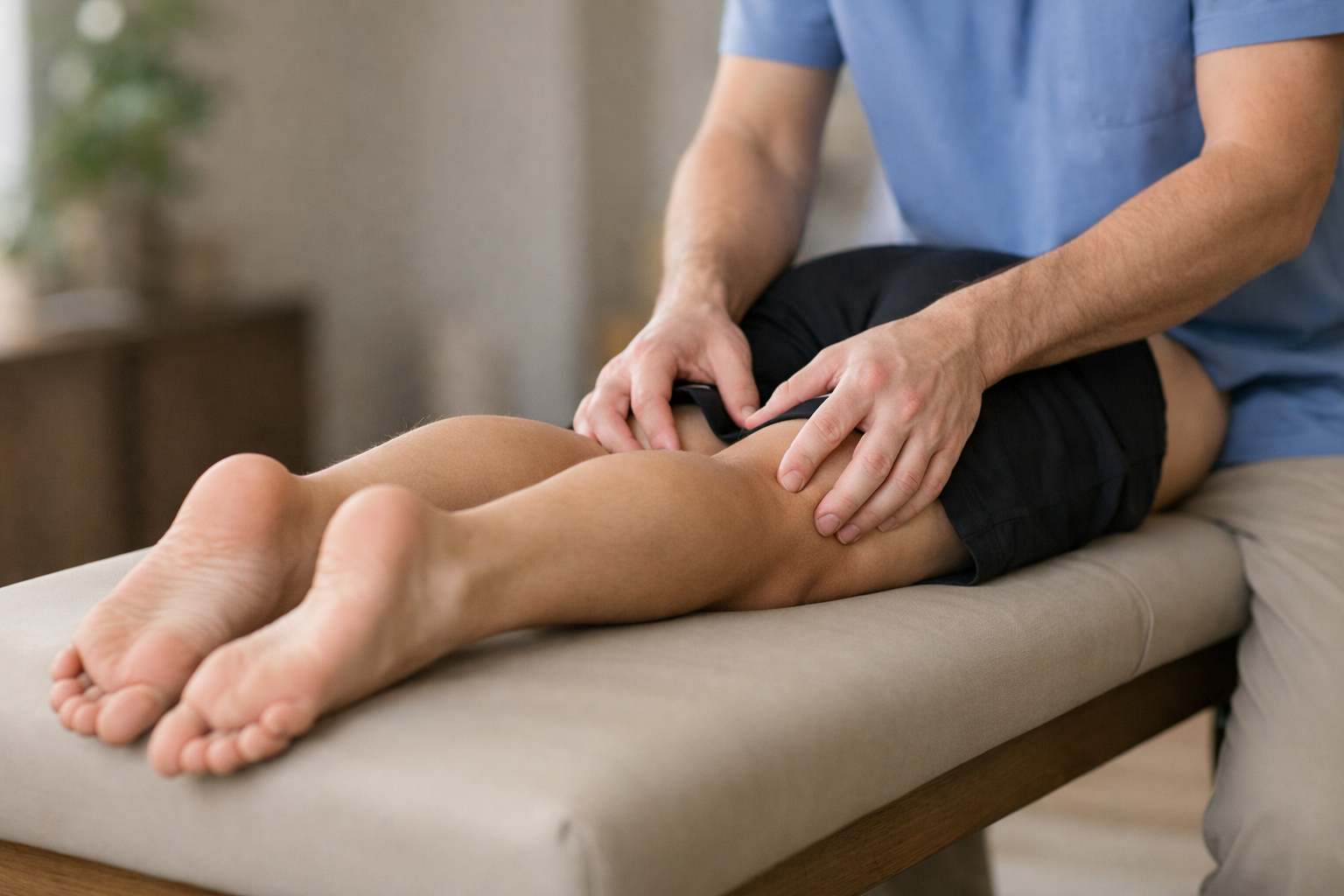
A proper exam sorts this out quickly, and there are a few things a clinician looks for.
The story. A sudden pop or snap during push-off, often with the sensation of being struck in the calf, is one of the more telling features in all of musculoskeletal medicine. Gradual soreness that built up over weeks points somewhere else entirely.
A palpable gap. With a complete rupture, you can often feel a divot or dip in the tendon a few centimeters above the heel. Swelling can obscure it after a day or two, which is another reason not to wait a week to get looked at.
The calf squeeze test. Lying face down with your feet hanging off the end of a table, someone squeezes your calf. In an intact tendon, the foot points down. With a complete rupture, it barely moves or doesn’t move at all. Simple, and quite informative.
Loss of single-leg heel rise. Not being able to lift your heel off the floor on that leg alone is a meaningful sign.
Imaging when needed. Ultrasound or MRI can confirm the tear, show whether it’s complete or partial, and show how far apart the ends sit. Imaging is helpful for planning, but the diagnosis is often made on the exam alone.
What this can be consistent with is a complete rupture. What it can also be consistent with, and what an evaluation is there to distinguish, includes a partial tear, a torn calf muscle higher up (sometimes called tennis leg), a severely irritated tendon, a bursitis at the back of the heel, or in rarer cases a blood clot. The treatment paths diverge sharply, so guessing from a web page isn’t the move here.
Is it better to have Achilles surgery or not?
This is the question people fixate on, and it deserves a more honest answer than either camp usually gives.
Both surgical repair and non-surgical (functional) treatment are legitimate, well-established paths. Twenty years ago, surgery was the default for anyone active. That’s shifted, largely because non-surgical care changed: instead of casting the leg rigid for months, modern protocols use a boot with heel wedges, start protected weight-bearing early, and begin controlled movement much sooner. Managed that way, outcomes for many people look considerably closer to surgery than they used to.
A few things genuinely factor into the decision:
- How far apart the tendon ends sit when the ankle is positioned in a boot. If they approximate well, non-surgical care becomes more attractive.
- Timing. A rupture treated in the first couple of weeks has more options than one found at eight weeks.
- Your health profile. Diabetes, smoking, circulation problems, and skin issues all raise the stakes of a surgical wound in an area with thin tissue coverage.
- Your demands. A competitive athlete’s push-off requirements differ from those of someone whose main goal is hiking and stairs without a second thought.
- Risk tolerance. Surgery carries wound healing and infection risk plus nerve irritation. Non-surgical care has historically carried a somewhat higher re-rupture rate, though good functional protocols have narrowed that gap.
What matters far more than which box gets checked is what happens over the following year. A well-rehabbed non-surgical Achilles routinely outperforms a surgically repaired one that got a generic handout and no real progression. The repair restores continuity. It doesn’t restore capacity. That part gets built.
This is a conversation for you and an orthopedic surgeon, with your actual imaging, your actual health history, and your actual goals on the table.
Can a torn Achilles heal without surgery?
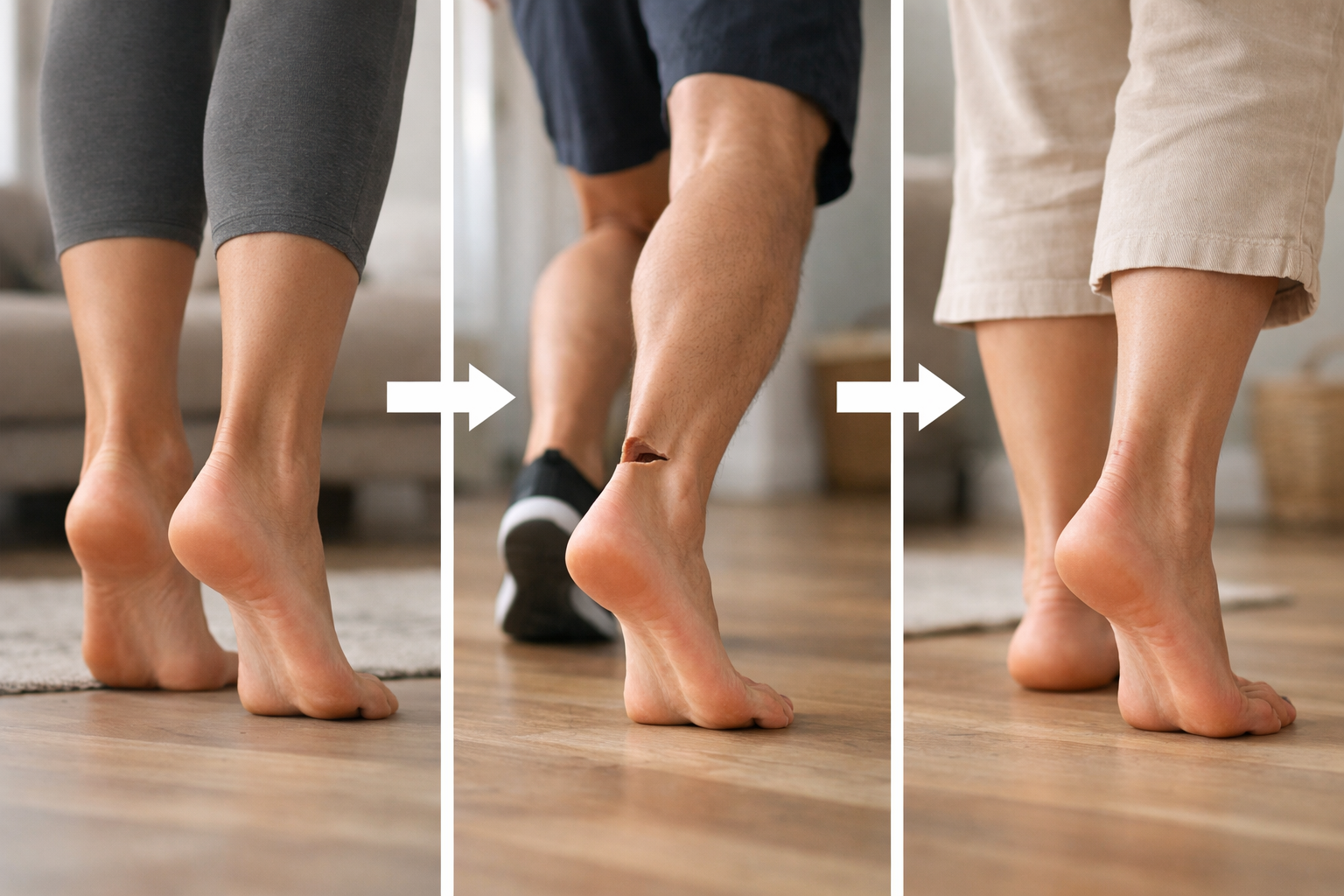
Yes, it can. Tendon is living tissue, and if the torn ends are held close together in a protected position, scar tissue bridges the gap and gradually remodels into something functional.
The important caveat is that “without surgery” doesn’t mean “without treatment.” Non-surgical management is an active, structured process: a boot, staged heel wedge removal, a specific weight-bearing progression, and rehab that begins far earlier than most people assume. Left alone in a cast for three months and then released into the world, that tendon tends to heal long and weak, and a long Achilles gives you a permanently mushy push-off that’s hard to recover later.
So the honest framing is that non-surgical care works when it’s done properly. It’s a real plan, not the absence of one.
When is it too late to get Achilles tendon surgery?
There’s no hard cutoff, but time genuinely matters here.
In the first two to three weeks, the torn ends are still workable and repair is relatively straightforward. As weeks pass, the calf muscle shortens and pulls the upper end further away, the tendon ends soften and fray, and the gap fills with disorganized tissue. A rupture that’s identified at two or three months is usually described as chronic or neglected, and repairing it often requires a more involved reconstruction: tendon transfers, grafts, or lengthening procedures. Those surgeries can work well, but they’re bigger operations with longer recoveries.
Which brings us back to the beginning. Missed ruptures happen because the pain calms down and people can walk. If you felt the pop, don’t wait it out to see if it settles.
How long do you stay in hospital after Achilles tendon surgery?
For a standard Achilles repair, this is almost always same-day surgery. You arrive in the morning, the procedure takes under an hour in most cases, you spend some time in recovery, and you go home that afternoon in a splint or boot with crutches.
Overnight stays are the exception, usually related to anesthesia issues, other medical conditions, or a much more complex reconstruction. Plan your logistics around getting home the same day: a ride, a plan for stairs, somewhere to elevate the leg.
How long does it take to recover from an Achilles tendon rupture?
Here’s where I’ll be direct, because vague answers do people no favors.
Walking in a normal shoe typically comes somewhere around the two to three month mark. Feeling reasonably normal for daily life often lands somewhere around four to six months. Returning to running, cutting sports, and full explosive push-off commonly takes nine to twelve months, and for some people longer. Calf strength in particular is stubborn, and it’s the piece most often left unfinished.
Those are general patterns, not promises. Age, rupture location, how the tendon healed, and how consistently the rehab got done all move the numbers. Two people with identical MRIs can sit months apart in their progress.
What I’d rather you take from this than any specific number: the calendar provides structure, but your response to loading determines what comes next. You do an appropriate amount, you watch how the tendon and calf respond over the next day or so, and you adjust from there. Soreness that settles within about 24 hours is generally workable information. Symptoms that escalate and stay escalated mean the dose was too much, too soon. That loop, repeated over months, is the actual mechanism of recovery.
If you want the full stage-by-stage breakdown, there’s a companion article on this site, Achilles Tendon Rupture Recovery: A Realistic Timeline, that walks through each phase in detail.
What is the hardest tendon to heal?
People ask this a lot, and the Achilles is usually one of the names that comes up, along with the rotator cuff and the patellar tendon.
There’s some reasonable basis for it. The Achilles has a relatively poor blood supply in its midportion, it bears enormous loads with every step, and it’s very difficult to genuinely rest without giving up walking. So it heals slowly, and it can stay sensitive for a long stretch.
But “hard to heal” gets heard as “won’t heal,” and that’s not the case. Tendon responds well to progressive mechanical loading. It’s just slow. Meaningful structural adaptation in tendon tissue typically unfolds over months, not weeks, and often in the eight to twelve week range per phase of loading rather than in a handful of sessions. The early strength gains you feel in the first few weeks are largely your nervous system learning to recruit the muscle again. The tissue changes come later, and they’re the reason you keep going after it stops hurting.
That last part is worth sitting with. The most common mistake after an Achilles rupture isn’t doing too much. It’s stopping the strength work at month four because walking feels fine, leaving a calf that’s still noticeably weaker than the other side. Recovery is built, and it gets built past the point where symptoms have quieted.
Will you ever be the same after an Achilles tear?
The honest answer has two halves.
Many people return to everything they cared about. Running, hiking, ball sports, long days on their feet. Plenty of professional athletes have come back and performed at a high level after this injury, which tells you the ceiling is high.
At the same time, small asymmetries are common even years later. A calf that stays a little smaller. Slightly less peak push-off power on that side. A single-leg heel raise that tops out a bit lower. Whether you ever notice these in daily life depends almost entirely on what you ask your leg to do and how thoroughly you rebuilt it.
How much residual difference you end up with is heavily influenced by the rehab, and specifically by whether calf strength training was progressed properly and carried on long enough. That part is within your control in a way the injury itself was not.
And some things do come back better. People often finish this process with a clearer understanding of how to load tissue, how to read soreness, and how to build back after a setback. That knowledge transfers to everything else you do.
What to watch for along the way
A few situations warrant prompt contact with your surgeon or clinician rather than waiting for your next appointment:
- A sudden pop, giving way, or new loss of push-off during recovery, which can indicate a re-rupture.
- Calf pain, swelling, warmth, or redness that’s disproportionate or one-sided, particularly with shortness of breath, given that immobilization raises clot risk.
- Fever, spreading redness, or wound drainage after surgery.
- Numbness or persistent burning along the outside of the foot or back of the leg.
- Pain that keeps climbing day after day rather than settling within a day of activity.
None of these are reasons to be anxious about every twinge. Tendon recovery involves plenty of ordinary soreness, and an uptick in symptoms after a harder day is usually information about dosing rather than evidence of damage. The list above is about the specific signals that deserve a phone call.
Where to start if this just happened
If you felt the pop today or yesterday: keep weight off it as best you can, elevate the leg, and get in front of an orthopedic or foot and ankle specialist within a few days rather than a few weeks. That window matters for keeping all your options open.
If you’re already past the surgical decision and into the boot: the work ahead is less about the injury and more about the rebuild. The tendon will heal. Whether your calf ends up capable of what you want from it depends on what happens over the next nine to twelve months, and that’s a longer, more gradual project than most people are told up front.
Every Achilles recovery is specific to the person attached to it, and this article can’t substitute for an exam by someone who can put hands on your leg and watch you move. What it can do is make the road ahead less mysterious, so the decisions you’re about to make feel like decisions rather than guesses.