Achilles Tendon Rupture Recovery: A Realistic Timeline
A clear, stage-by-stage look at what recovery from an Achilles tendon rupture actually involves, why the calendar only tells part of the story, and how strength and function are rebuilt over months rather than weeks.

Most people who tear an Achilles remember the exact moment. A pop. The feeling that someone kicked the back of the leg. Turning around to look and finding nobody there. Then the strange part: it often doesn’t hurt as much as you’d expect, and you can sometimes still shuffle a few steps, which is exactly why some people wait days before getting it checked.
By the time you’re reading about recovery, you probably already have the boot, the crutches, and a rough plan from a surgeon. What you’re actually asking is different. When can I walk normally? Will my calf ever look the same? Am I going to be one of the people who never quite gets back?
Those are fair questions, and they deserve better than “about six months.”
What actually happened inside your leg
The Achilles is the thickest, strongest tendon in your body. It transmits force from your calf muscles to your heel bone, and during running or jumping it handles loads several times your body weight. A rupture means that tendon tore, usually completely, most often a couple of inches above the heel where blood supply is thinnest.
Here’s the frame that will make everything else in this article make sense. Tendon problems happen when the demand placed on a tissue goes past what that tissue can currently handle. A rupture is the extreme version of that. And recovery, the whole thing, is the process of rebuilding capacity, which is the tendon’s and calf’s ability to tolerate a specific task over time.
That matters because the tendon healing and the leg becoming capable again are two separate timelines. The tissue knits back together over roughly the first three months. Your calf becoming strong enough to run, jump, and push off confidently takes far longer. Most of the frustration I see in the clinic comes from people who were told the first timeline and assumed it was the second.
Tear versus rupture: is there a difference?
People use these words interchangeably, and clinicians aren’t always consistent either. In practice:
- A partial tear means some tendon fibers are damaged but the tendon is still continuous. You’ll usually still have some ability to push the foot down against resistance.
- A complete rupture means the tendon has separated into two ends. Pushing off is dramatically weakened or absent.
So a rupture is a tear, just the complete version. The distinction matters clinically because it changes early management. An evaluation, sometimes with ultrasound or MRI, sorts out which one you have. And worth saying plainly: not every sudden calf or heel pain is a ruptured Achilles. Calf muscle strains, Achilles tendinopathy flares, and other problems can feel alarming and behave differently.
Surgery or no surgery
This is a conversation for you and your surgeon, and it depends on the gap between the tendon ends, your age, activity goals, health history, and how quickly you were seen.
What’s worth knowing: both paths work for a lot of people. Non-surgical management with early functional bracing has become much more common than it was twenty years ago, and outcomes are closer than most people assume. Surgery may be favored in certain cases, particularly with a large gap or in some higher-demand athletes.
What does not change with either choice is the rehab. The boot comes off eventually either way, and either way somebody has to rebuild a calf that has been asleep for two months. The rehabilitation is the treatment. The surgery, when it’s done, is a decision about how the tendon ends are brought together.
The recovery timeline, stage by stage
Treat these as general patterns, not a schedule you’re graded against. Protocols vary between surgeons, and your specific instructions override anything general you read online.
Weeks 0 to 2: protection
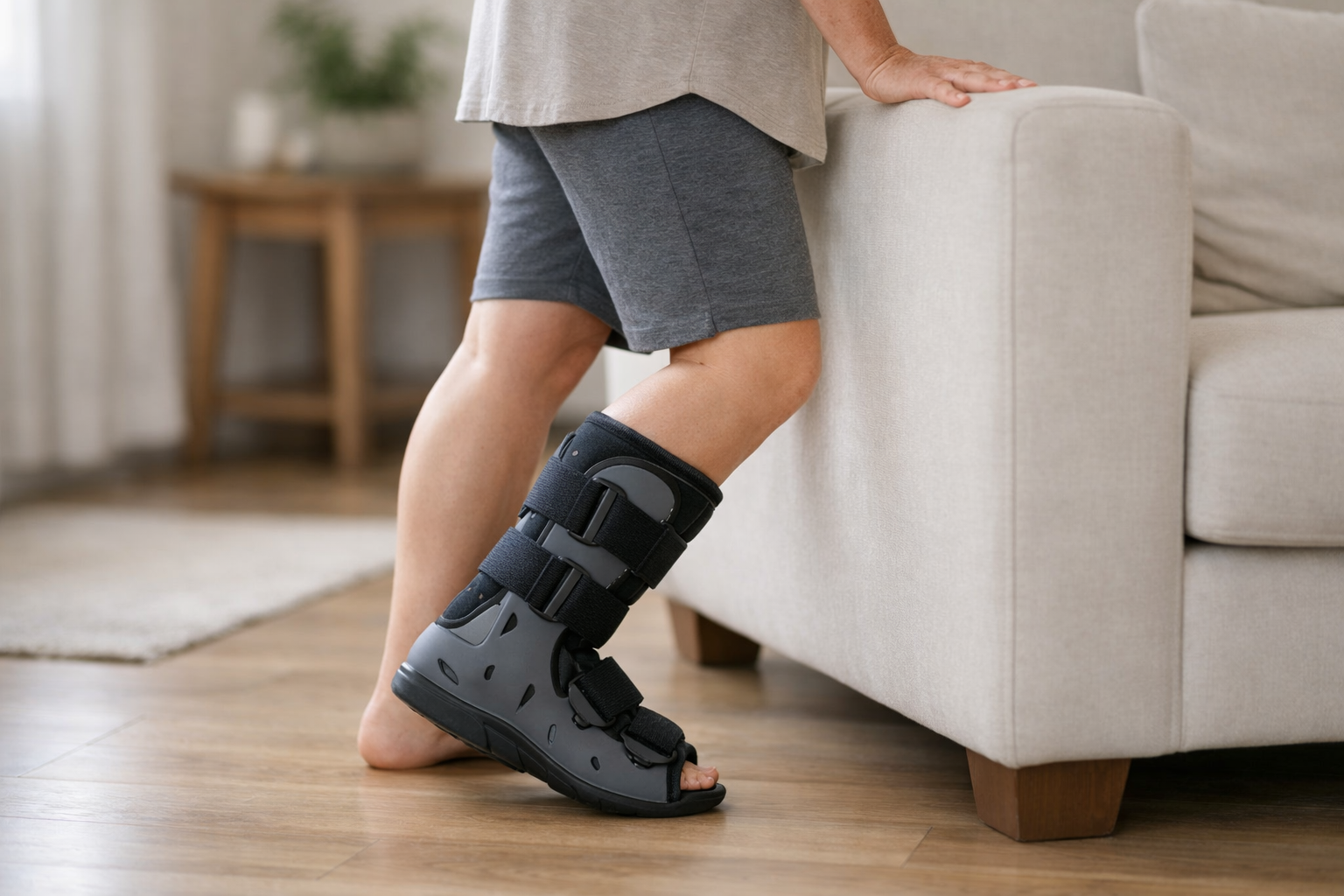
Boot or cast, often with the foot pointed downward to take tension off the healing tendon. Limited or no weight through the leg. This is the one phase where protection genuinely is the priority, because the repair or the healing gap needs a stable environment.
This is also where people start losing ground everywhere else, and it’s avoidable. Hip work, knee work, core work, the other leg, cardiovascular conditioning with your arms. There is a lot of body that did not tear an Achilles. Keeping it working makes the later stages easier.
Weeks 2 to 6: gradual weight and gradual angle
Most protocols start moving you toward weight-bearing in the boot, and start bringing the foot up from that pointed-down position toward neutral, often with wedges removed one at a time. Gentle ankle motion usually enters here.
This is where the answer to “how long until you can walk after a torn Achilles” gets complicated. Many people are walking in a boot somewhere in this window. That’s not the same as walking. Walking in a boot is a straight-legged, rocker-bottom shuffle that requires almost nothing from your calf. It’s a meaningful step, and it’s also why people get blindsided at week eight.
Weeks 6 to 12: out of the boot, into the real work
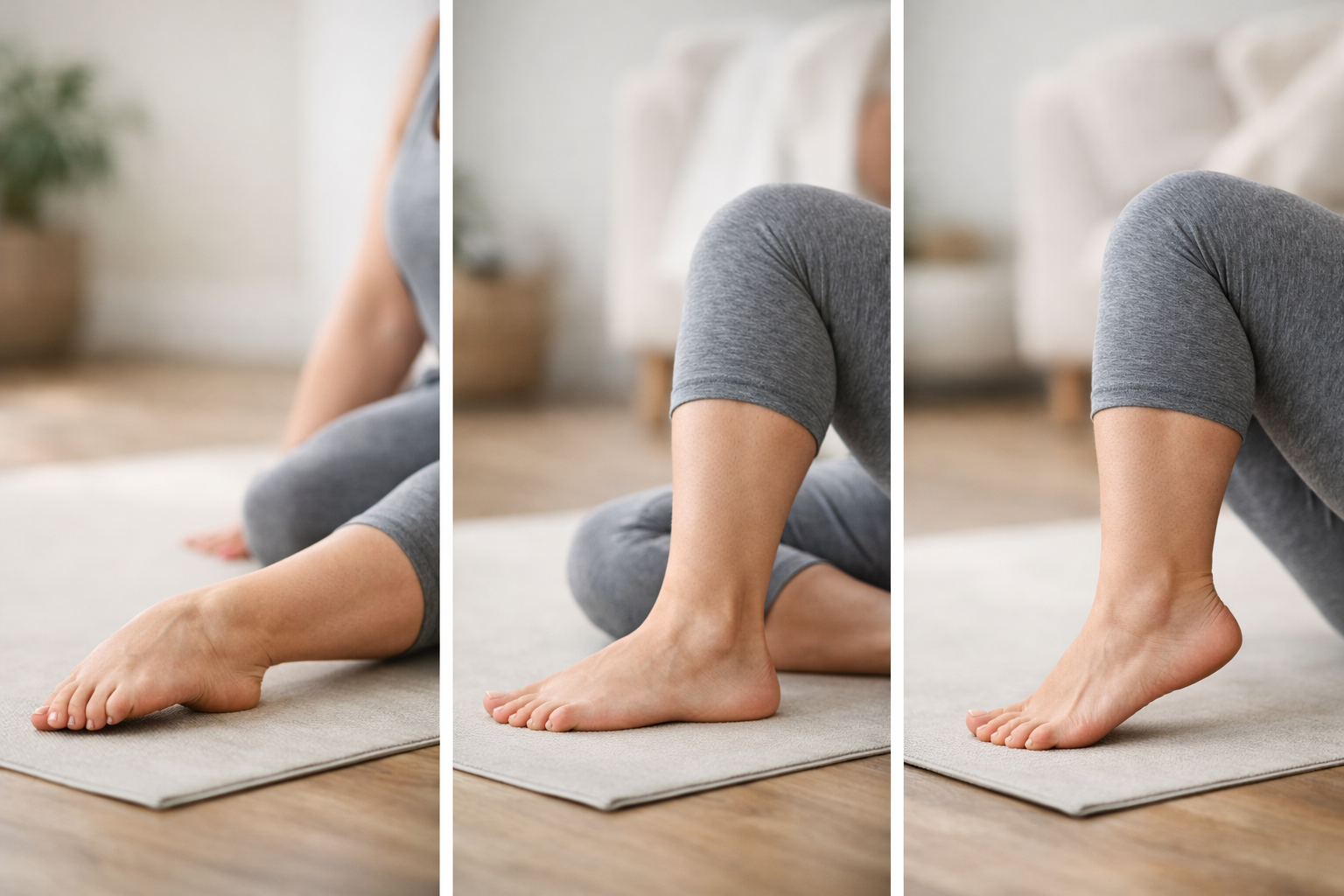
Transitioning out of the boot into a shoe, learning to walk again, and beginning to load the calf deliberately. Two-legged heel raises, then shifting more weight to the injured side. Range of motion work. Balance work, because your foot’s sense of where it is in space took a hit too.
Walking without the boot feels bizarre at first. Your calf is small, your ankle is stiff, and your body has spent weeks learning to avoid pushing off on that side. Expect to feel like you’re relearning something you’ve done since you were one year old, because in a sense you are.
A practical way to walk after an Achilles rupture as you come out of the boot:
- Take shorter steps at first. Long strides demand more ankle motion and more push-off than you have yet.
- Aim for heel contact, then rolling through the middle of the foot, then a small push off the toes. That last part is the piece everyone skips.
- Let the knee bend and straighten normally. Stiff-legged walking is a habit the boot teaches, and it lingers.
- A slight heel lift in both shoes can make early walking smoother, and it comes out over time.
- Slow and even beats fast and limping. Consistency beats intensity here.
Months 3 to 6: building strength you can feel
Single-leg heel raises are the milestone people fixate on, and reasonably so. Getting your full body weight up onto one foot, and then lowering it under control, tells us a lot. From there: heavier and slower calf loading, step work, hopping when appropriate, and early jogging for people whose goals include it.
The first months of a strength program give you gains that are largely about your nervous system relearning how to recruit the muscle. The tendon’s own structural adaptation lags behind, which is why continuing to load past the point where things feel fine matters. Typically we’re thinking in eight to twelve week blocks for real tissue adaptation, and multiple blocks stacked on top of each other.
Months 6 to 12 and beyond: capacity for the thing you actually want to do
Running, cutting, jumping, back-to-sport work. Long days on your feet without paying for it the next day. Confidence on uneven ground.
Many people are functionally quite good at six months and still measurably behind on the injured side at twelve. Both of those things are true at once. It’s not a sign something went wrong.
Why the calendar isn’t the whole plan
The timeline gives structure. It does not tell us what you’re ready for on a given Tuesday.
Here is how I think about progressing someone: do an appropriate amount, watch how the leg responds over the next day, adjust, then repeat slightly higher. The response guides the progression. Two people at the same week post-rupture can be in very different places, and both can be doing fine.
A couple of general patterns I use with patients, offered as rough guides rather than rules:
- Discomfort during and after loading that stays around or below about a 4 out of 10 is usually workable, once you’re past the protected phase and cleared to load.
- Soreness that settles back to your normal baseline within about 24 hours suggests the amount was reasonable. Soreness still elevated the next evening suggests you went past what the leg was ready for that day.
And remember that load is cumulative. Your rehab exercises are a small slice of what your leg did today. Standing at work, walking the dog, stairs, the grocery store, a travel day in an airport, all of it counts. When someone flares after a session that seemed identical to last week’s, the difference is usually the rest of the day, not the exercises. Symptoms also lag. What you feel Thursday may belong to Tuesday.
A flare-up is not a re-rupture
This fear is nearly universal, and it deserves a direct answer.
An increase in soreness, aching, or stiffness after doing more is information about what your leg could handle that day. It is not proof of damage. Tendons and muscles get sore when asked to work, especially early. Backing off slightly and rebuilding is a normal part of the process, not evidence that three months got erased.
What does deserve prompt attention: a sudden pop or snap with immediate weakness, a distinct new inability to push off, a visible gap or divot you can feel in the tendon, or rapidly increasing swelling. Also calf pain with swelling, warmth, and redness, which can point to a blood clot and is worth same-day evaluation, particularly during the immobilized weeks.
Outside of those, an uncomfortable week is an uncomfortable week. Look at what changed, adjust the amount, keep the longer trend in view. Recovery is not a straight line for anybody.
Long-term effects, honestly
You asked, so here’s the straight version.
Calf size and strength. Most people end up with some lasting difference in calf circumference and calf strength on the injured side compared to the other one. How much depends heavily on how thoroughly the calf was rebuilt, and this is the piece most within your control. Stopping rehab when walking feels normal is the single most common reason for a persistent gap.
Tendon length and stiffness. The healed tendon is often slightly longer than the original, which can subtly change how much force your calf produces at the end of push-off. Many people never notice. Sprinters and jumpers sometimes do.
Ankle motion. Some stiffness or, less often, extra motion is common. It usually improves with continued work.
Re-rupture. It’s a real but relatively uncommon risk, highest in the early months. Progressive loading under guidance reduces risk rather than raising it. An under-loaded tendon is not a safe tendon; it’s a weak one.
Return to previous activity. Many people get back to recreational running, hiking, tennis, and lifting. Some elite athletes return at a lower level, and that’s well documented in the sports world. Your goals matter here. Rebuilding for eight-hour shifts on a warehouse floor is a different target than rebuilding for competitive basketball.
One more thing worth saying, because it’s the whole point. Being fully recovered doesn’t mean identical to your pre-injury leg on every measurement. It means capable of what you want to do, reliably, without paying for it for days afterward. Function matters as much as pain.
Shoes after an Achilles rupture
There’s no single best shoe, but there are useful principles.
Early on, out of the boot: a shoe with a meaningful heel-to-toe drop (a higher heel than forefoot) reduces the stretch demand on the tendon during walking. A cushioned running shoe or a supportive walking shoe usually works well. Firm enough that your foot isn’t fighting the shoe, cushioned enough to take the edge off heel contact.
Avoid, for now: zero-drop and minimalist shoes, flip flops, worn-out flats, and anything that lets your heel sit lower than your forefoot. Save those for much later, if at all.
As you progress: start reducing your reliance on a high heel. If a shoe with a big drop is the only way your tendon tolerates walking at month five, that’s information about capacity, not a footwear problem. The goal is a tendon that handles a normal shoe, not a permanent workaround.
Rocker-bottom soles roll you through the step and reduce push-off demand. Genuinely helpful during the transition out of the boot. Also worth stepping away from eventually, for the same reason.
And are Hokas bad for Achilles tendonitis? No. That reputation comes from a real mechanism applied too broadly. Highly cushioned, rockered shoes change how much work the calf and Achilles do per step, usually reducing it. For an irritated tendon that’s often welcome. Problems come from the switch, not the shoe. Going abruptly from a firm, high-drop shoe into a very different platform changes the demands on your tendon overnight, and tendons dislike overnight changes. Transition gradually, and judge any shoe by how your leg responds over a week rather than by its reputation. A shoe that makes walking tolerable during rehab is doing its job.
The questions everybody asks about pain
What is the hardest tendon to heal? The Achilles is usually near the top of that list, and the reasons are structural. Blood supply in the mid-portion is limited. It carries enormous loads with every step, so you can’t truly rest it and still live your life. And it’s under tension constantly. Rotator cuff tendons and the gluteal tendons are also notoriously slow. “Hard to heal” is really about the mismatch between how much load a tendon carries and how quickly it can adapt.
What hurts more, an Achilles rupture or an ACL tear? They’re different kinds of unpleasant, and comparing them is more anecdote than science. Both are frequently described as a pop with a sudden sense of the leg failing. An ACL tear often brings dramatic swelling and instability. An Achilles rupture often brings a strange, sharp initial pain that fades faster than people expect, followed by a leg that simply won’t push off. Plenty of people report the Achilles hurt less in the moment and more over the following weeks.
What is the most painful tendon to rupture? There’s no reliable ranking, and pain doesn’t track neatly with tissue damage anyway. The quadriceps and patellar tendons are often described as brutally painful because of the immediate loss of knee function. The distal biceps tendon at the elbow is another commonly cited one. Pain is information from your nervous system about a situation, and it’s shaped by context, alarm, and swelling as much as by the tear itself. Which is also why the pain of a rupture doesn’t predict how well you’ll recover.
What actually separates good outcomes from disappointing ones
After enough of these, patterns show up.
The people who do well are rarely the ones who found a special exercise. They’re the ones who kept loading the leg progressively long after it stopped hurting, who understood that calf strength at month four was not the finish line, and who had a plan for what came next when something got easy.
The disappointing outcomes usually aren’t about surgical technique or a bad protocol. They’re about the handoff. Surgery goes well, the boot comes off, formal rehab covers the first stretch, and then the plan quietly stops around the time walking feels normal. Nobody was negligent. There just wasn’t a next chapter. Rest and protection reduce sensitivity, and the tendon does knit together, but the structural strength of tendon and muscle only changes through months of graded loading. A tendon that hasn’t been asked to do much stays a tendon that can’t do much.
So if you’re a year out and your calf is still smaller, your heel raises are still weak, and you still don’t trust the leg on a curb, that is not a permanent verdict. It usually means the loading chapter never happened, or ended early. Longer duration means a lower starting point and a more patient progression. It does not mean the door is closed. Recovery is built.
When to check in with someone
See your surgeon or a physical therapist if you notice a sudden pop with new weakness, a new inability to push off, pain that’s climbing week over week rather than settling, numbness or significant swelling, or calf pain with warmth and redness. Also worth an appointment if you’re simply stuck: months out, technically discharged, and no clearer on what to do next than you were at week eight. Being stuck is a solvable problem, and it’s a common one.
An Achilles rupture is a big injury with a long runway. It’s also one of the more predictable ones, in the sense that the work is clear and it reliably pays off when it gets done. The tendon heals on its own schedule. The leg becomes capable on yours.