Posterior Tibial Tendonitis: How Long Does Recovery Really Take?
A realistic look at posterior tibial tendonitis recovery time, why the range is so wide, and how to read your own progress week to week instead of watching the calendar.

You searched a timeline. I understand why. When your ankle has been aching on the inside for a couple of months and every article gives you a different number, you want someone to tell you when this ends.
Here’s the honest answer, and then the useful one.
The honest answer: most people with posterior tibial tendon irritation feel meaningfully better somewhere in the range of a few weeks to a few months, and rebuilding the tendon so it holds up to real life often takes longer than the pain takes to quiet down. The useful answer is that the number on the calendar isn’t what determines your outcome. What determines it is whether the tendon gets stronger at the thing you actually need it to do, and whether you can tell the difference between a setback and a normal bump along the way.
So let’s talk about what the timeline actually depends on.
Why every source gives you a different recovery time
One site says two to four weeks. Another says three to four months. A forum post says six months and counting. They’re not contradicting each other as much as it looks. They’re describing different people at different starting points, and often measuring different finish lines.
A runner who felt a twinge on the inside of the ankle nine days ago and backed off immediately is a different situation from someone who has been limping through twelve-hour shifts since spring. Same tendon. Very different starting capacity, and very different recovery time.
The other reason the numbers scatter: “recovered” means different things. Pain gone while sitting? Pain gone walking the dog? Pain gone at mile six? Those are three separate milestones and they can be weeks or months apart.
When I’m thinking about how long something like this takes, I’m weighing a handful of things:
- How long it’s been going on. Weeks is a different problem than a year. Not a hopeless one, just a slower build.
- How irritable it is right now. If ten minutes of standing sets it off, we start lower and climb more patiently.
- What your day already demands. A nurse on concrete, a teacher, a parent carrying a toddler up stairs: that’s real load whether or not it’s called exercise.
- What you want to get back to. Walking comfortably and returning to trail running are different targets, and the second one takes longer.
- Whether the tendon is being loaded on purpose. This is the one people underestimate the most.
What is actually happening in the tendon
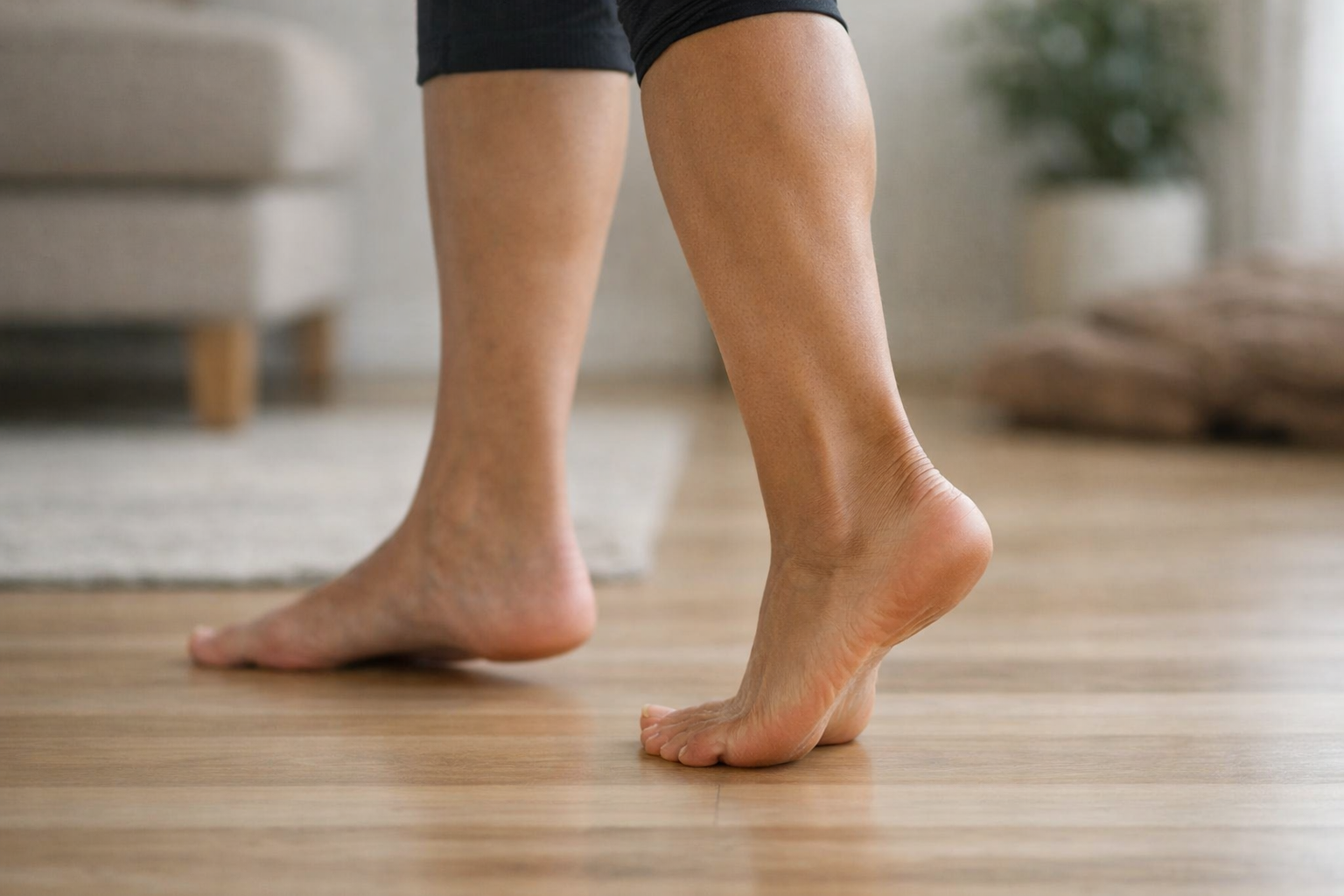
Tendon problems come down to a mismatch. The demand on the tissue outgrew what the tissue could currently handle. Not one dramatic moment, usually. A shoe change, a new job, a mileage jump, a summer of flat sandals, a few pounds gained, a hill you started walking. Any of those alone might be fine. Stacked, they can push past what the tendon was ready for.
That framing matters for your timeline, because it tells you what has to change for this to be over. Calming the tendon down lowers the demand side. That helps, and it helps quickly, which is why rest feels like it’s working. But it doesn’t raise what the tendon can handle. The moment your life goes back to normal, the mismatch is right back where it started.
Recovery is built. The tendon has to get better at the job.
What are the three stages of tendon healing?
You’ll see tendon healing described in three phases, and it’s a reasonable model as long as you don’t take the timelines too literally.
- The inflammatory phase. Days. The tissue reacts, the area is sensitive, things feel sharp and reactive.
- The repair phase. Weeks. New collagen gets laid down, but it’s disorganized. The tendon feels better than it is. This is where a lot of people go back to full activity and get burned.
- The remodeling phase. Months. The new tissue reorganizes and gets stronger along the lines of stress it’s asked to tolerate. Loading is what tells it how to organize.
That third phase is the one that matters most for your question, and it’s the one you can influence. Tendon doesn’t remodel because time passed. It remodels because it was asked to do progressively more.
Worth naming: what most people call posterior tibial tendonitis, when it has been hanging around for months, usually isn’t much of an inflammatory problem anymore. It’s a tissue that has changed in response to chronic stress. That’s why anti-inflammatory strategies alone often plateau, and why the loading work becomes the main event rather than the finishing touch.
What is the fastest way to heal posterior tibial tendonitis?
Nobody likes this answer, but the fastest route is almost always the one that doesn’t stall out.
What actually shortens the process:
Turn down the daily load without going to zero. Cut the specific things that spike it, not all activity. If ninety-minute walks flare it and thirty-minute walks don’t, walk thirty minutes. Twice, if you want. Rest calms an angry tendon, and in small doses that’s genuinely useful. In large doses it costs you capacity you’ll have to rebuild later. Rest equals rust.
Start loading the tendon early, at a level it tolerates. For most people that starts with calf and posterior tibialis work you can control: heel raises, resisted foot turning inward, gradually adding range and load and then single-leg work. The specifics should come from someone who has watched you move. The principle is universal: find an amount the tendon can handle, and build from there.
Stay at each level long enough for something to change. This is where people lose weeks. They do an exercise for four days, feel no different, and swap it out. Adaptation isn’t that fast. Early improvement is largely your nervous system getting more comfortable and more coordinated. Actual tissue change tends to show up over a longer stretch, often in the range of eight to twelve weeks of consistent loading for many people.
Address why the demand was too high in the first place. Calf tightness, weak hips, a foot that collapses more than it used to, footwear with no structure, a training jump. If nothing about the input changes, the tendon has to absorb all the change itself.
Be consistent rather than heroic. Three solid sessions a week for three months beats a ferocious week followed by a flare and ten days off. Consistency beats intensity, especially with tendon.
What generally doesn’t speed it up: waiting for the pain to disappear before you start strengthening. That’s the single most common reason a six-week problem becomes a six-month one.
Can I still walk with posterior tibial tendonitis?
Usually, yes, and usually you should. Walking is a load the tendon needs to be able to tolerate, so removing it entirely rarely serves you.
The question isn’t walk or don’t walk. It’s how much, how fast, on what surface, in what shoes, and how the foot responds afterward.
A few practical adjustments that often let people keep walking comfortably:
- Break longer walks into shorter ones spread through the day.
- Flat, even ground beats sand, trails, and cambered roads while things are sensitive.
- A shoe with a real heel counter and some structure through the arch usually feels better than a flat, floppy shoe. Sandals and bare feet on hard floors tend to be the worst offenders.
- Slow down. Pace increases the demand on this tendon more than most people expect.
A reasonable guardrail: keep discomfort at or below roughly a 4 out of 10 during the activity, and see where you are about a day later. If you’re back to your normal baseline within about twenty-four hours, that walk was in bounds. If you’re worse for two days, it was too much for right now. That’s information, not a verdict.
One exception worth taking seriously. If you can’t do a single-leg heel raise on that side at all, if the arch has visibly flattened compared to the other foot, or if walking is genuinely getting harder week over week, that deserves a hands-on evaluation soon rather than a self-managed plan.
What aggravates posterior tibial tendonitis?

The tendon runs behind the inner ankle bone and helps hold up your arch and control your foot as you push off. Anything that asks it to do more of that job, for longer, tends to stir it up.
Common aggravators:
- Long periods standing or walking, especially on hard, flat surfaces
- Unsupportive shoes, brand-new shoes, or a sudden switch (including going more minimalist too fast)
- Hills, stairs, and uneven ground
- Pushing off hard: sprinting, jumping, quick direction changes, court sports
- Adding distance or speed faster than the tendon can adapt
- Barefoot on tile or hardwood at home, which quietly adds up over a whole day
- Travel days, moving days, theme parks, conferences, anything that triples your step count without warning
Here’s the part that confuses people: the flare often doesn’t come from the exercise. It comes from the sum of the day. You did your rehab, then walked the airport, then stood at a wedding. The tendon added it all together. And symptoms can lag a day or two behind the load that caused them, which makes it easy to blame the wrong thing.
When someone tells me their program isn’t working, we usually find the program is fine and the week around it changed.
Does posterior tibial tendonitis ever go away?
For most people, yes, in the sense that matters: you get back to walking, working, and doing what you want without the tendon dictating your day.
Whether it goes away permanently depends a lot on what happens after the pain stops. If you stop everything the week the pain leaves, you’ve finished the repair phase and skipped remodeling. The tendon feels fine at your current activity level and fails again the next time life asks for more. That’s the classic recurrence pattern, and it’s not bad luck.
If this has been going on for a year, that doesn’t mean it can’t improve. Persistent doesn’t mean permanent. It usually means we start from a lower point and climb more patiently, and that expecting a four-week turnaround will only frustrate you.
How to tell if tendonitis is healing
Pain level alone is a poor progress meter. It bounces around with sleep, stress, weather, how much you did yesterday. Watch these instead:
- How long you last before it complains. Twenty minutes of standing became forty. That’s progress even if forty minutes still aches.
- How fast it settles. Same activity, but it calms in two hours instead of the rest of the evening. That’s capacity improving.
- Mornings and first steps. The initial stiffness gets shorter and less intense.
- Strength you can measure. How many single-leg heel raises you can do on that side, and how much closer that gets to the other side. This one is objective and hard to fool yourself about.
- Fewer bad days per week. Not zero. Fewer.
- Less thinking about it. You planned a walk without calculating the route.
If every one of those is trending in the right direction and your pain number hasn’t moved much, you are healing. Function matters as much as pain.
If nothing on that list has changed in a month of consistent work, something in the plan needs to change, and that’s worth a conversation rather than more of the same.
Should I massage posterior tibial tendonitis?
Massage can help, mostly for comfort. Working on a tight calf, the muscles along the inside of the shin, and the surrounding tissue often reduces sensitivity and makes movement feel easier. If it feels good and you’re not worse the next day, it’s reasonable.
What massage won’t do is build the tendon’s capacity. Neither will stretching, ice, a night splint, or a new insole. These lower the sensitivity side of the equation, which is genuinely valuable and often makes the loading work more tolerable. But if you strip them away and nothing else has changed, you’re back where you started when your activity picks up.
So use them as helpers, not as the plan. And don’t dig aggressively into the tendon itself right behind the inner ankle bone when it’s sharply painful. Firm, uncomfortable pressure on a reactive tendon tends to buy you a worse day tomorrow.
Same goes for orthotics and bracing. In the right situation, particularly when the arch is collapsing and the tendon needs some help sharing the load, they can be a genuinely useful part of getting you moving again. The gap I see isn’t that people use them. It’s that nothing gets built underneath them, so there’s no plan for eventually asking the foot to do more of the work itself.
What is the hardest tendon to heal?
People usually expect me to name one. The more accurate answer is that tendons under high load with a limited blood supply, and tendons you can’t easily unload because you need them to walk, are the stubborn ones. The Achilles, the posterior tibial tendon, the gluteal tendons at the hip, and the tendons around the elbow all show up on that list.
The posterior tibial tendon has a couple of features that make it slow. It works constantly, every step, holding the arch. There’s a stretch of it behind the inner ankle where the blood supply is relatively poor. And you can’t rest a walking tendon the way you can rest a shoulder.
None of that means it doesn’t recover. It means the progression has to be more deliberate and the expectations longer than a hamstring strain.
How long is too long to have tendonitis?
A rough guide, not a rule.
If you’ve been managing it sensibly for six weeks and there’s no movement in any direction, get it evaluated. Not because it’s dangerous, but because six weeks of the wrong plan is six weeks you don’t get back.
If it’s been three months or more, the tissue has almost certainly changed and the approach needs to be a structured, progressive loading plan rather than symptom management. This is the point where people often say they’ve tried everything. Frequently they’ve tried many things briefly, without a progression connecting them. Maybe the missing piece wasn’t another treatment. It was knowing how to advance.
Worth getting looked at sooner rather than later:
- The arch on that side is flattening or the foot is turning outward compared to the other side
- You can’t perform a single-leg heel raise on the painful side
- Swelling and pain behind the inner ankle that keeps escalating
- Numbness, tingling, or a burning sensation into the foot
- Pain that wakes you at night or doesn’t ease with rest at all
- You couldn’t put weight on it after an injury
Also worth saying: not everything on the inside of the ankle is this tendon. Tarsal tunnel irritation, a stress reaction in the bone, arthritis in the midfoot, and nerve pain can all feel similar. A proper evaluation sorts that out, and it’s a shame to spend three months rehabbing the wrong thing.
What a realistic timeline tends to look like
With the honest caveat that this varies enormously by person, here’s the general shape I’d expect, not a promise.
Caught early, a few weeks of symptoms, low irritability: noticeably better in two to six weeks, with loading continued for a couple of months beyond that so it holds. The mistake here is stopping at week three because it feels fine.
Several months of symptoms, moderate irritability, on your feet for work: expect the first real change in four to eight weeks, meaningful function back over three to four months, and continued building past that if you want to run or hike.
A year or more, arch changes, low tolerance for standing: think in terms of a longer arc, several months of patient progression, with early wins in how long you last and how fast you recover rather than in the pain number. Slower doesn’t mean impossible.
The pattern underneath all three: symptoms improve before capacity does. Capacity is what keeps it away.
The part that actually decides your recovery time
You can’t control which category you started in. You can control whether the tendon is asked to do progressively more, and whether you interpret the response correctly.
An increase in symptoms after a hard day is not the tendon tearing. It’s a tissue telling you where its current ceiling is. A flare-up doesn’t erase eight weeks of work. Look at what changed, dial it back a notch, hold there, and keep the larger trend in view. Recovery is not a straight line, and expecting it to be one is what makes ordinary bumps feel like failure.
If you’ve been waiting for the pain to leave before you start building, the waiting is likely the thing extending your timeline. Start where the tendon can handle it. Watch what it does over the next day. Adjust. Then ask for a little more.
If your symptoms are severe, getting worse, or haven’t budged despite doing sensible things for a couple of months, see a physical therapist or physician who can put hands on the foot and watch you walk. There’s only so much anyone can tell you from a distance, and the specifics of your progression should be built around what your foot is actually doing.