Foot and Ankle Strengthening Exercises That Actually Build Capacity
A practical, progressive program that combines foot arch strength with ankle stability and balance, plus how to know when to advance, what a flare-up really means, and why building capacity beats collecting exercises.

Most people who search for foot and ankle strengthening exercises aren’t looking for a list. They’ve already got a list. Somebody handed them towel scrunches and ankle circles at some point, they did them for two weeks, and nothing much changed.
The exercises weren’t wrong. What was missing was the part nobody explained: how much, how often, how hard, and when to make it harder.
That’s what I want to give you here. The moves matter, but the plan around them matters more.
Start with the real problem: demand versus what your foot can handle
Your foot and ankle do an enormous amount of work you never think about. Every step, your foot has to absorb load, stay stable for a moment, then turn into a stiff lever to push you forward. Do that eight thousand times a day on concrete, in shoes that may or may not suit you, after a week of travel or a new job or a return to running, and you have a system being asked for quite a lot.
Problems show up when the demand goes past what those tissues can currently tolerate. Not because you’re broken. Because the ask outpaced the ability.
So the goal of strengthening isn’t to collect exercises. It’s to raise what your foot and ankle can handle until the ask feels ordinary again.
That framing changes how you train. You stop asking “am I doing the right exercise” and start asking “is my foot handling more this month than it was last month.”
How do I strengthen my ankles and feet?

Three things have to happen, and most programs only do one.
1. The small muscles inside the foot need work. These are the ones that control your arch and your toes. They’re easy to ignore because you can’t see them working.
2. The bigger muscles crossing the ankle need load. Calf, soleus, the muscles running down the inside and outside of your shin. These are the workhorses. They need real resistance, not just movement.
3. Your balance system needs to be challenged. Strength you can’t access quickly, on one leg, on an uneven surface, doesn’t protect you when you step off a curb wrong.
Most lists cover part of this. Towel scrunches and ankle circles hit the first category and part of the second, at a very low intensity, and then stop. That’s a fine place to start if you’re irritated. It’s not a place to stay.
The program
I’ll organize this in three levels. Not by week, because your response should decide when you move up, not the calendar. Levels give you a ceiling and a floor. Where you land depends on how irritable things currently are.
A general guide throughout: during and after an exercise, pain sitting at or below roughly a 4 out of 10 is usually acceptable for most people. Then you check the next morning. If things have settled back to your normal baseline within about 24 hours, the dose was reasonable. If you’re clearly worse the next day, the dose was too much, and you scale back rather than quit.
Level 1: calming and waking things up
Use this when the foot or ankle is sore most days, painful with your first steps in the morning, or you’re early after a sprain and cleared to start moving.
Short foot (arch lift). Sit with your foot flat. Without curling your toes, try to draw the ball of your foot slightly toward your heel so the arch rises a little. It’s a small, frustrating movement at first. Hold 5 seconds, repeat 10 times, a couple of times a day. Most people can’t do this well initially. That’s normal and it improves quickly.
Toe splay and big toe press. Spread your toes apart, hold, relax. Then press just the big toe into the floor while keeping the others relaxed, then reverse it. Your big toe does a large share of the push-off work, and it gets lazy in stiff shoes.
Seated heel raises. Sit, feet flat, push through the balls of your feet to lift your heels. Add weight on your thighs when it becomes easy. This loads the soleus, the deep calf muscle that does more of the work in walking and standing than most people expect.
Ankle alphabet or resisted band work. Slowly trace the letters of the alphabet with your foot, or use a band to resist pointing, pulling up, turning in, and turning out. Ten to fifteen controlled reps each direction.
Two-leg heel raises. Stand, hands on a counter for balance, rise onto the balls of both feet and lower slowly. Slow on the way down is where the value is. Two or three sets of 10 to 15.
The entire Level 1 block takes maybe ten minutes. Do it most days.
Level 2: building real strength
Move here when Level 1 feels easy, symptoms settle within a day, and you can get through your normal walking without a significant spike.
Single-leg heel raises. The single most useful ankle exercise there is. Stand on one leg, fingertips on a wall for balance only, rise as high as you can, lower under control over about three seconds. Start with whatever number you can do with good height, even if that’s four. Build toward three sets of 15 to 20 with full range.
Bent-knee heel raises. Same movement with the knee bent about 25 degrees. This shifts work to the soleus, which handles a lot of load in running and prolonged standing and is very commonly undertrained.
Tibialis raises. Stand with your back against a wall, feet a step or two out in front, and pull your toes up toward your shins against gravity. Two or three sets of 15 to 25. The front-of-shin muscles control how your foot lands, and they fatigue fast in people who’ve been limping or avoiding.
Banded inversion and eversion. Anchor a band, turn the foot inward against resistance, then outward. The outward (eversion) direction matters especially if you’ve rolled your ankle before, because those muscles help resist the foot rolling under.
Toe-flexor work with real load. Stand with the balls of your feet on a book or a step, let the toes hang slightly over, and do heel raises from there. This loads the arch and the toe flexors through a longer range than a flat-floor raise.
Split-stance balance. Stand on one leg for 30 seconds, first with eyes open, then with eyes closed, then with a head turn. Adding a challenge to your balance system is what makes standing on one leg worth doing.
Level 3: preparing for what you actually want to do
This is the level almost everyone skips, and it’s why symptoms come back when life gets busy again.
Loaded heel raises. Hold dumbbells, wear a backpack, or use a calf raise machine. If you weigh 180 pounds and want to run, the demand on your calf in running is several times body weight. Three sets of body-weight raises isn’t preparing you for that.
Single-leg squats or step-downs. Slow, controlled, watching that the knee doesn’t cave and the arch doesn’t collapse. This trains foot and ankle control under the kind of load walking downhill and descending stairs actually produce.
Hops and pogos. Small, quick, stiff bounces on both feet, then single leg. Start with 20 seconds. These build the spring-like quality of the tendon and fascia, which is entirely different from slow strength and can’t be trained by slow work alone.
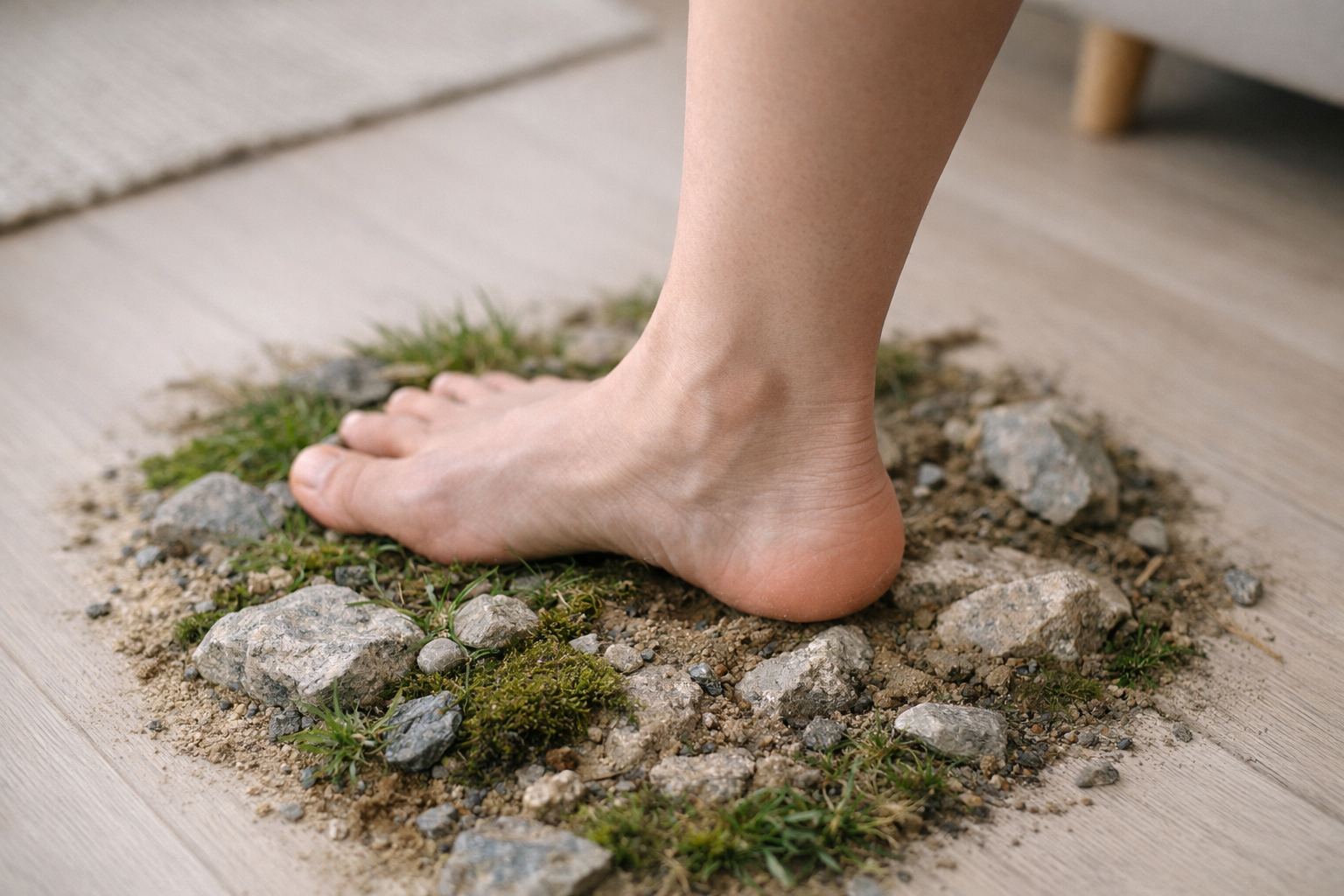
Direction changes and uneven surfaces. Lateral hops, cutting drills, walking on grass or trail. If your life includes a surface, your ankle should have practiced it.
You don’t need all of these. You need the ones that match what you’re trying to get back to.
Can weak ankles be fixed?
In almost every case, ankles get meaningfully stronger and more stable with consistent loading. Muscle and tendon respond to demand at any age. That part isn’t in doubt.
But it’s worth separating two things that both get called “weak ankles.”
One is genuine strength and control that hasn’t been built, or that was lost after an injury, a boot, surgery, or a long stretch of avoiding activity. That responds very well to training.
The other is ligament laxity, usually after repeated sprains, where the passive restraints around the joint are looser than they used to be. Training doesn’t tighten a stretched ligament. But it does something nearly as good: it builds the muscular control that compensates, so your ankle catches itself before the ligament ever gets tested. Many people with genuinely lax ankles stop spraining them entirely once the muscles and reflexes are doing their job.
If your ankle gives way repeatedly, swells regularly, or locks or catches, that deserves an in-person evaluation rather than a home program. Recurrent instability sometimes involves things a training plan alone won’t address.
What causes very weak ankles?
Usually some combination of:
- A previous sprain that never got rehabbed. Extremely common. Pain stops in a few weeks, life resumes, and the strength and balance deficits quietly stay for years.
- Time in a boot, cast, or on crutches. Muscle capacity drops fast when a limb isn’t loaded, and it doesn’t come back on its own just because you started walking again.
- Low overall demand. Flat floors, supportive shoes, sitting jobs. Nothing wrong with any of that, but the foot adapts down to what it’s asked to do.
- Pain-related avoidance. When something hurts, you unconsciously stop using it fully. Months of that produces real weakness.
- Occasionally, something medical. Nerve issues, certain neurological or metabolic conditions, or medication effects can cause genuine weakness. If weakness came on without an injury, is getting worse, involves numbness or foot drop, or affects both sides evenly, get it evaluated.
Notice that most of these are about load, not about you doing something wrong. Bodies adapt to what’s asked of them, in both directions.
Do ankles get weaker as you age?
They tend to, but far less because of age itself than because of what changes with age.
People walk less, walk on easier surfaces, stop running or playing sports, wear more supportive shoes, spend more time seated. Calf muscle and tendon stiffness change over the decades, and balance reflexes get slower without regular challenge. The result looks like aging. Much of it is disuse.
The encouraging part is how responsive this stays. Strength and balance improve with training well into later decades. The progression is usually more patient and the starting point lower, but the direction of change is the same. Ankle strength and single-leg balance are two of the more worthwhile things to maintain, given what they do for staying steady on stairs, curbs, and uneven ground.
Is walking good for ankle strengthening?
Walking is good for a lot. It keeps tissue loaded, maintains circulation, helps with mood and sleep, and is usually the exact activity people want to get back to.
As a strengthening stimulus, though, it’s limited. Walking is a load your body already tolerates. It doesn’t ask for much more than you currently have, which is exactly why it doesn’t build much beyond that.
Use walking as the foundation and the goal. Use targeted strength work as the thing that raises the ceiling. Then walking gets easier, longer, and less symptomatic because the underlying capacity went up.
You can make walking itself more demanding, which does help: hills, trails, uneven ground, a loaded pack, faster pace. Those genuinely add stimulus.
Does walking on tiptoes strengthen ankles?
Somewhat, yes. Toe walking loads the calf and the toe flexors, and it’s a reasonable way to add work without equipment. Same with heel walking for the front of the shin. Both show up on nearly every exercise list because they’re simple and need nothing.
But they’re low-load and easy to do sloppily. A set of slow single-leg heel raises will build more than several minutes of tiptoe walking. Think of toe and heel walks as a useful warm-up or a filler on a busy day, not the main course.
How long does it take to strengthen weak ankles?
Here’s the honest version.
You’ll usually notice changes in the first two to three weeks. Better balance, a bit more confidence, exercises that felt awkward starting to feel coordinated. Most of that early improvement is your nervous system learning to recruit muscle you already had. Real, and useful, but not yet structural.
The tissue changes, actual adaptation in muscle, tendon, and fascia, typically take longer. For many people the meaningful window is somewhere around 8 to 12 weeks of consistent loading, sometimes longer for tendon and fascia, which remodel slowly.
This gap is where most people get caught. The early improvement feels like the job is done. They stop. Two months later, at the first busy week or long walk, everything comes back, and it feels like a failure when really the tissue just never got the time it needed.
If you’ve had the problem for years, expect a lower starting point and a slower climb. Persistent doesn’t mean permanent. It usually means you begin smaller and you’re more patient about adding.
Consistency beats intensity here. Three honest sessions a week for three months does more than two heroic weeks.
What good exercises look like for rehabilitation specifically
If you’re rehabbing rather than just strengthening, a few things change.
Early on, the goal is movement and light load, not strength. Ankle alphabet, gentle band work, seated heel raises, getting normal range of motion back. Swelling and irritability set the ceiling.
Balance work starts earlier than people expect. After a sprain, the sensors in the joint and the reflexes that use them get disrupted. Standing on one leg is legitimate rehab, not a warm-up. It’s one of the better predictors of whether you’ll sprain that ankle again.
Weight-bearing beats non-weight-bearing once you tolerate it. Band exercises in a chair have a role. But your ankle’s job happens standing, so get to standing work as soon as it’s reasonable.
Finish the job. Rehab isn’t complete when it stops hurting. It’s complete when the ankle can do what you’re going to ask of it: the hop, the cut, the long day, the trail. Stopping at pain resolution is the most common reason ankles re-sprain.
And worth saying plainly: not all heel and foot pain is what it appears to be. Heel pain that fits the usual plantar fascia pattern can sometimes be a nerve issue, a stress reaction in the bone, a tendon problem behind the ankle, or referred from elsewhere. Pain that isn’t responding to sensible loading over several weeks is worth having someone look at in person.
What shoes are best for ankle support?
The short answer people don’t love: the best shoe is the one that lets you do what you need to do with the least symptom cost, and that’s individual.
A few things I’d offer:
High-top shoes provide some mechanical restriction, but the research support for them preventing sprains isn’t strong, and they don’t build anything. If you want to protect an ankle during a specific high-risk activity, a proper lace-up brace generally does more than shoe height.
A stiffer, more supportive shoe reduces the demand on your foot. That’s genuinely helpful when you’re flared up or working a long day on concrete. It’s also why relying on it permanently keeps your foot’s capacity where it is. Support is a tool for managing load, not a replacement for building capacity.
Minimal shoes increase the demand on your foot. Also a tool. Also easy to overdo. If you’re going to spend more time in them, treat it as new training load and add it gradually, over weeks.
Sudden changes matter more than the shoe itself. A lot of foot pain traces back to a change: new shoes, a switch to sandals in summer, more barefoot time on hard floors at home, worn-out shoes finally giving out. Not because one shoe is bad, but because the demand shifted faster than the tissue adapted.
Orthotics fit the same logic. They can reduce strain and help a great deal in the short and medium term. They work best paired with a plan for building what the foot can handle, rather than instead of one.
What to do when it flares
It will, at some point. Here’s how to think about it.
A flare is information about the total load on the system, not evidence that you damaged something. And the total includes everything: your exercises, plus the standing, walking, work, errands, and the weekend you spent on your feet at an airport. The exercise often gets blamed because it’s the deliberate part, when the actual cause was the day.
Symptoms also lag. Something you did Saturday can show up Monday morning. When you’re tracking cause and effect, look back two days, not just at what you did this morning.
When you flare:
- Cut the volume roughly in half rather than stopping entirely. Complete rest calms things down and then the pain returns the instant load does, because nothing got built.
- Keep moving in whatever way doesn’t aggravate it.
- Look for what changed in the preceding 48 hours. Usually there’s something.
- Give it a few days, then start climbing again from the lower level.
A flare-up doesn’t erase the work you’ve done. The strength you built two weeks ago is still there. What changed is sensitivity, and sensitivity moves up and down far faster than tissue does.
Recovery is not a straight line. Judge it over months, not days.
Knowing when to make it harder
This is the part the exercise lists never tell you, and it’s the part that determines whether anything changes.
Add difficulty when:
- You can complete all sets and reps with good control
- The last few reps feel like work, but not a struggle
- Symptoms during and after stay around or below that 4 out of 10 mark
- Things return to your normal baseline within about a day
- You’ve been at the current level long enough to have actually adapted, usually a week or two at minimum
Then change one variable. More reps, or more weight, or one leg instead of two, or a slower lowering phase, or a less stable surface. One at a time, so you know what caused what.
If you never make anything harder, you’ll maintain. If you jump three levels in a week, you’ll flare. The middle is where the adaptation happens, and finding that middle is most of the skill.
A few things worth watching for
See a clinician in person if you have pain that keeps getting worse despite sensible management, numbness or tingling, an ankle that gives way or locks, swelling that doesn’t settle, pain that wakes you at night, an inability to bear weight after an injury, or any weakness that came on without a clear cause. Those aren’t reasons to panic. They’re reasons to have someone actually look at it.
And if you’ve done the exercises before and nothing changed, consider that the missing ingredient may not have been a different exercise. It may have been someone showing you how to progress it, how to interpret what you were feeling, and how long to keep going.
That’s usually where the difference lives.